Gas Detection Malaysia: Complete Guide for Oil & Gas Safety and Compliance
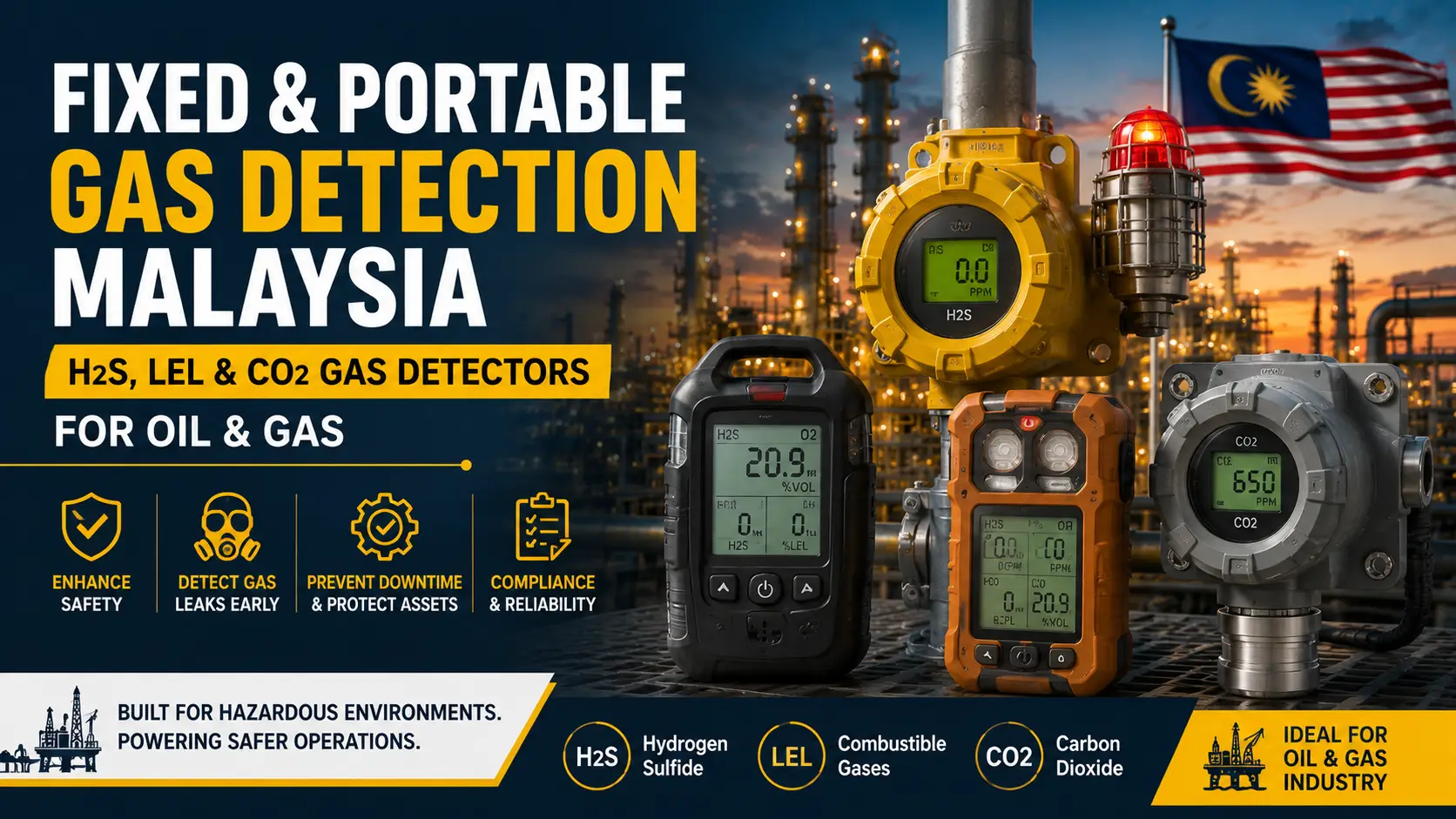
Malaysia's upstream, midstream and downstream oil and gas sites operate in some of the most dangerous industrial environments in the region. Gases are routinely employed in refineries, offshore platforms, LNG terminals and petrochemical plants that are toxic, flammable or that replace the breathable oxygen. That's why, instead of being a luxury, oil gas planning is an integral part of process safety management in Malaysia. In Malaysia's oil and gas sector, reliable gas detection systems are essential to ensure the safety of workers, the integrity of equipment, and compliance with local and international standards. This guide provides the guidance on the most relevant hazardous gases in Malaysian sites, the available detection technologies, the regulatory expectations on the system and a practical approach for selection of the right system.
Looking for Right Gas Detection Equipment for Workplace?
What Is Gas Detection?
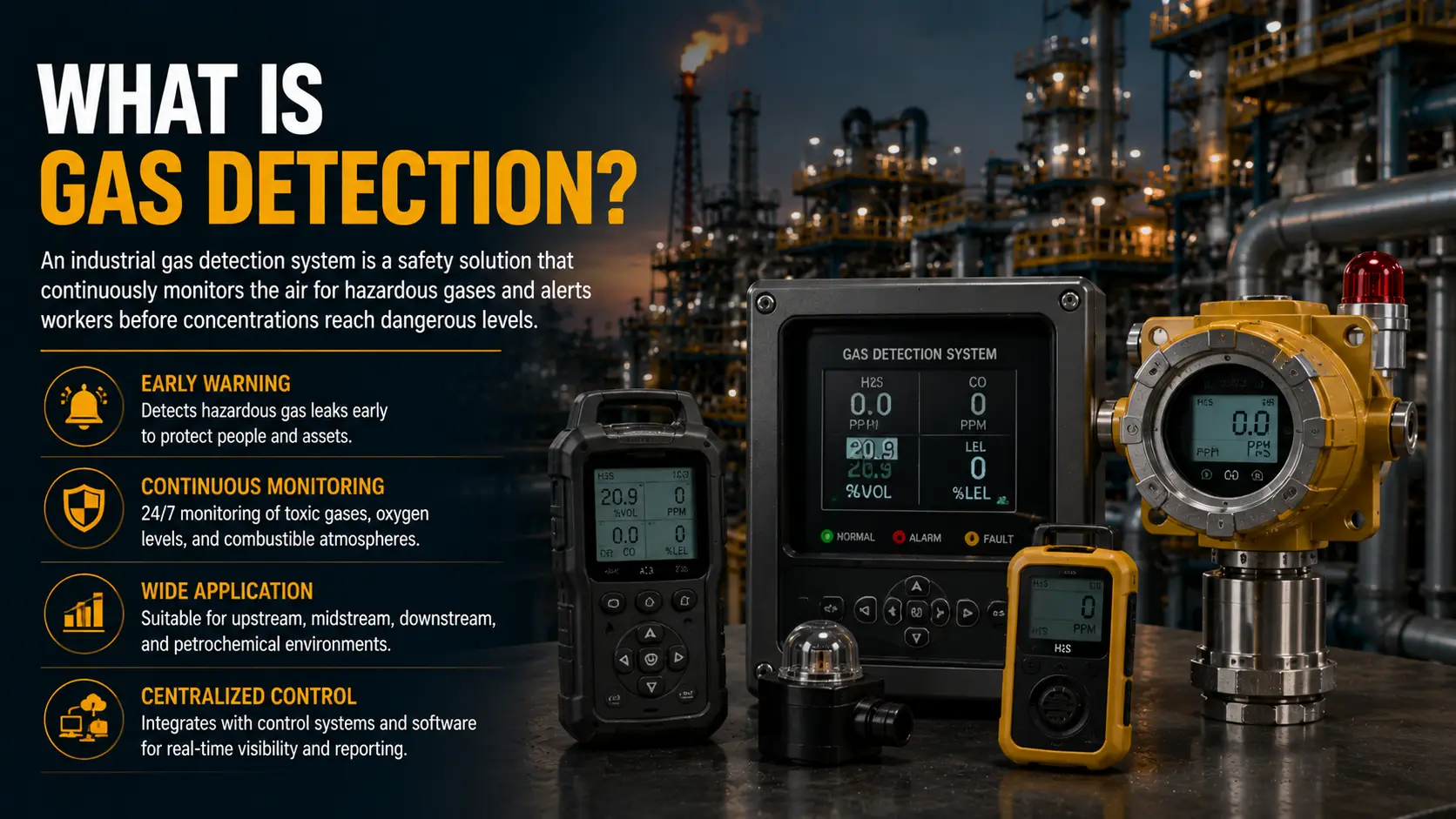
An industrial gas detection system is a safety system that is constantly monitoring the air for the presence of hazardous gases and warnings workers before they reach dangerous levels. Such systems integrate sensors, control devices, and alarms to provide early warning of toxic exposure, oxygen deficiency, and explosive atmospheres. In reality, the gas detection Malaysia oil gas programs combine fixed installations, portable instruments and central software to ensure that all areas of a facility, from the wellhead to the tank farm, are under constant surveillance with a minimum of gaps.
Why Gas Detection Is Critical in Oil & Gas Operations
The International Association of Oil & Gas Producers (IOGP Safety Performance Indicators Report, 2023) ranks Hydrocarbon releases as one of the most significant PSIs in the industry. This makes it indispensable to monitor the operations constantly from upstream to midstream and downstream. These oil gas systems that are in place for gas detection Malaysia can save operators from explosion, toxic exposure incidents, unplanned shutdowns, and ensure compliance during regulatory and insurance audits and inspections.
Does not allow combustible gases to accumulate and cause explosions or fires
Minimizes risk of toxic exposures to work crew in confined and open spaces
Enables quicker response to emergencies with early and automatic alerts
Helps facilities prevent unforeseen shutdowns and losses in production
Sends documentation required for regulatory and insurance requirements
Common Hazardous Gases in Malaysia's Oil & Gas Industry
The five types of gases which are generally monitored in facilities across Kuala Lumpur, Johor, the Pengerang Integrated Petroleum Complex, Bintulu, Miri, Kerteh, Labuan, Sarawak and Sabah include hydrogen sulfide (H2S), methane (CH4), carbon monoxide (CO), oxygen (O2) and volatile organic compounds (VOCs). They each have a unique risk profile; they each call for a unique sensing approach.
Gas | Primary Hazard | Typical Sensor Type |
Hydrogen Sulfide (H2S) | Highly toxic, even at low concentrations | Electrochemical |
Methane (CH4) | Combustible / explosive atmosphere | Catalytic bead, Infrared |
Carbon Monoxide (CO) | Toxic, odorless asphyxiant | Electrochemical |
Oxygen (O2) | Deficiency or enrichment risk | Electrochemical / Galvanic |
VOCs | Toxic exposure, flammability | Photoionization (PID) |
Hydrogen Sulfide (H2S) Detection
Hydrogen sulfide is a gas that is one of the most hazardous that may be found in upstream and midstream operations. It can be fatal at high levels in just a few minutes and is a numbing agent of the sense of smell so that workers can no longer rely on smell. An H2S gas detector (Fixed or Body Mounted) is regarded as mandatory equipment to be used on well sites, gas processing units and confined space entry operations in sour gas fields.
Methane and Hydrocarbon Gas Detection
Combustible gas hazards are likely to occur when concentrations of methane or other light hydrocarbons approach the Lower Explosive Limit (LEL). A compressor station, LNG terminal, or tank farm is normally equipped with a LEL monitor to continuously monitor the distance to the ignition point of the atmosphere, and to give an alarm long before the point of ignition.
Carbon Monoxide Monitoring
Generators, flares and heaters can generate carbon monoxide as a result of incomplete combustion. Dedicated CO sensors are utilized close to enclosed equipment rooms, workshops and near any area where combustion engines or heaters are used in enclosed, partially enclosed spaces, as the sensors are colorless and odorless.
Oxygen Deficiency and Enrichment Risks
Inert Gas displacement can result in loss of breathable oxygen in confined spaces like vessels, tanks and pits or oxygen enrichment may occur near some process lines, increasing the fire hazard. All refineries and offshore platforms in Malaysia have to have oxygen sensors as part of the confined space entry procedures.
Fixed Gas Detection Systems
A fixed gas detection system is configured and installed at locations as determined by a hazard assessment, including compressor skids, pump stations, storage tank dikes, and process units. These systems are always on, always monitoring and generally are connected to a building's emergency shutdown and alarm system. They come in two configurations: point detectors and open path detectors, the latter of which are used in large open spaces such as tank farms and jetties.
Portable Gas Detectors
Portable gas detector provides protection for individual workers during maintenance, turnarounds and confined space work where fixed gas detection instruments may not be able to reach. With multi-gas portable detectors, a single field worker can now monitor H2S, CO, O2 and combustibles all in one portable detector, providing them with continuous personal protection as they move around the site. A portable gas detector for offshore platforms is particularly useful when the platforms undergo a shutdown with temporary work crews changing in areas that may not be monitored by a fixed Gas Detector.
Types of gas detection
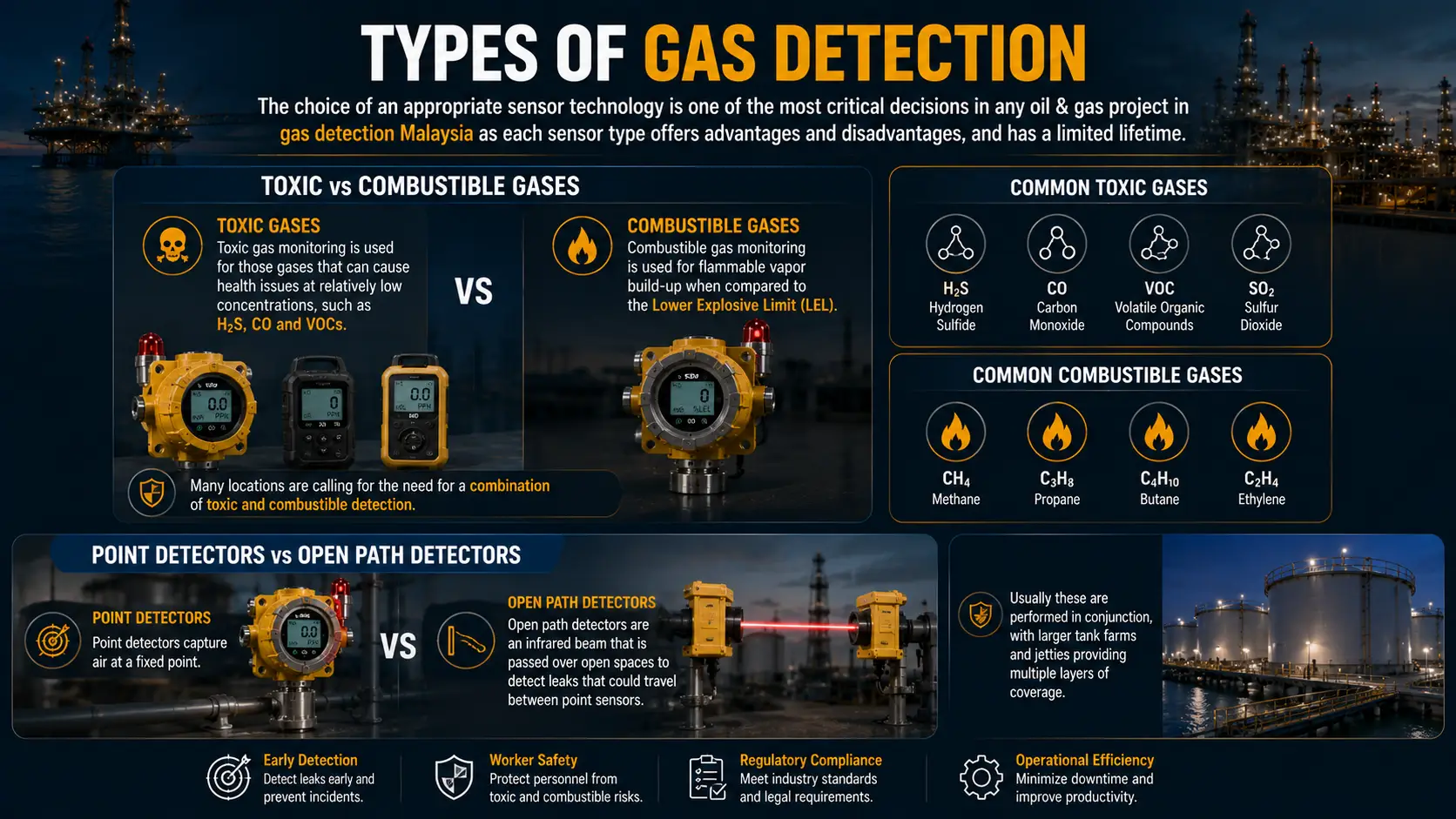
The choice of an appropriate sensor technology is one of the most critical decisions in any oil gas project in gas detection Malaysia as each sensor type offers advantages and disadvantages, and has a limited lifetime.
Toxic vs Combustible Gases
Toxic gas monitoring is used for those gases that can cause health issues at relatively low concentrations, such as H2S, CO and VOCs, and combustible gas monitoring is used for flammable vapor build-up when compared to the Lower Explosive Limit. Many locations are calling for the need for a combination of toxic and combustible detection.
Point Detectors vs Open Path Detectors
Point detectors capture air at a fixed point and open path detectors are an infrared beam that is passed over open spaces to detect leaks that could travel between point sensors. Usually these are performed in conjunction, with larger tank farms and jetties providing multiple layers of coverage.
Sensor Technology | Best Suited For | Key Consideration |
Electrochemical | Toxic gases (H2S, CO, O2) | Limited sensor lifespan, periodic replacement |
Catalytic Bead | Combustible gases / LEL | Can be poisoned by silicones, leaded compounds |
Infrared (IR) | Combustible gases, open path monitoring | Higher upfront cost, long service life |
Photoionization (PID) | VOCs, low-level toxic vapors | Sensitive to humidity and interference gases |
Regulatory Requirements in Malaysia
Compliance is a very important aspect of any oil gas program in Malaysia. Equipment selection and hazardous area classification is usually done in conjunction with recommendations from the Department of Occupational Safety and Health (DOSH) Malaysia, PETRONAS Technical Standards, NIOSH Malaysia and other International Standards (IEC, ISO, API, OSHA, IOGP and IECEx Certification System). Documentation of hazard assessment, calibration records and maintenance logs are frequently requested as part of audits and insurance reviews.
Department of Occupational Safety and Health (DOSH) Malaysia
PETRONAS Technical Standards
National Institute for Occupational Safety and Health (NIOSH Malaysia)
The International Electrotechnical Commission (IEC) and IECEx Certification System.
The American Petroleum Institute (API) and IOGP guidelines have been referenced.
To learn more about workplace risk management practices that support gas monitoring, visit our Safety Pillar page.
Offshore vs Onshore Gas Monitoring Requirements
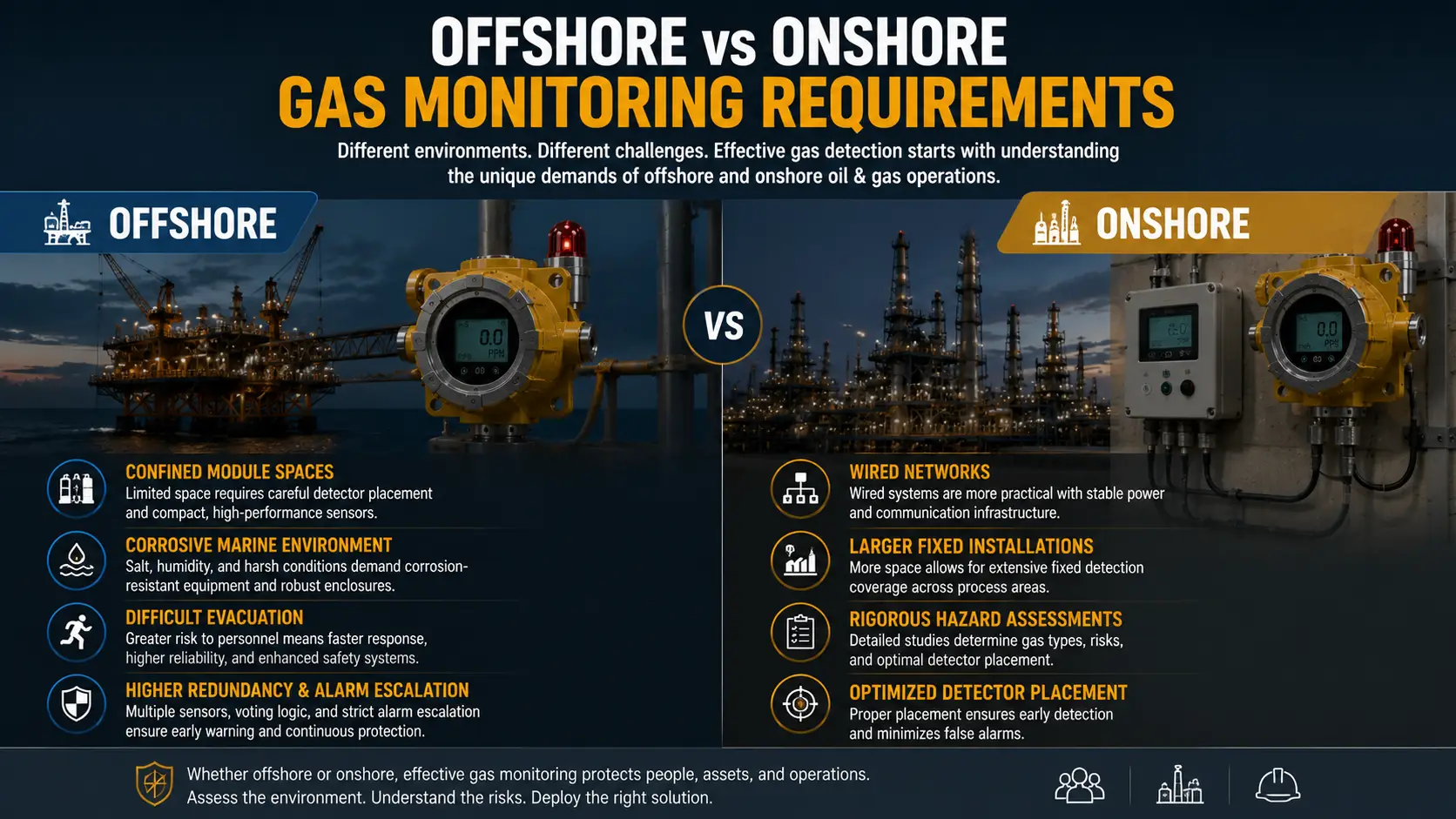
In Malaysian offshore gas monitoring on drilling platforms, there are several challenges to consider, such as limited module space, corrosive marine environments and the difficulty in evacuating the platform, which often requires more sensors to be deployed and more strict escalation of alarms. Wired networks and larger, fixed installations can be more of a staple for onshore refinery gas detection, but in both cases, thorough hazard analysis and assessment are imperative to the placement of the detector.
Gas Detector Calibration and Maintenance
Periodic calibration and frequent bump testing are usually suggested by the manufacturers and the exact interval varies based on operating conditions, sensor type, and applicable standards. A maintenance plan with documentation will help minimize risks of sensor drift and provide an important trust signal for compliance audits.
Bump Testing Requirements
Bump testing is a process of short exposure of a detector to a known concentration of gas to ensure that sensor and alarm will operate properly. A number of sites conduct daily ‘bump tests' on portable instruments, with fixed detectors undergoing a calibration program as scheduled.
How to Select a Gas Detection System
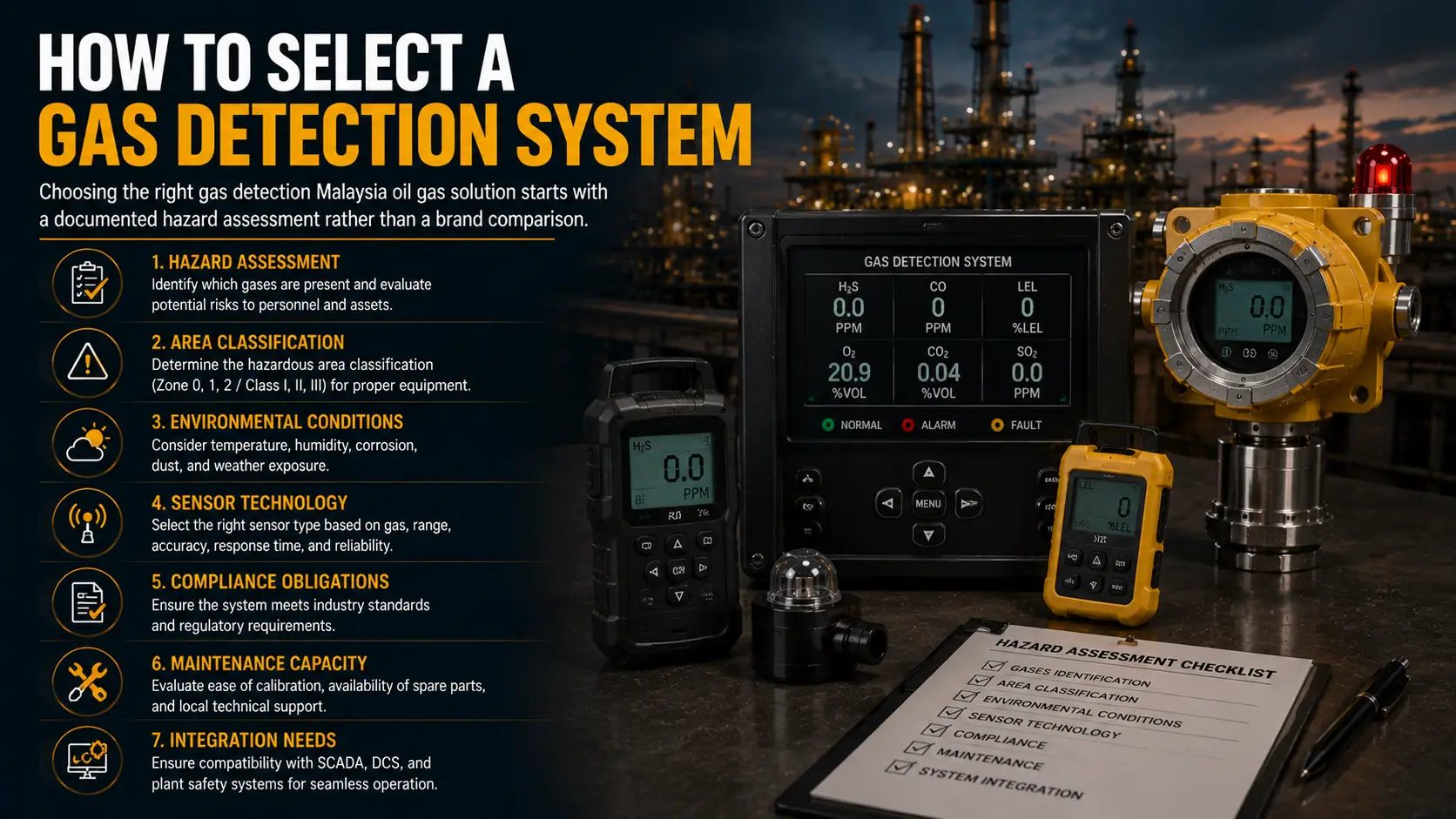
The key to a successful gas detection Malaysia oil gas solution is a documented hazard assessment, not a brand comparison. Before shortlisting equipment, assess the type of gases, hazardous area classification, environmental conditions, sensor technology required, compliance requirements, maintenance capability, and integration requirements with SCADA or DCS systems.
How to Conduct a Gas Hazard Assessment
Identify all possible Gas release points throughout the facility.
Classify hazardous areas per IEC 60079 and local guidance
Draw air flow diagrams and equipment layouts
Identify types and positioning of sensors and detectors needed
Note down for audit and reference purposes
Common Mistakes to Avoid
Placement of detector not optimal for leak sources and airflow
Failure to perform calibration intervals or bump testing intervals
The use of sensor technology which is not suitable for the target gas.
Poor hazards identification prior to purchasing
Lack of maintenance documentation for audits and inspections
Gas detectors are most effective when used in combination with other safety measures. For personal protective equipment which can be used to supplement fixed and portable monitoring equipment in hazardous areas, refer to our PPE Article.
Future Trends in Industrial Gas Monitoring
Wireless mesh networks, cloud-based safety platforms and AI-powered predictive maintenance system that alerts users to sensor drift are helping to shape the next generation of gas detection Malaysia oil gas deployment. When it comes to the integration of industrial IoT, real-time analytics dashboards and digital twin applications are also being used to model hazardous gas dispersion and any specification of connected detection network must include cybersecurity considerations.
AI driven predictive gas detection maintenance.
Wireless mesh gas monitoring networks
Cloud-based industrial safety platforms
Innovative wearable gas detection devices
The integration of ESG and process safety reporting.
Frequently Asked Questions
What gases should oil and gas facilities monitor?
Hydrogen sulfide (H2S), methane (CH4), carbon monoxide (CO), oxygen (O2), and volatile organic compounds (VOCs) are among the typical gases measured at facilities.
What is the purpose of gas detection systems?
Gas detection systems are used to continuously test air for hazardous gases and sound an alarm when unsafe levels are detected, to keep people and equipment safe.
How often should gas detectors be calibrated?
Periodic calibration is recommended by manufacturers depending on operating conditions, applicable standards and site safety procedures, and bump testing is a process that should be conducted regularly.
What is the difference between fixed and portable gas detectors?
Fixed detectors are used to monitor specific areas and portable detectors are used for inspections, maintenance and confined space entry.
Which gas detection technology is best for H2S?
The most popular application of a H2S gas detector is electrochemical sensors, which are sensitive and reliable at low concentrations of gas.
What regulations apply to gas detection in Malaysia?
Most of the references that are made by organizations are related to DOSH Malaysia, PETRONAS Technical Standards, IEC, ISO, OSHA, API and IECEx.
Can gas detectors integrate with SCADA systems?
Yes. A significant number of industrial gas monitoring system installations link to SCADA, DCS or PLC platforms for centralized monitoring and alarm management.
How do I choose the right gas detection system?
Assess hazardous gases, area classification, environmental conditions, detection technology, compliance requirements, maintenance needs and system integration.
Conclusion
The selection of the appropriate gas detection in the oil and gas industry in Malaysia is not just a one-off acquisition of a detecting device, but a continuous gas safety program founded on hazard assessment, proper sensor choice, strict calibration adherence, and compliance with regulations. The solution for an appropriate gas detection system to address a processing unit, confined space gas detector, or complete industrial gas monitoring system with SCADA begins with an understanding of the gases, environment and compliance standards at your facility. A comprehensive, efficient gas detection Malaysia oil gas strategy safeguards your employees, minimizes business risk, and ensures compliance with the regulations over time in both upstream and downstream operations.
Not yet decided on gas detection options?
Call Our Specialist for a complimentary consultation.
DISCLAIMER: Z&F Corporation is not affiliated with, authorized by, endorsed by, or acting as an official representative of any manufacturer, brand, or trademark owner referenced on this website. All product names, trademarks, brand names, logos, and manufacturer references are the property of their respective owners and are used solely for identification, reference, and compatibility purposes.