Complete Guide to Hydraulic Cylinders in the Netherlands: Suppliers, Types & Buying Guide
From construction sites and ships to agriculture and logistics, reliable hydraulic cylinders are essential for heavy machinery to lift, push and position loads. Hydraulic cylinders in the Netherlands convert pressurized fluid into controlled linear force, forming the heart of all mobile and industrial hydraulic systems. The selection of the most appropriate hydraulic cylinder suppliers in the Netherlands, based on the bore, stroke, and mounting arrangements, can have a substantial impact on overall equipment uptime, safety, and lifecycle costs.
Request a Quote — customized one-stop hydraulic cylinder sourcing consultancy and quotation according to technical requirements.
To help procurement teams and maintenance engineers in the Netherlands to understand the cylinder types, standards, applications and the practical selection checklist to use before sourcing a new project or OEM parts replacement to an industrial hydraulic cylinder supplier in the Netherlands market.
What Is a Hydraulic Cylinder?
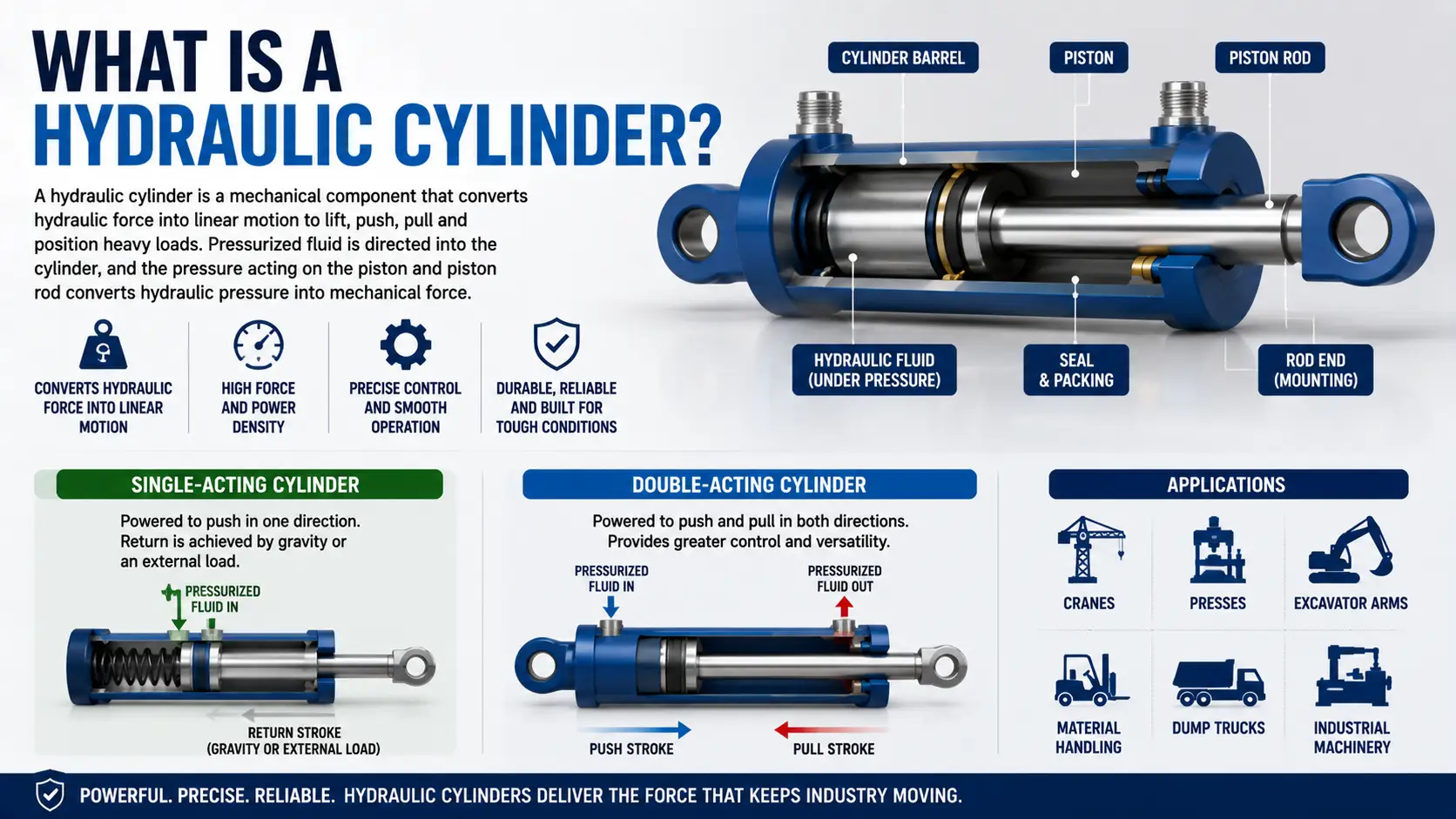
A hydraulic cylinder is a mechanical component that converts hydraulic force into linear motion to lift, push, pull and position heavy loads. Pressurized fluid is directed into the cylinder, and the pressure acting on the piston and piston rod converts hydraulic pressure into mechanical force.
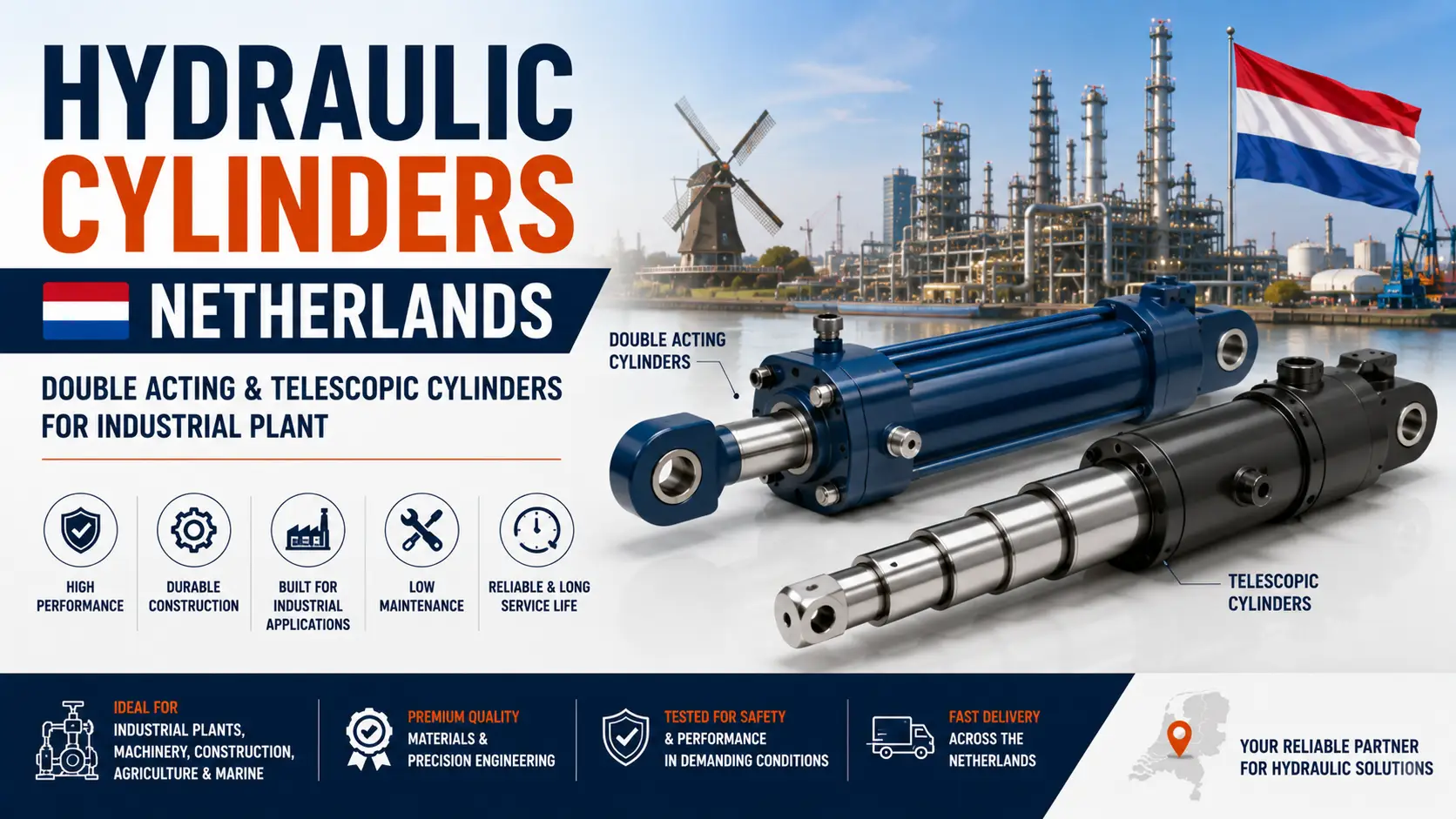
Single-acting cylinders are powered to push and only push when gravity or an external load acts on them, whilst double-acting hydraulic cylinders are powered to push and pull, providing greater control when used in cranes, presses, excavator arms etc.
Why Cylinder Type and Specification Matter
There are four basic components to consider when choosing from the various industrial hydraulic cylinders on the market: bore size, stroke length, operating pressure, and mounting style. A misconfiguration can result in low forces, seal wear out, or buckling of the rods under load.
The most frequent hydraulic cylinder body types employed in the industry of the Netherlands are contrasted in the table below.
Type | Body Construction | Typical Pressure | Common Use |
Tie Rod Cylinder | Threaded steel rods secure end caps | Up to 250 bar | Industrial machinery, manufacturing |
Welded Cylinder | Compact welded body, no tie rods | Up to 350 bar | Mobile & heavy-duty equipment |
Telescopic Cylinder | Nested stages for long stroke in short length | Up to 250 bar | Tipper trucks, dump trailers |
Double-Acting Cylinder | Powered movement in both directions | Varies by design | Cranes, excavators, presses |
Types of Hydraulic Cylinders Explained
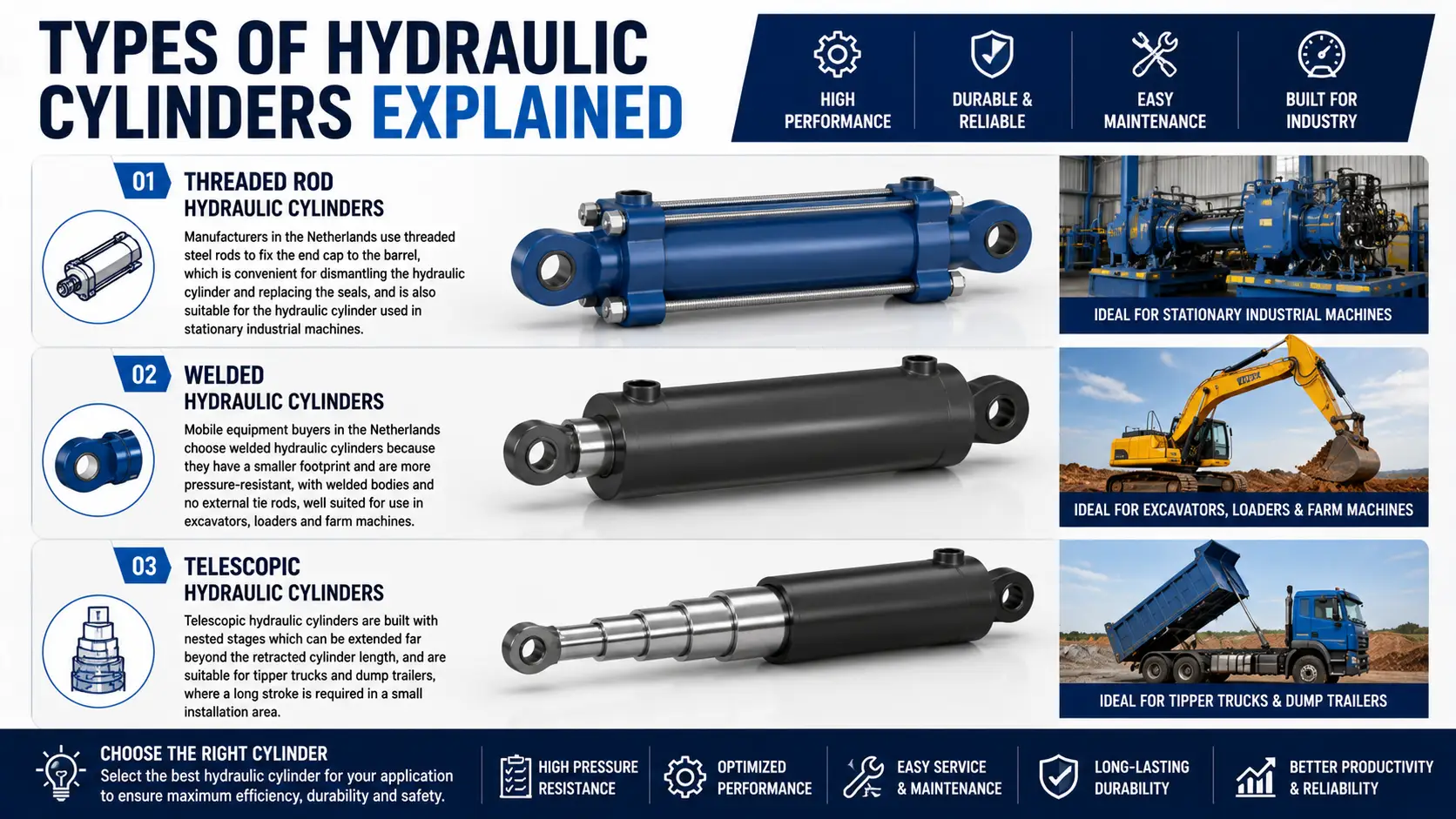
Generally, manufacturers of threaded rod hydraulic cylinders in the Netherlands use threaded steel rods to fix the end cap to the barrel, which is convenient for dismantling the hydraulic cylinder and replacing the seals, and is also suitable for the hydraulic cylinder used in stationary industrial machines.
Mobile equipment buyers in the Netherlands choose welded hydraulic cylinders because they have a smaller footprint and are more pressure-resistant, with welded bodies and no external tie rods, well suited for use in excavators, loaders and farm machines.
Telescopic hydraulic cylinders are built with nested stages which can be extended far beyond the retracted cylinder length, and are suitable for tipper trucks and dump trailers, where a long stroke is required in a small installation area.
Industries Using Hydraulic Cylinders in the Netherlands
Wherever controlled linear force is needed, hydraulic cylinders are used. Typical applications include:
Rotterdam Port uses cargo handling equipment, such as cranes and other specialized machines.
A wide variety of construction equipment and machinery are used on Dutch construction sites, including excavators and cranes.
Agricultural machines throughout the Netherlands
Write a brief essay focusing on one of the following topics:
Industrial presses, manufacturing automation lines
Waste compactors and recycling equipment
High-capacity lifting platforms at warehouses and heavy transport trailers.
Standards That Govern Hydraulic Cylinder Design
The ISO 6020 and ISO 6022 standards are internationally accepted standards for hydraulic cylinder dimensions and mounting specifications, and are used as a reference by most European engineering teams in specifying hydraulic cylinder replacement parts. Other guidance relevant to fluid power component compatibility throughout the EU exists from the Netherlands Standardization Institute (NEN) and the European Fluid Power Committee (CETOP).
The National Fluid Power Association reports that energy transmission efficiencies of greater than 80 to 90 percent can be realized by properly designed, maintained systems, demonstrating system performance's importance as affected by correct specification.
How to Choose the Right Hydraulic Cylinder
There are a few simple questions to ask before you ask for quotes:
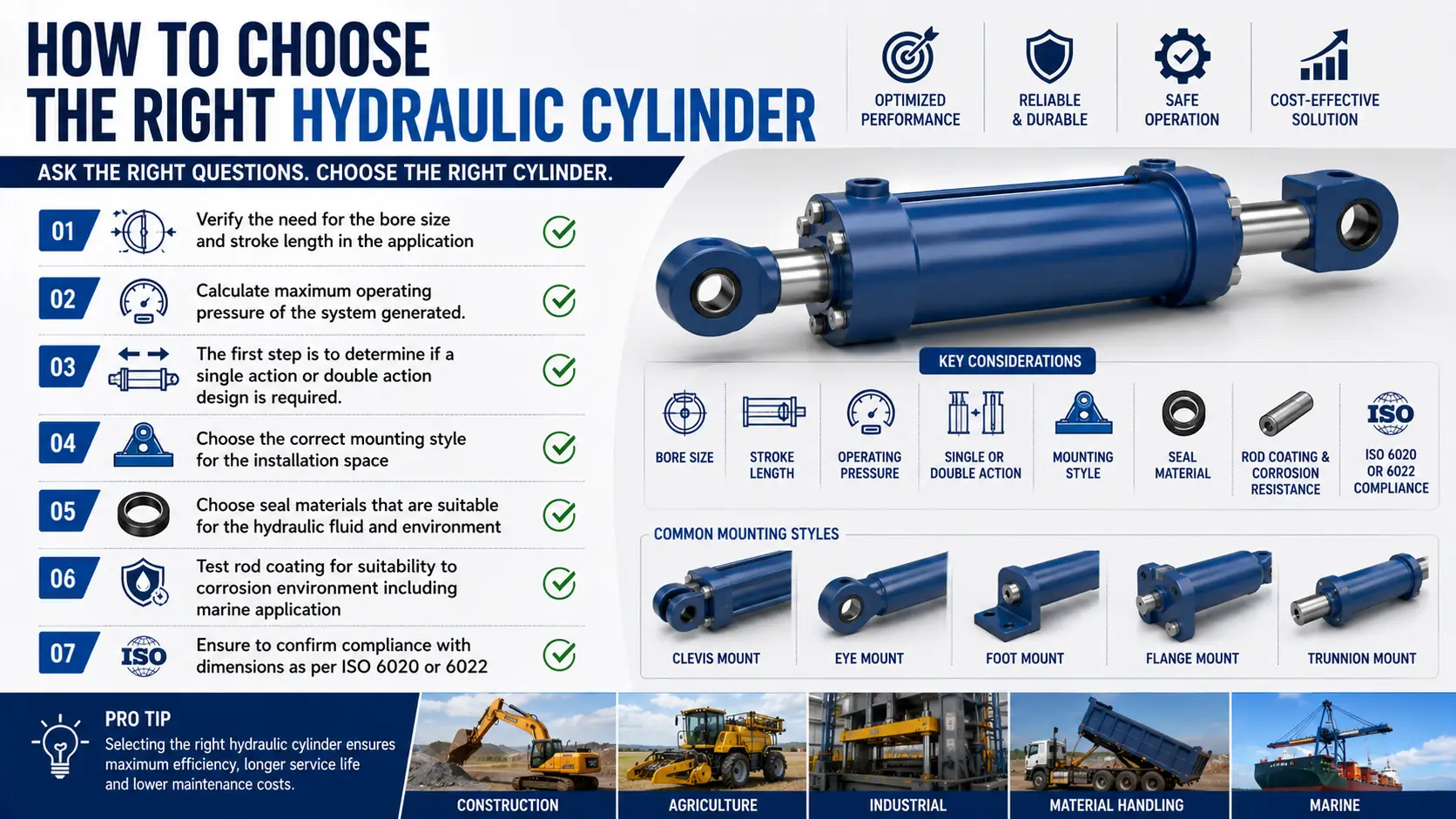
Verify the need for the bore size and stroke length in the application.
Calculate the maximum operating pressure of the system generated.
The first step is to determine if a single-action or double-action design is required.
Choose the correct mounting style for the installation space.
Choose seal materials that are suitable for the hydraulic fluid and environment.
Test rod coating for suitability to the corrosion environment, including marine application.
Ensure to confirm compliance with dimensions as per ISO 6020 or 6022.
Common Causes of Hydraulic Cylinder Failure
Fatigue of the cylinder is usually caused by a few primary causes: worn or improperly matched cylinder seals, contaminated hydraulic fluid, rod scoring or corrosion, improper installation and operating pressure in excess of the cylinder's ability. Proactive maintenance and monitoring of fluid cleanliness through routine inspections help to significantly extend service life.
Custom and Repair Options for Hydraulic Cylinders
Procurement teams looking for an expert hydraulic cylinder repair Netherlands specialist should require documentation that the seal kit is compatible with the unit, the condition of the rod surfaces and results of the pressure testing before a unit is returned to service. For older or imported machines where spare parts for the stock production bore and stroke hydraulic cylinder have ceased to be available, many custom hydraulic cylinders Netherlands manufacturers will also make non-standard bore and stroke parts for these machines.
Hydraulic cylinders are usually used in conjunction with other fluid power components, and purchasers who are researching this product also tend to be interested in the other pillar pages referenced on the Hydraulics page, such as the page on Hydraulics systems and the page on Pneumatic tools, which provide complementary functions within many industrial and mobile equipment systems.
Frequently Asked Questions
What is a hydraulic cylinder?
Simply put, an actuator that uses oil to perform linear movements to lift, push and position loads
How do hydraulic cylinders work?
A piston in the cylinder is moved by the pressurized oil. From this piston a piston extends a piston rod that does the actual work
What is the difference between welded cylinder and tie rod cylinder?
The body of welded cylinders is compact, permanently sealed, and is well suited for heavy duty mobile equipment, whereas the tie rod cylinders have removable threaded rods and are better suited for maintenance in industrial applications.
What places can I find hydraulic cylinder suppliers in Netherlands?
From Dutch suppliers of industrial hydraulic equipment and OEM representatives to hydraulic repair specialists and independent procurement service providers.
Can hydraulic cylinders be repaired?
Yes, it is possible In many cases, they can be repaired by simply replacing worn parts such as seals, piston rods, pistons and bearings without needing to replace them completely.
How much pressure will a hydraulic cylinder take?
The Standard operating range for typical industrial hydraulic cylinders is between 150 and 350 bar, but there are also special high-performance models that can withstand significantly higher pressures.
Conclusion
The first step to reliable hydraulic performance is selecting the correct cylinder type, bore, stroke and mounting arrangement for your application. If you are installing a new hydraulic power unit, or replacing a hydraulic cylinder for an existing machine, using double-acting hydraulic cylinders can significantly minimize risk of downtime and ensure maintenance costs are in your budget. A technically capable supplier is one of the easiest ways to ensure long-term equipment uptime by sourcing hydraulic cylinders nationwide throughout the Netherlands.
Consult an Engineering Specialist — Ensure that you discuss the hydraulic cylinder specification checklist with an engineering specialist before you buy.
DISCLAIMER: Z&F Corporation is not affiliated with, authorized by, endorsed by, or acting as an official representative of any manufacturer, brand, or trademark owner referenced on this website. All product names, trademarks, brand names, logos, and manufacturer references are the property of their respective owners and are used solely for identification, reference, and compatibility purposes.