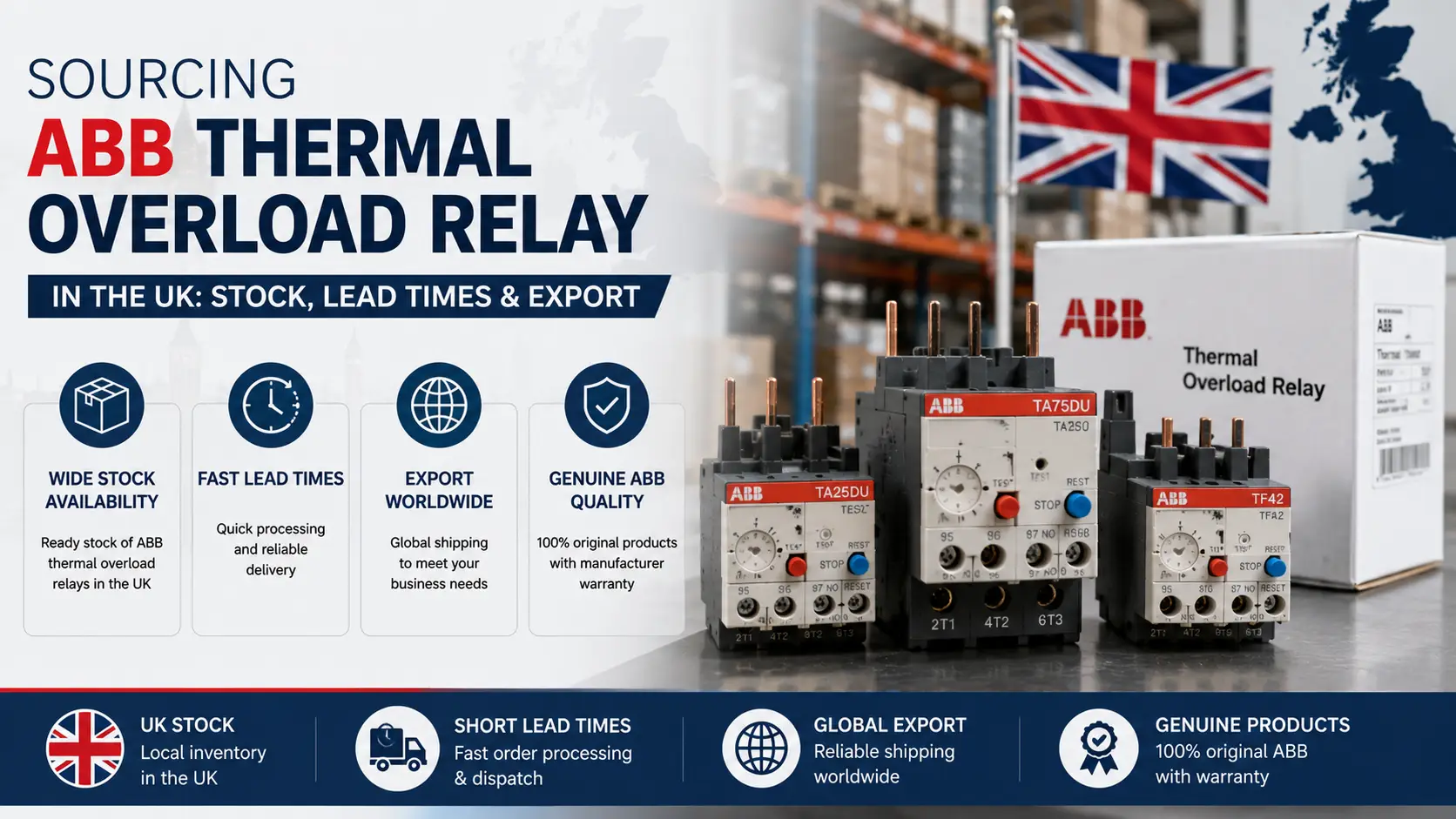
Sourcing ABB Thermal Overload Relay: Stock, Lead Times & Export
When a thermal overload relay trips on a critical motor circuit, or a planned panel upgrade calls for a specific frame size, the question isn't just "which relay?" — it's "how fast can it land, and who can actually supply it?" This guide covers what UK buyers and international procurement teams need to know about sourcing genuine ABB thermal overload relays: current UK stock positions, realistic lead times, and export considerations for multi-site or overseas projects.
Need help sourcing an ABB thermal overload relay for your site?
Stock Availability
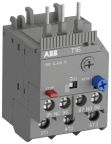
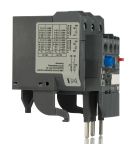
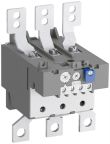
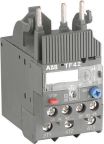
ABB's thermal overload relay range spans small frame sizes (T-series and TF42, typically 0.1A to around 32A full load current) up to larger frame relays for higher-current motor circuits. Commonly specified frame sizes and current ranges are the ones most likely to be held as stock in the UK; less common combinations, older series, and relays for obsolete contactor frames are more likely to require a short lead time or direct sourcing from ABB's wider distribution network.
Sizing a Thermal Overload Relay Correctly
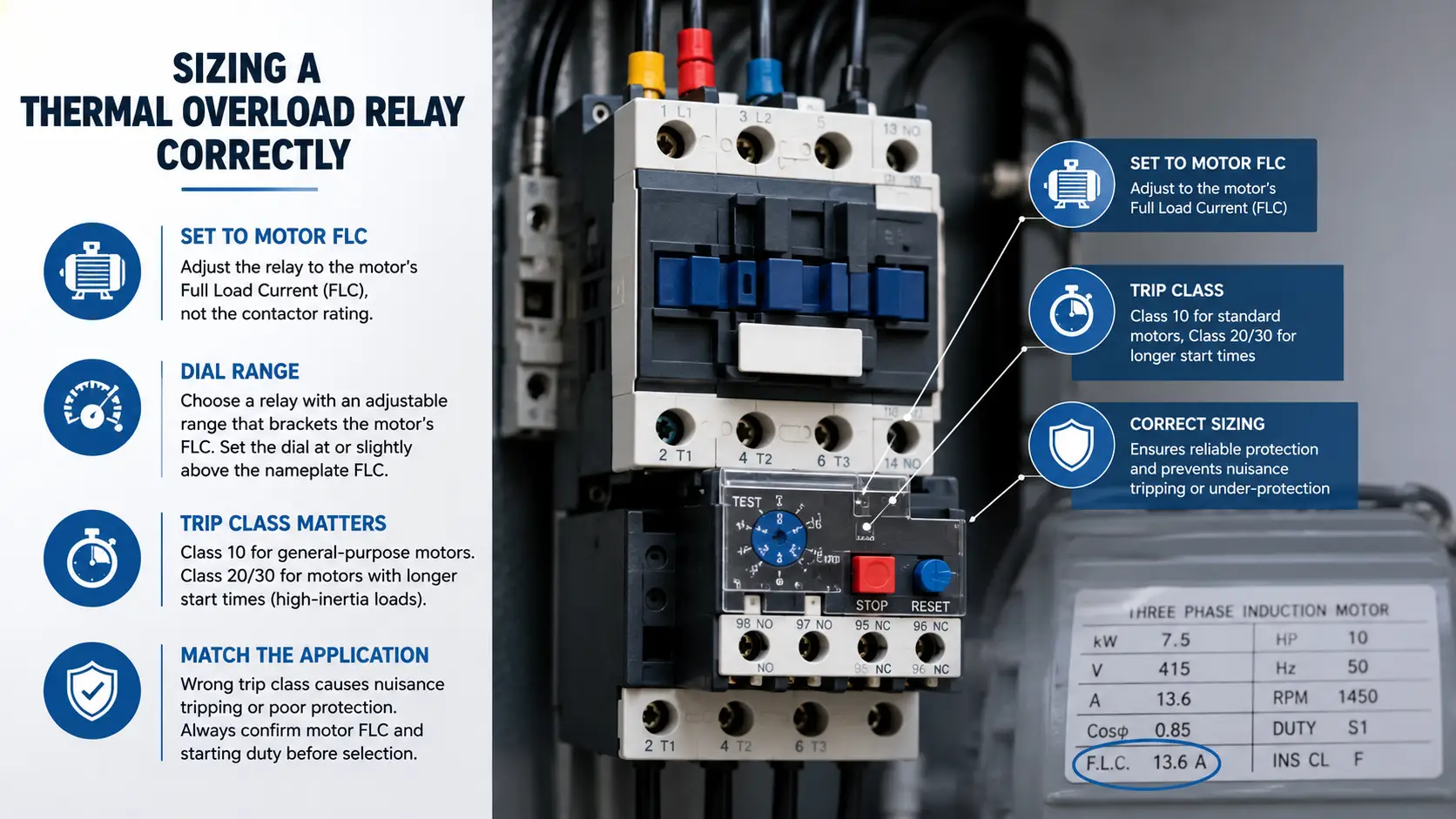
A thermal overload relay is set to the motor's full load current (FLC), not the contactor's current rating — this is the detail most often missed on a re-order. The relay's adjustable dial range needs to bracket the motor's FLC (usually with the dial set at or slightly above nameplate FLC), and the trip class — typically Class 10 for general-purpose motors or Class 20/30 for motors with longer start times, such as high-inertia fans or compressors — needs to match the motor's starting characteristics. A Class 10 relay on a long-starting motor will nuisance-trip during start-up; a Class 30 relay on a standard motor will under-protect it during a genuine stall condition. When you're sourcing a replacement or cross-referencing an obsolete part, always confirm the motor's nameplate FLC and starting duty alongside the contactor frame size — a relay that physically mounts but is calibrated to the wrong trip class is a specification error that won't show up until the motor is under real load.
Thermal Overload Relay vs Motor Protection Circuit Breaker
Buyers sometimes ask whether a motor protection circuit breaker (MPCB) can simply replace a contactor-and-overload-relay combination — the answer is that they solve the same core problem (motor overload protection) via different architectures, and the right choice depends on the panel design. A thermal overload relay is a separate device mounted directly to a contactor, giving you two components (contactor for switching, relay for protection) that can be replaced or upgraded independently. An MPCB combines short-circuit protection, overload protection and isolation in a single DIN-rail mounted device, often paired with a separate contactor for remote switching duty. MPCBs tend to suit new panel builds where footprint and simplified spares holding matter; contactor-plus-relay combinations remain the standard for retrofits and like-for-like replacements on existing panels, since replacing one component doesn't require re-engineering the whole starter. If you're specifying a new panel from scratch, it's worth pricing both approaches before committing.
Export & Shipping Considerations
EPC contractors, plant operators and distributors in the Middle East, Africa and Asia commonly source through ZF Corporation for exactly this reason — export orders need the correct commercial invoice, HS code and, where applicable, certificate of origin and conformity documentation to clear customs without delay. Confirm freight method (air for urgent single-unit orders, sea freight for bulk panel-build quantities) and Incoterms at RFQ stage so landed cost and delivery date are clear before you commit to the order.
Lead Times & MOQs
The table below reflects typical scenarios rather than a guarantee for a specific part — always confirm against the exact relay reference and destination at RFQ stage, particularly for export orders where customs documentation lead time can matter as much as freight transit time itself.
|
Scenario |
Typical Lead Time |
Notes |
|---|---|---|
|
Common frame size & current range |
Ex-stock to 2-3 working days |
Subject to stock confirmation at time of order |
|
Less common current rating |
1-2 weeks |
May require sourcing from wider ABB distribution |
|
Obsolete/superseded relay cross-reference |
1-3 weeks |
Depends on whether a direct or functional equivalent is used |
|
Export order (air freight) |
lead time + 3-7 days transit |
Subject to destination customs clearance |
|
Export order (sea freight, bulk) |
lead time + 4-8 weeks transit |
Recommended for large panel-build quantities |
|
Minimum order quantity |
No fixed MOQ for standard stock lines |
Bulk pricing available on request |
Installation, Wiring & Troubleshooting Basics
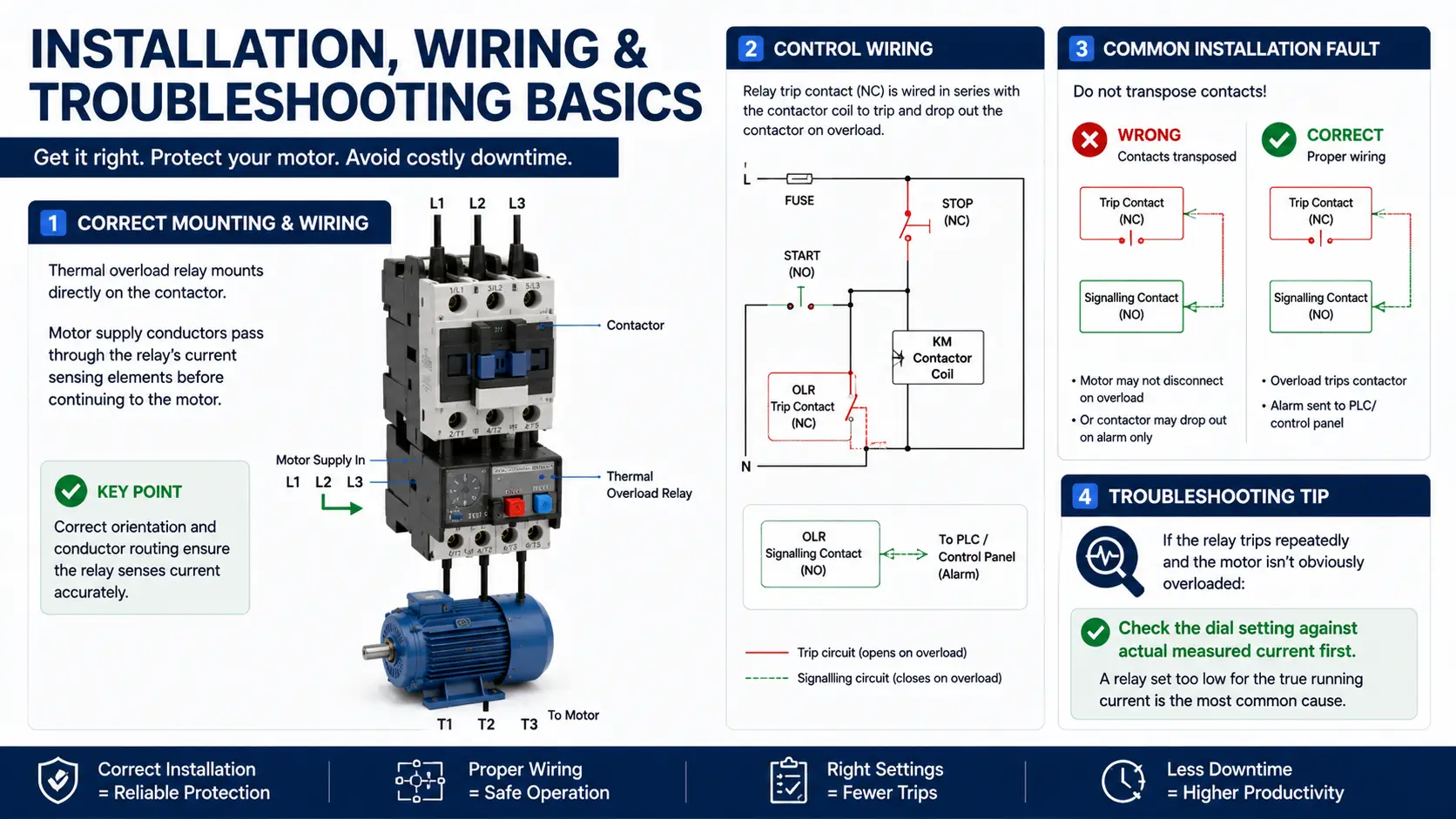
A thermal overload relay is normally mounted directly onto the base of its matching contactor, with the motor supply conductors passing through the relay's current sensing elements before continuing to the motor — get the mounting orientation and conductor routing wrong and the relay simply won't sense current correctly. The relay's own trip contact (usually a normally-closed auxiliary) wires into the contactor's control circuit so that a trip cuts the coil supply and drops the contactor out, and a separate signaling contact can feed a fault indication back to a PLC or control panel. The most common installation fault is transposing the trip contact for the signaling contact, which either prevents the relay from actually disconnecting the motor on a genuine overload or causes the contactor to drop out on a signal that should only have raised an alarm. If a relay is tripping repeatedly on a motor that isn't obviously overloaded, check the dial setting against actual measured current first — a relay set too low for the true running current is a far more common cause than a faulty relay.
Brands We Supply for Overload Protection
ABB is our core stocked range for thermal overload relays, sized to match ABB contactor frames across the T-series and TF-series. Panel builds also commonly need overcurrent protection and earth fault devices from other manufacturers on the same job, so here's what else is genuinely on the shelf:
|
Brand |
What We Stock |
Brand Page |
|---|---|---|
|
ABB |
Full T-series and TF-series thermal overload relay range across common frame sizes and current ratings |
|
|
Allen Bradley |
Matching contactors, overload relays and earth leakage/RCD protection sized to Allen-Bradley frames for mixed-brand panels |
Related Categories
|
Category |
Description |
Link |
|---|---|---|
|
Thermal Overload Relays |
Full ABB thermal overload relay range by frame size and current rating |
|
|
Contactors |
Matching contactors for thermal overload relay mounting |
Frequently Asked Questions
What is a thermal overload relay used for?
A thermal overload relay protects a motor from sustained overcurrent by monitoring current draw and tripping the associated contactor before winding damage occurs, then automatically or manually resetting once the motor has cooled.
How do I choose between ABB and Allen-Bradley thermal overload relays?
Match the relay to the contactor frame it needs to mount on — ABB relays are sized to ABB contactor frames and Allen-Bradley relays to Allen-Bradley frames — so the existing contactor on site usually decides the brand.
What standards apply to thermal overload relays (IEC 60947)?
ABB thermal overload relays are tested to IEC 60947-4-1, which defines trip class (typically Class 10 or Class 20) and current calibration accuracy.
Can ZF Corporation source obsolete or discontinued thermal overload relays?
Yes — we cross-reference discontinued ABB relay part numbers to current equivalents, which is common when an older contactor frame is still in service but the original relay is no longer manufactured.
What is the typical lead time for a thermal overload relay?
Common frame sizes and current ranges are typically available ex-stock or within a few working days; less common ratings or export orders should be confirmed at RFQ stage.
Conclusion
Sourcing the right ABB thermal overload relay comes down to matching frame size and current range to the contactor already on site, then confirming stock or lead time and, for export orders, the correct freight method and documentation up front.
Need a quote for delivery or export?
Request a Quote
DISCLAIMER: Z&F Corporation is not affiliated with, authorized by, endorsed by, or acting as an official representative of any manufacturer, brand, or trademark owner referenced on this website. All product names, trademarks, brand names, logos, and manufacturer references are the property of their respective owners and are used solely for identification, reference, and compatibility purposes.