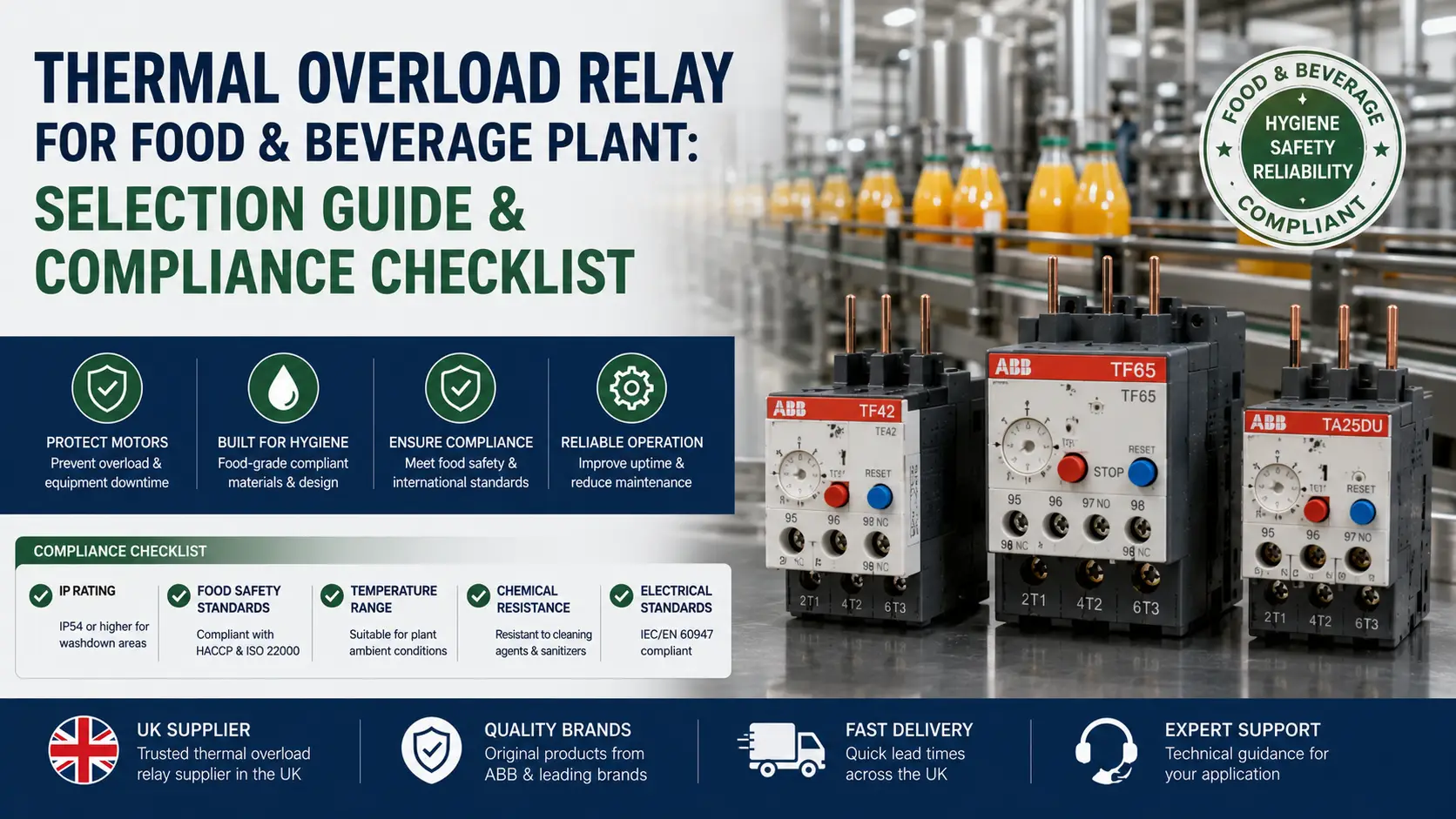
Thermal Overload Relay for Food & Beverage Plant: Selection Guide & Compliance Checklist
Food and beverage production lines put motor protection through a harder test than most industrial environments: frequent washdown, ambient temperature swings between chilled and process areas, and motors that are often started and stopped many times per shift on conveyors, mixers, and pumps. A thermal overload relay that's correctly matched to the motor and the environment is what stands between a nuisance trip that stops production and an undetected overload that burns out a motor mid-shift. This guide covers what to check when selecting a thermal overload relay for a food or beverage plant, and the compliance points an auditor or insurer is likely to ask about.
Need help specifying or sourcing thermal overload relays for a food-grade production line?
Why This Matters in Food & Beverage
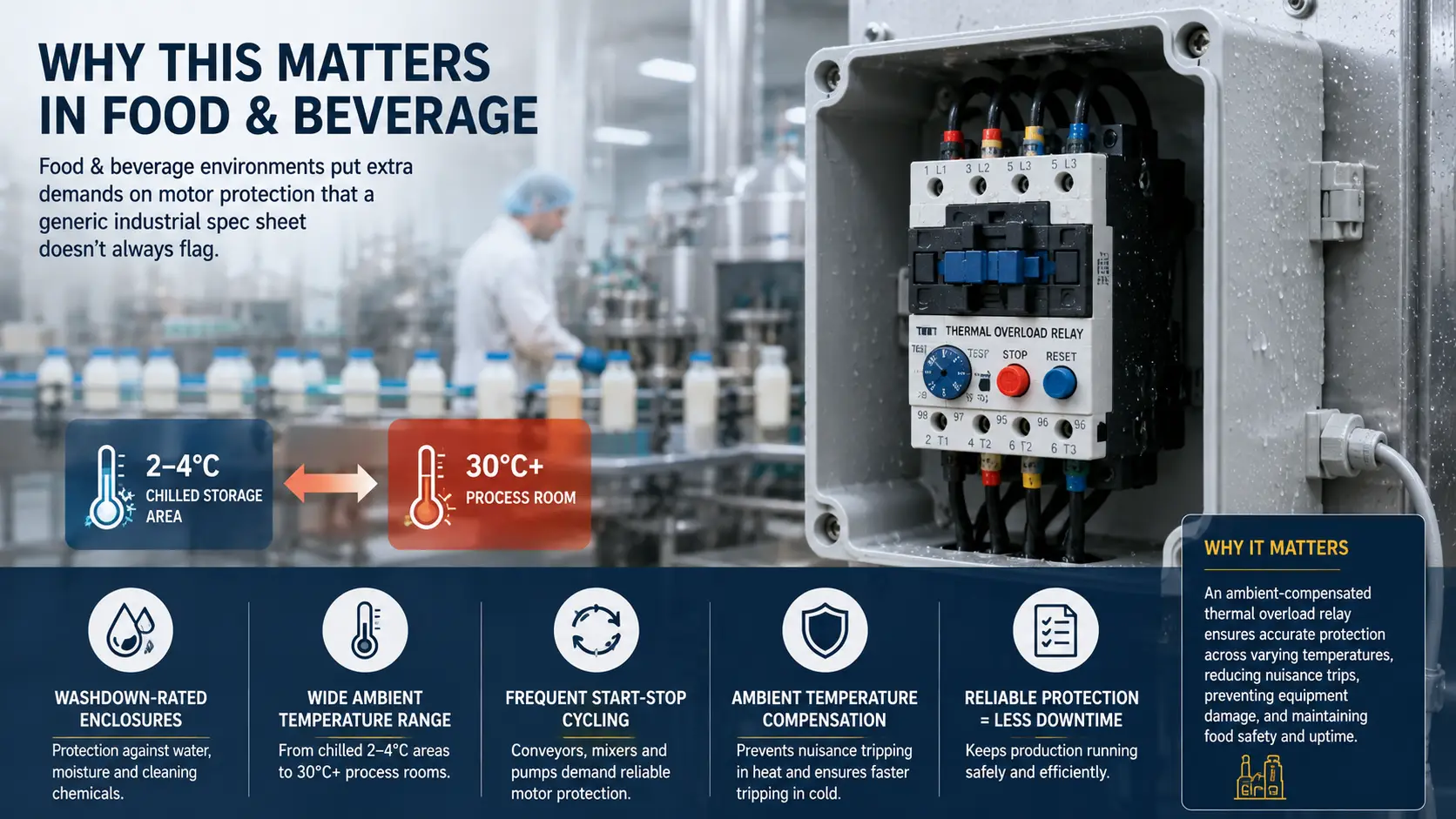
Washdown-rated enclosures, ambient temperature that can swing from a chilled 2-4°C storage area to a 30°C+ process room, and frequent start-stop cycling on conveyors and mixers all put extra demands on motor protection that a generic industrial spec sheet doesn't always flag. Ambient temperature compensation matters more here than in most sectors — a thermal overload relay that isn't ambient-compensated can nuisance-trip in a hot process area even though the motor itself is running well within its rated current, or fail to trip promptly enough in a chilled area where the bimetallic element responds more slowly.
Recommended Product Types
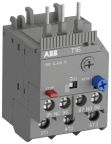
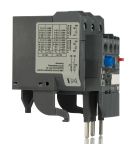
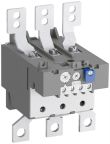
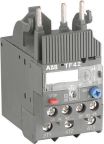
For most food and beverage motor circuits, a Class 10 or Class 20 thermal overload relay sized to the motor's full load current (F.L.C.) with a trip class matched to the load's starting characteristics is the standard choice — Class 10 for typical conveyor and pump duty, Class 20 for higher-inertia loads like large mixers that take longer to reach running speed. Where the panel itself is washdown-rated, the overload relay is normally mounted inside a sealed enclosure rather than being washdown-rated itself, so the enclosure's IP rating (commonly IP66 for direct washdown areas) does the environmental protection, and the relay is selected on electrical and thermal criteria.
Application | Typical Duty | Recommended Relay Class |
|---|---|---|
Conveyor drive motors | Frequent start/stop, moderate inertia | Class 10 |
Mixers & agitators | High starting inertia, longer run-up | Class 20 |
Wash-down pump sets | Continuous run, occasional restart | Class 10 |
Packaging line servo-assist motors | Frequent cycling, lower current | Class 10, ambient-compensated |
Chilled storage circulation fans | Continuous run, low ambient | Class 10, ambient-compensated |
Compliance Considerations
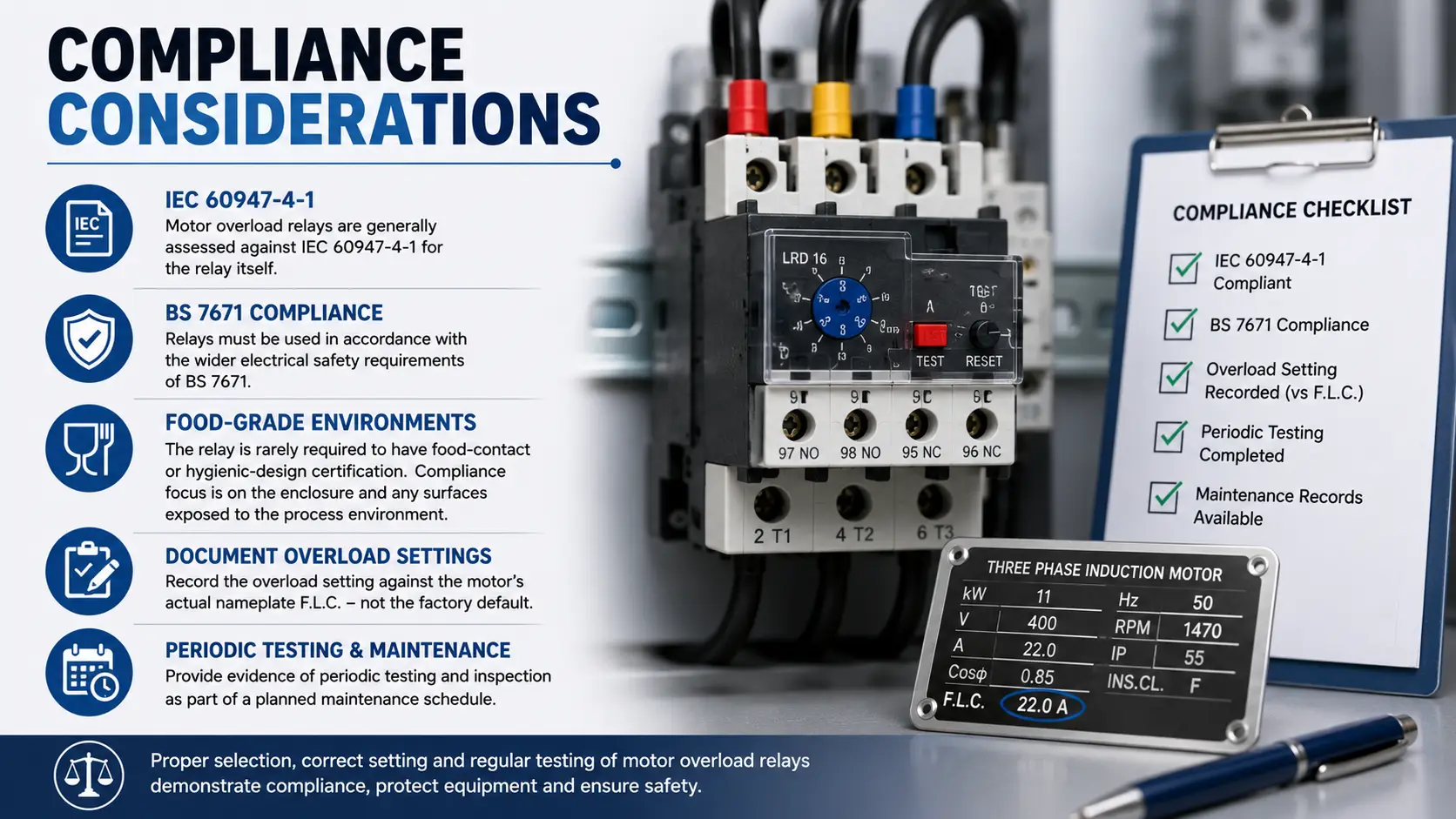
Motor overload protection in the UK is generally assessed against IEC 60947-4-1 for the relay itself, alongside the site's wider electrical safety compliance under BS 7671. For food-grade areas, the relay is rarely the item that needs food-contact or hygienic-design certification — that requirement sits with the enclosure and any surfaces the equipment presents to the process environment — but auditors will typically want to see the overload setting recorded against the motor's actual nameplate F.L.C., not left at a factory default, and evidence of periodic testing as part of a planned maintenance schedule.
Case Examples
A common pattern on UK bottling and packaging lines is nuisance tripping traced back to an overload relay set to the motor's rated current rather than its actual measured running current, which can differ meaningfully on a lightly loaded conveyor — resetting the relay to the measured current, within the motor's rated range, resolves the majority of these call-outs without any hardware change. Where trips are genuine (measured current consistently above F.L.C.), the usual root cause is a mechanical issue upstream — a seized bearing, a mistracked belt, or product build-up — rather than the overload relay itself.
Category | Typical Use Alongside Overload Relays | Link |
Thermal Overload Relays | Full current range for direct-on-line motor starters | |
Contactors | Paired with the overload relay to form a complete motor starter | |
Motor Protection Circuit Breakers | Combined short-circuit and overload protection in a single device |
Frequently Asked Questions
What is a thermal overload relay used for?
It protects a motor from sustained overcurrent by tripping the associated contactor before winding temperature rises to a damaging level, then resets once the motor has cooled.
How do I choose between ABB and Allen-Bradley thermal overload relays?
Match the frame size to your existing contactor (overload relays are typically mounted directly to a specific contactor range), then select the current range and trip class for the motor's F.L.C. and starting duty.
What standards apply to thermal overload relays (IEC 60947)?
Industrial thermal overload relays are tested to IEC 60947-4-1, which defines trip classes (10, 20, 30) and tripping time bands relative to a multiple of set current.
Can ZF Corporation source obsolete or discontinued thermal overload relays?
Yes — we regularly cross-reference discontinued ABB and Allen-Bradley overload relay part numbers to current equivalents that fit the same contactor frame.
What is the typical lead time for a thermal overload relay in the UK?
Common current ranges are typically available from stock; less common ratings may carry a short lead time — contact us with the motor's F.L.C. and existing contactor model for a quote.
Conclusion
Selecting a thermal overload relay for food and beverage duty is mostly about matching the trip class to the load's starting inertia and setting the current to the motor's actual measured draw rather than a factory default — get those two right and washdown, ambient swings and frequent cycling stop being a maintenance headache.
Need a custom MRO quote for your production line?
Get a Custom MRO Quote
DISCLAIMER: Z&F Corporation is not affiliated with, authorized by, endorsed by, or acting as an official representative of any manufacturer, brand, or trademark owner referenced on this website. All product names, trademarks, brand names, logos, and manufacturer references are the property of their respective owners and are used solely for identification, reference, and compatibility purposes.