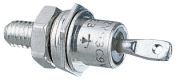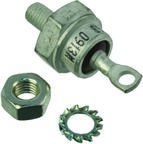
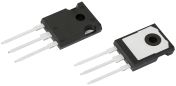
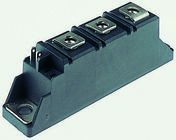
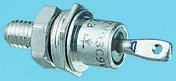
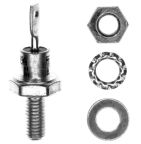
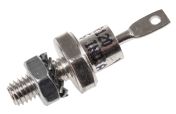
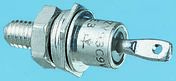
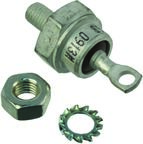
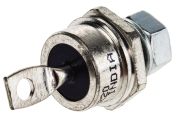
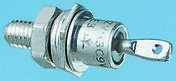
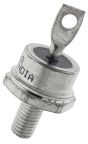
Vishay's stock here is power rectifier and switching diodes — general-purpose, fast-recovery and Schottky rectifiers, plus a smaller run of ESD-protection diodes — across TO-247, TO-3PF and DO-203 packages, spanning 200 V to 1.2 kV and current ratings from single digits up to 85 A. It's a similar product category to STMicroelectronics' diode range on this site, though Vishay's spread leans further into higher-current rectification (up to 85 A) alongside the fast-recovery and switching types both brands stock.
As with STMicroelectronics, a large share of Vishay's switching diodes here are tagged under our Isolator Switches category — again a naming artefact from "switching" in the product description rather than a functional isolator claim. If a bill of materials calls out a specific Vishay part number, search that directly rather than relying on category navigation, since the category tagging on semiconductor stock in this catalogue doesn't always match the product type cleanly.
Rectifier diode selection comes down to reverse voltage margin above your circuit's peak voltage, forward current rating with adequate derating, and recovery time class (standard, fast or ultrafast) matched to your switching frequency — getting any of the three wrong shortens the part's life even if it appears to work initially. We are not Vishay, and not an authorised Vishay distributor — we source and supply genuine Vishay stock from our own inventory.
Frequently Asked Questions
Q: What's the difference between a standard, fast-recovery and Schottky rectifier?
A: Standard rectifiers suit low-frequency mains applications; fast-recovery diodes switch off quickly enough for higher-frequency circuits; Schottky diodes have the lowest forward voltage drop and fastest switching but a lower reverse voltage ceiling — pick based on your circuit's switching frequency and voltage.
Q: Why are some Vishay diodes listed under Isolator Switches?
A: Category tagging on this catalogue sometimes follows the word "switching" in a product's description rather than its actual function — these are switching-type diodes, not isolation devices. Search by part number if you're not sure a category page has what you need.
Q: How much voltage margin should I leave above my circuit's peak voltage?
A: A common rule of thumb is at least 20% headroom above the expected peak reverse voltage, but always check your specific application's transient and surge conditions rather than relying on a fixed margin alone.