What Is MRO? Maintenance, Repair and Operations Explained
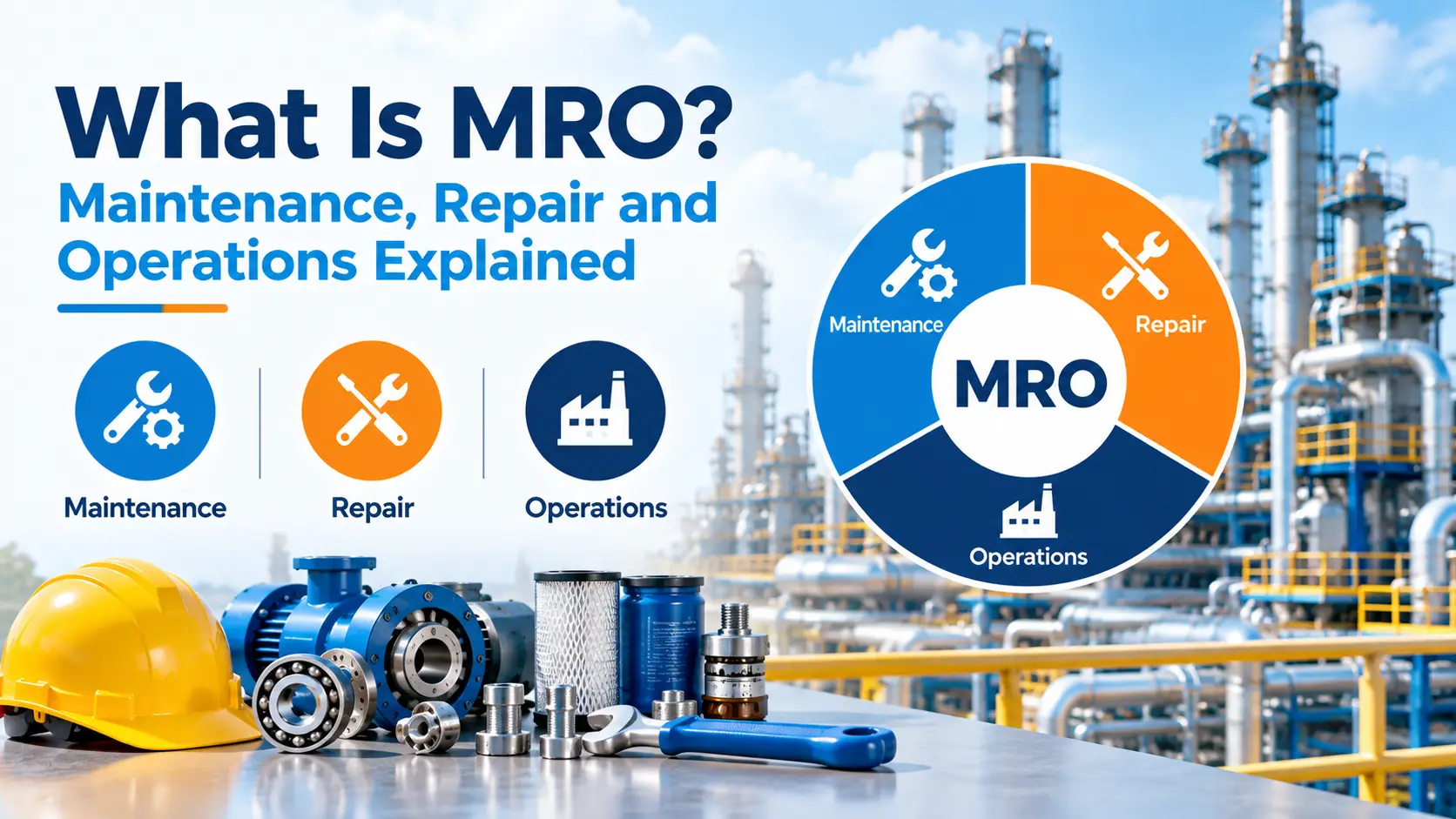
If you manage equipment, spare parts or maintenance purchasing, you may wonder what is MRO and how it supports an industrial business. MRO is a term that refers to Maintenance, Repair and Operations. It includes tools, replacement parts, consumables, equipment, and activities to maintain the operation of machinery, facilities and everyday activities without becoming a part of the completed product.
Need help sourcing MRO products or replacement parts?
Share your part numbers, specifications, quantities and required delivery schedule with our independent sourcing team.
Request a Quote
Quick answer — what is MRO? MRO includes the products, spare parts, tools, services and maintenance processes used to keep industrial assets and facilities operational. It also covers purchasing, storing, tracking and replenishing the materials needed for planned and unplanned maintenance.
What Is MRO in Manufacturing?
To understand what is MRO in manufacturing, consider everything required to keep a production line operational. Bearings, seals, valves, repair kits, lubricants, electrical components, safety products and hand tools are all common MRO supplies. They support production but do not normally become part of the product being manufactured.
Effective industrial MRO connects maintenance, engineering, warehouse and procurement teams. A technician may identify a worn component, verify its part number and request a replacement. Procurement then finds a technically compatible product, while the stockroom records its receipt, storage location and eventual use.
The Four Main Types of MRO
The following categories provide a practical way to organise Maintenance, Repair and Operations requirements.
MRO category | What it covers | Industrial examples |
|---|---|---|
Infrastructure | Buildings, utilities and facility systems | Lighting, HVAC parts, plumbing and cleaning products |
Production equipment | Machinery used in manufacturing | Motors, pumps, valves, sensors and repair kits |
Material handling | Equipment used to move or store materials | Conveyors, forklifts, lifting equipment and warehouse parts |
Tooling and consumables | Frequently used maintenance materials | Fasteners, lubricants, welding supplies, tools and PPE |
Businesses researching what are MRO supplies can start with ZF Corporation’s maintenance products category . The products required will vary according to the facility, equipment, maintenance plan and operating environment.
What Products Are Included in MRO?
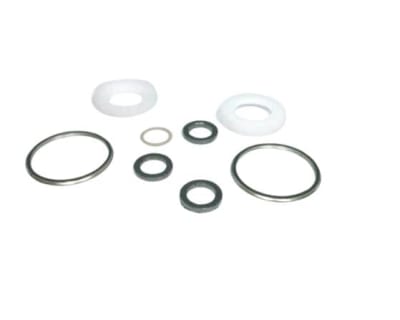
Typical MRO supplies include bearings, filters, seals, gaskets, pumps, valves, motors, electrical parts, instrumentation, lubricants, fasteners, cleaning materials and protective equipment. Repair kits are also important because they may allow maintenance teams to restore an assembly without replacing the complete unit.
Examples include the Gemco Electric J073918 repair kit , Gemco Electric J098134 repair kit and Gemco Electric AME J073921 HM cylinder repair kit . Buyers should verify compatibility, model numbers and included components before ordering.
Valve maintenance may involve a product such as the Apollo Valves 4A00503 complete repair kit . These examples are informational and do not imply an authorised or endorsed relationship with any manufacturer.
What Is MRO Inventory Management?
The parts, tools and consumables in inventory for maintenance and operational purposes are called MRO inventory. The inventory control process is using MRO involves determining what products are needed, what the adequate stock levels are, and keeping track of products to ensure they do not become available for maintenance when they are needed.
The following factors should be taken into account when developing a practical MRO spare parts inventory management program: equipment criticality, equipment failure impact, consumption history, supplier lead time and equipment replacement availability. If a failure of this rarely used component could disrupt a major production line for weeks, it is essential that the component be held in safety stock.
Useful advice: Prioritize spare parts based on operational risk, not just by use. Some long lead or legacy components can be more critical than low-cost parts that are utilized on a daily basis.
How MRO Procurement Works
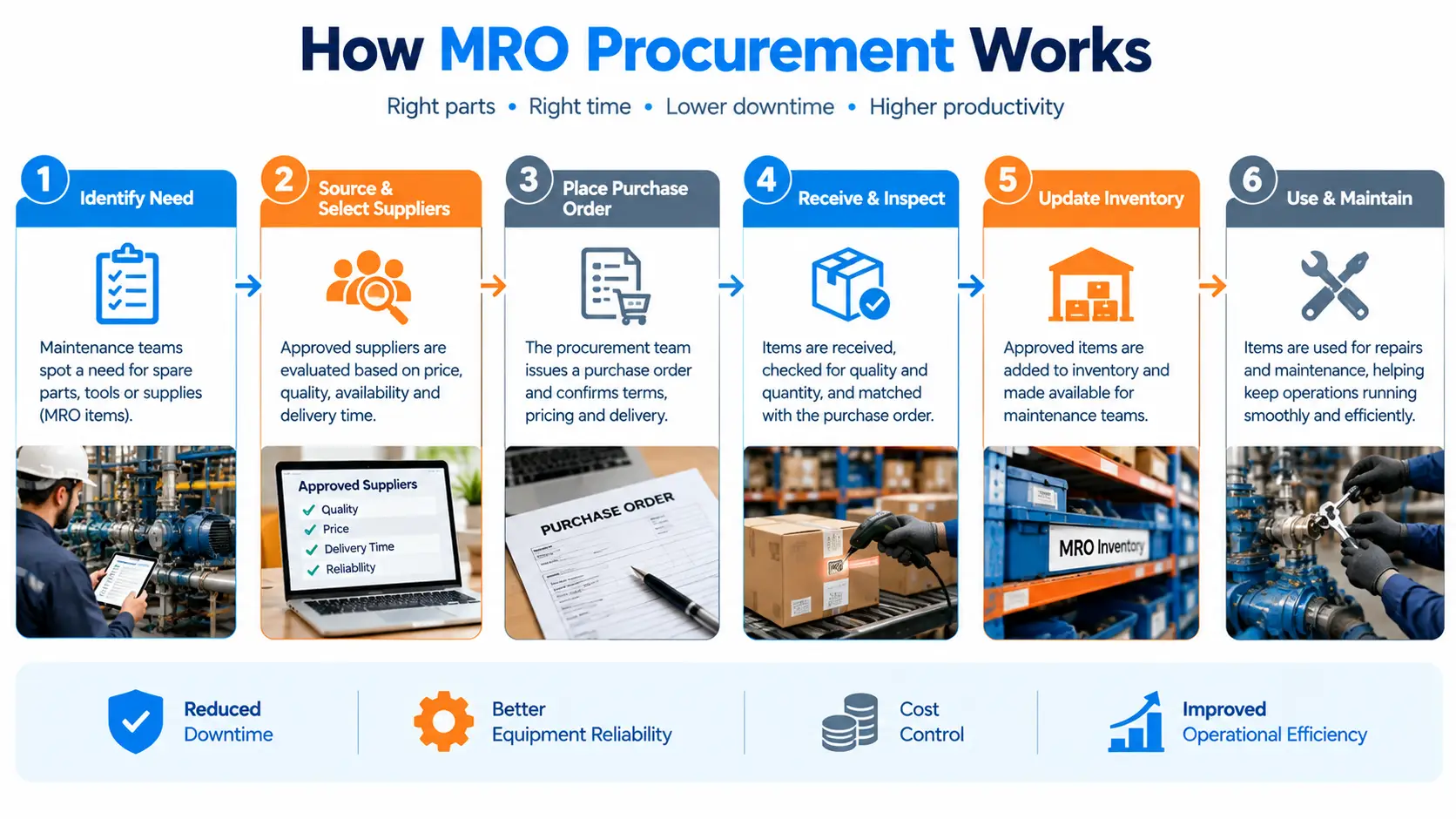
MRO procurement begins when a maintenance need is identified. The buyer confirms the manufacturer, part number, technical specification, quantity and required date. Potential products are then sourced, quotations are compared, compatibility is checked and an approved purchase order is issued.
Identify the asset and maintenance requirement.
Confirm the exact part number and technical specification.
Check available MRO inventory.
Review equipment criticality and delivery lead time.
Request technical and commercial quotations.
Check compatibility, condition, warranty and documentation.
Receive, inspect, label and record the item.
Good MRO management avoids buying only on the lowest price. Product suitability, availability, lead time, documentation and total downtime risk can be equally important.
MRO vs Direct Materials
Factor | MRO materials | Direct materials |
|---|---|---|
Purpose | Support maintenance and operations | Used to manufacture the final product |
Examples | Tools, lubricants and replacement parts | Raw materials and production components |
Demand | Often irregular or failure-driven | Usually linked to production volume |
MRO, CMMS and EAM
MRO describes maintenance activities and supporting materials. A CMMS manages work orders, maintenance schedules and asset records. An EAM system has a broader role across the complete asset lifecycle. These systems can improve MRO inventory management by linking spare parts with assets, planned work and purchasing data.
Frequently Asked Questions
What is MRO?
MRO: Maintenance, Repair and Operations – products/service activities that are used to maintain industrial machinery, facilities and operational continuity.
Why is MRO important?
Structured MRO planning helps ensure suitable parts, tools and maintenance resources are available when required, reducing stockout and downtime risk.
Does MRO mean the same thing in aviation?
Not always. In industrial supply, MRO commonly means Maintenance, Repair and Operations. In aviation, it can refer to Maintenance, Repair and Overhaul.
Final Thoughts
Once a company identifies what is MRO, they can align their maintenance planning and inventory and procurement processes more effectively. Technical specs, criticality and accurate part records can help to increase availability without unnecessary inventories.
Need MRO parts or industrial sourcing support?
Send your part number, equipment details, technical specification and required quantity to ZF Corporation.
Talk to Our Specialist
Disclaimer: This article provides general educational information. Product suitability and compatibility must be verified against current manufacturer documentation and application requirements. Brand references do not imply partnership, authorization or endorsement.