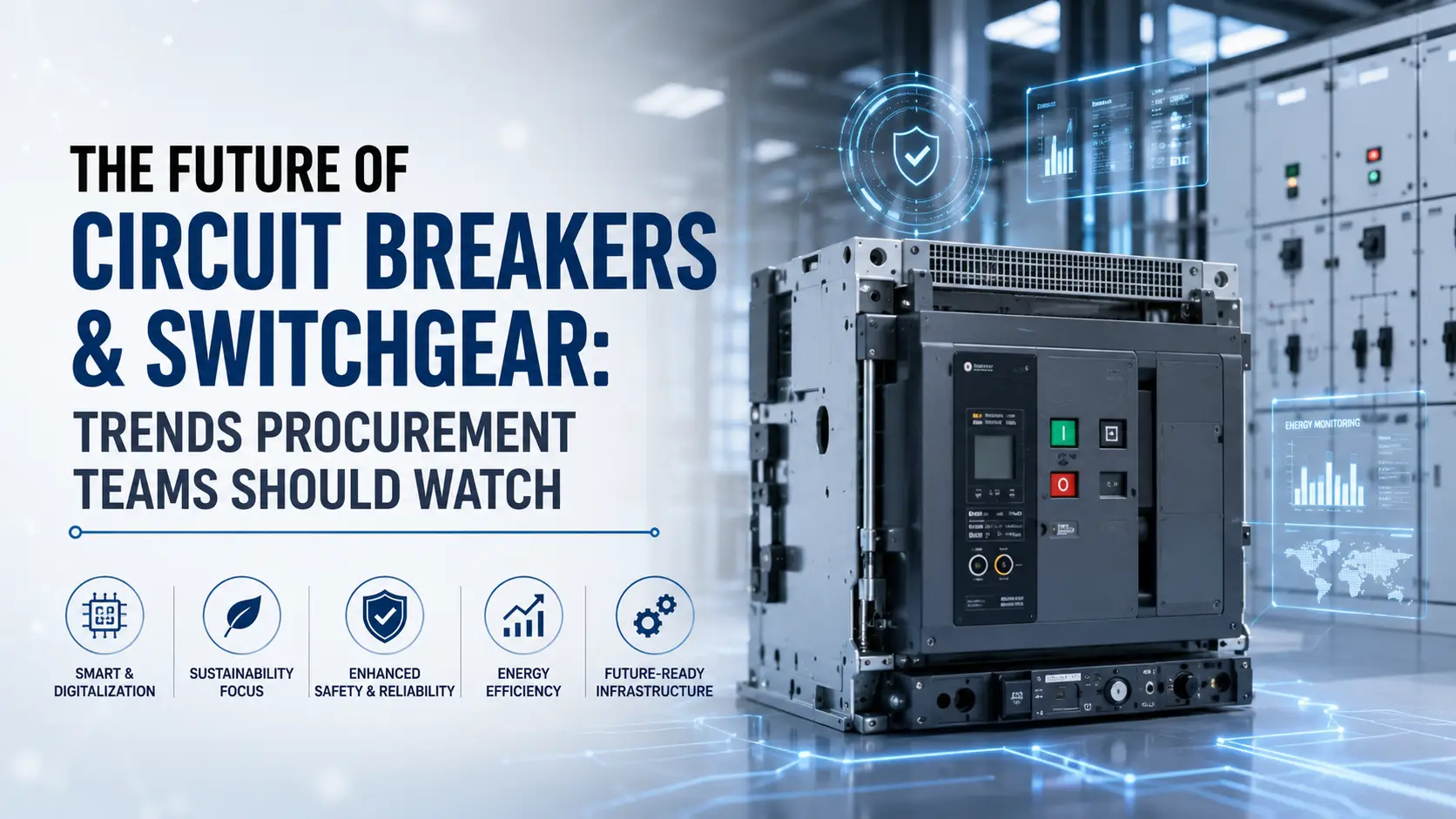
The Future of Circuit Breakers & Switchgear: Trends Procurement Teams Should Watch
Circuit breakers and switchgear are not usually where UK facilities and procurement teams expect to see rapid change — the underlying physics of interrupting a fault current hasn't shifted much in decades. But the way breakers are specified, monitored and procured is changing quickly, driven by digitalisation, sustainability targets, and a supply chain that has taught buyers to think further ahead than they used to. This article covers the trends worth watching if you're specifying or procuring air circuit breakers, MCCBs or switchgear over the next few years.
Need help specifying switchgear for a new or upgraded installation?
Current Market Trends
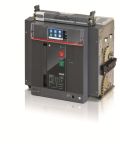
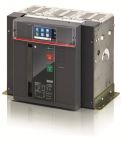
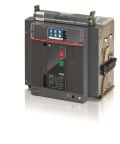
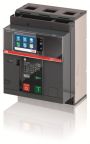
The clearest trend on UK sites right now is the shift from purely mechanical/thermal-magnetic breakers toward electronic trip units with built-in metering and communication capability, particularly at the ACB and larger MCCB end of the range. A modern electronic release doesn't just protect the circuit — it logs load current, records trip events with a timestamp and cause code, and in many cases exposes that data over Modbus or similar protocols to a building management or SCADA system. For procurement teams, this shifts part of the evaluation from "does it trip at the right current" to "what data can we get out of it, and does that integrate with what we already run."
A second trend is supply chain resilience becoming an explicit specification criterion rather than an afterthought. Since 2020-2021, many UK buyers have been burned at least once by a critical breaker being unavailable or quoted with a lead time measured in months rather than weeks. That experience has pushed procurement teams toward standardising on ranges with genuinely deep UK/European stock, and toward building cross-reference relationships with suppliers in advance of a failure rather than scrambling to find an equivalent during an outage.
Emerging Technology
Beyond communication-enabled trip units, three specific developments are worth tracking. Predictive maintenance analytics built into some manufacturers' electronic releases can flag a developing mechanical or contact issue before it causes a trip, based on trends in operating time and contact wear estimates rather than a fixed calendar interval. Remote racking and operation for withdrawable ACBs is becoming more common on sites where personnel safety during switching operations is a priority, allowing an operator to rack a breaker in or out from outside the arc-flash boundary. And sustainability-driven design changes — reduced SF6 use in higher-voltage switchgear, recyclable enclosure materials, and manufacturer environmental product declarations — are increasingly appearing as line items in tender specifications, particularly for public sector and larger corporate procurement.
Period | Dominant Trend | Procurement Implication |
|---|---|---|
Recent past (pre-2020) | Thermal-magnetic/basic electronic trip units, price-led sourcing | Selection driven mainly by rating and unit cost |
Current | Communication-enabled electronic releases, supply resilience focus | Selection driven by data integration and verified stock depth |
Emerging | Predictive maintenance analytics, remote operation, sustainability metrics | Specification increasingly includes lifecycle and data criteria alongside rating |
Sustainability and Energy Efficiency in Switchgear Specification
Energy efficiency and sustainability credentials have moved from a "nice to have" line in a tender document to a genuine evaluation criterion on a growing share of UK switchgear projects, particularly where the end client has published net-zero or carbon-reduction commitments. For circuit breakers and switchgear specifically, this shows up in a few concrete ways: manufacturers publishing Environmental Product Declarations (EPDs) covering the embodied carbon of a breaker or panel, a continued move away from SF6 gas insulation in medium-voltage switchgear toward air- or vacuum-insulated alternatives, and enclosure and packaging materials specified with recyclability in mind rather than purely on cost.
There's also a quieter, more operational side to this trend. Electronic trip units with accurate metering built in make it far easier for a facilities or energy manager to identify where load is higher than expected, where power factor correction might reduce losses, or where a distribution board is running well under-utilised and could potentially be consolidated. None of this replaces a proper energy audit, but breaker-level metering data that used to require a separate power monitoring system is increasingly available as standard on modern electronic releases, at no extra hardware cost beyond the breaker itself. For a procurement team building a specification today, it's worth asking whether the metering data already available at the breaker can feed directly into a site's existing energy management or BMS platform, rather than commissioning a parallel monitoring system to capture the same information.
Standards Are Evolving Alongside the Technology
It's worth noting that the underlying standards framework is moving to keep pace with these trends, not just manufacturer product ranges. IEC 61439, covering low-voltage switchgear and controlgear assemblies, has been updated in recent editions to reflect verification requirements that increasingly assume some level of digital monitoring and design software use during panel build, rather than purely manual calculation. Arc-flash safety guidance, referenced in the UK primarily through BS EN 60947-2 test data and site-level risk assessment under the Electricity at Work Regulations, is also an area where remote racking and electronic protection settings are increasingly cited as mitigation measures rather than optional extras. For a procurement team, the practical takeaway is to check that any new switchgear specification references the current edition of the relevant standard, since compliance verified against an older edition can create a gap during a future inspection or insurance review, even where the physical equipment itself hasn't changed.
What It Means for Procurement
None of this changes the fundamental job of a circuit breaker — protecting people and equipment from overcurrent and short-circuit faults — so the core specification discipline (rating, breaking capacity, discrimination study, relevant standard) still comes first. What it does change is the secondary criteria worth building into an RFQ: does the electronic release's communication protocol match what your BMS or SCADA already speaks, can the supplier demonstrate UK stock depth for the specific frame and rating you need, and does the manufacturer publish a clear end-of-life and spares policy for the range you're standardising on. Building these questions into supplier evaluation now avoids having to retrofit them into a switchboard specification later, when the installed base is already locked in.
Breaking this down into the three areas that matter most for a procurement team building a switchgear specification or supplier panel today:
Obsolescence risk — electronic trip units and communication modules have shorter product lifecycles than the mechanical breaker frames they're fitted to, which means a board specified today may need a trip unit refresh well before the breaker itself is due for replacement. Ask suppliers directly what their obsolescence and end-of-support policy looks like for the electronic components, not just the mechanical frame.
Stock strategy — as breakers increasingly carry configurable electronic releases rather than fixed mechanical settings, it's worth confirming whether a supplier holds genuinely deep stock of the specific frame and release combination you use, or only the base mechanical frame with the electronics built to order. The latter can turn a "24-hour" quoted lead time into several weeks once the actual configuration is accounted for.
Supplier relationships — a UK MRO supplier that already knows your installed base, your standard frame sizes, and your preferred trip unit configuration can turn an emergency replacement into a same-day or next-day job. Building that relationship before a fault occurs — rather than searching for a supplier for the first time during an outage — is consistently the single biggest factor in how quickly a site recovers from an unplanned switchgear failure.
Sites managing a multi-building or multi-site estate get an additional benefit from standardising on a small number of breaker ranges and trip unit types across locations: it simplifies spares holding, means engineers moving between sites already know the equipment, and gives real negotiating leverage with a supplier over stock commitments and lead times, since the volume is consolidated rather than spread across many small, site-specific specifications.
Related Category | Why It Matters | Link |
|---|---|---|
Molded Case Circuit Breakers | Electronic and thermal-magnetic MCCBs across the ABB SACE Tmax range | |
Motor Protection Circuit Breakers | MPCBs for motor starting and protection duty | |
Switch Disconnectors | Manual isolation devices to pair with modern switchgear |
Frequently Asked Questions
What is an air circuit breaker (ACB) used for?
An ACB protects higher-current sections of a distribution system, typically at main incomers and large distribution boards, using air as the arc-quenching medium and usually offering adjustable electronic protection settings.
How do I choose between ABB and Allen-Bradley ACBs?
Both are established across UK commercial and industrial installations; the decision often depends on what protocol your monitoring system needs to speak, what's already standardised on site, and current UK stock availability.
What standards apply to air circuit breakers (IEC 60898)?
ACBs are typically tested to IEC 60947-2 as a rule, rather than IEC 60898 which covers smaller MCBs — always check the specific standard referenced on the breaker's datasheet against your specification.
Can ZF Corporation source obsolete or discontinued air circuit breakers?
Yes — we regularly cross-reference discontinued ACB frames and trip units to current equivalents for switchboard upgrades and panel repairs where the original unit is no longer manufactured.
What is the typical lead time for an air circuit breaker in the UK?
Standard frame sizes and common trip unit configurations are often available from shorter lead times than bespoke configurations — contact us with the exact specification for an accurate quote.
Conclusion
The breakers themselves are still doing the same fundamental job they always have, but the criteria around them — data connectivity, supply resilience, sustainability credentials — are increasingly part of the specification conversation rather than a nice-to-have. Procurement teams that build these questions into their evaluation now will be better placed as switchgear ranges continue to evolve, rather than discovering gaps in a critical installation years down the line.
Want to talk through how these trends affect your next switchgear specification?
Talk to Our Expert Team
DISCLAIMER: Z&F Corporation is not affiliated with, authorized by, endorsed by, or acting as an official representative of any manufacturer, brand, or trademark owner referenced on this website. All product names, trademarks, brand names, logos, and manufacturer references are the property of their respective owners and are used solely for identification, reference, and compatibility purposes.