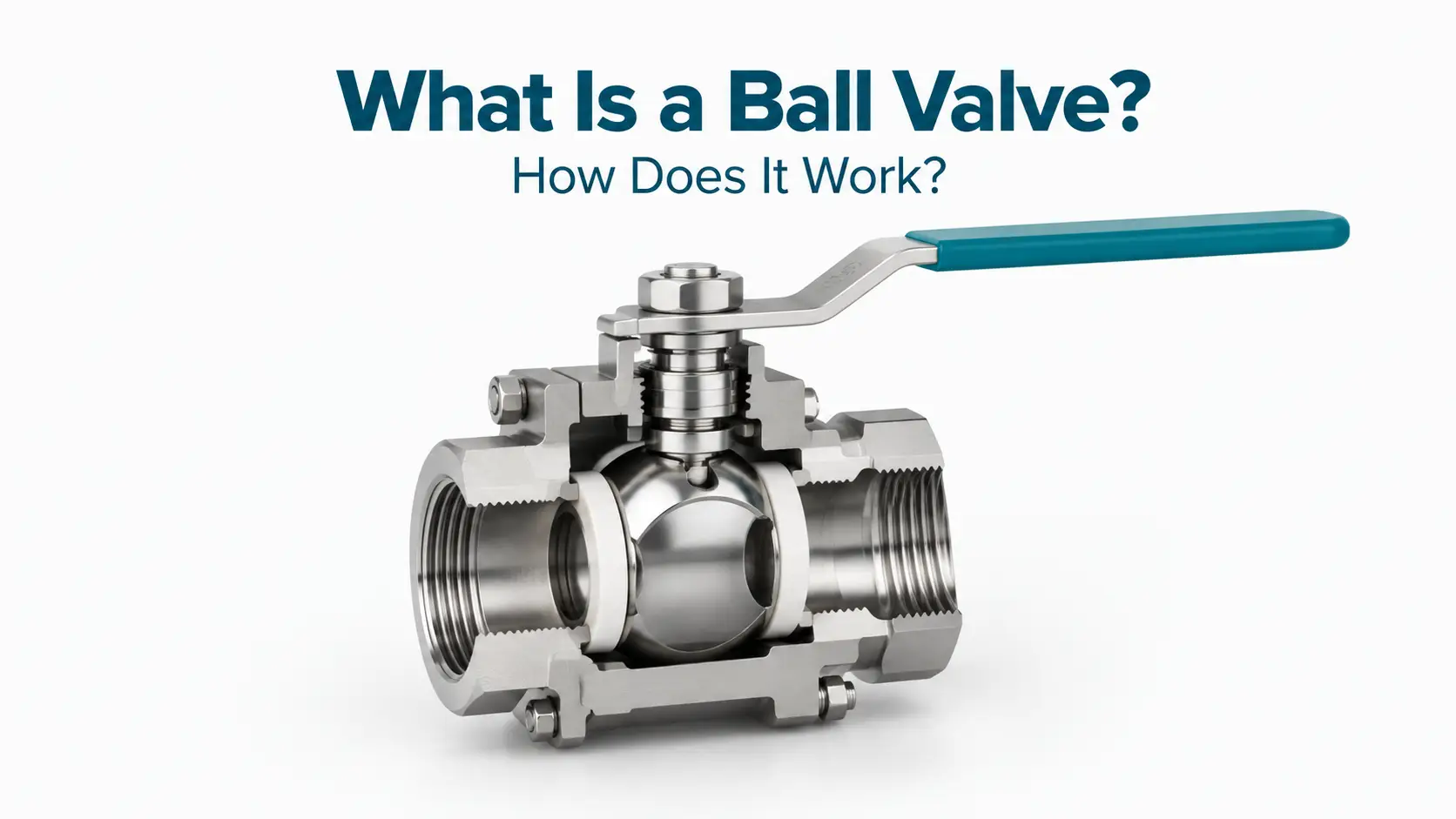
What Is a Ball Valve and How Does It Work?
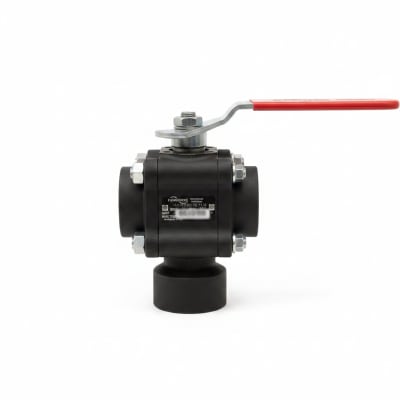
A Ball Valve is a quarter-turn rotary valve that controls liquid or gas flow with a drilled spherical ball. When the hole through the ball aligns with the pipeline, fluid can pass through. Turning the handle or actuator by approximately 90 degrees moves the solid side of the ball across the passage and shuts off the flow.
Need help sourcing an industrial valve?
Send your required size, pressure, temperature, material, connection, seat and operating specifications to our independent sourcing team.
Request a Quote
Quick answer: A ball valve is a valve used to turn a liquid on or off by rotating a ball. The valve opens when the central part of the valve bore runs in the direction of pipe flow, and it closes when the bore runs perpendicular to the pipe flow. This mechanism provides rapid isolation for suitable liquid and gas services.
How Does a Ball Valve Work?
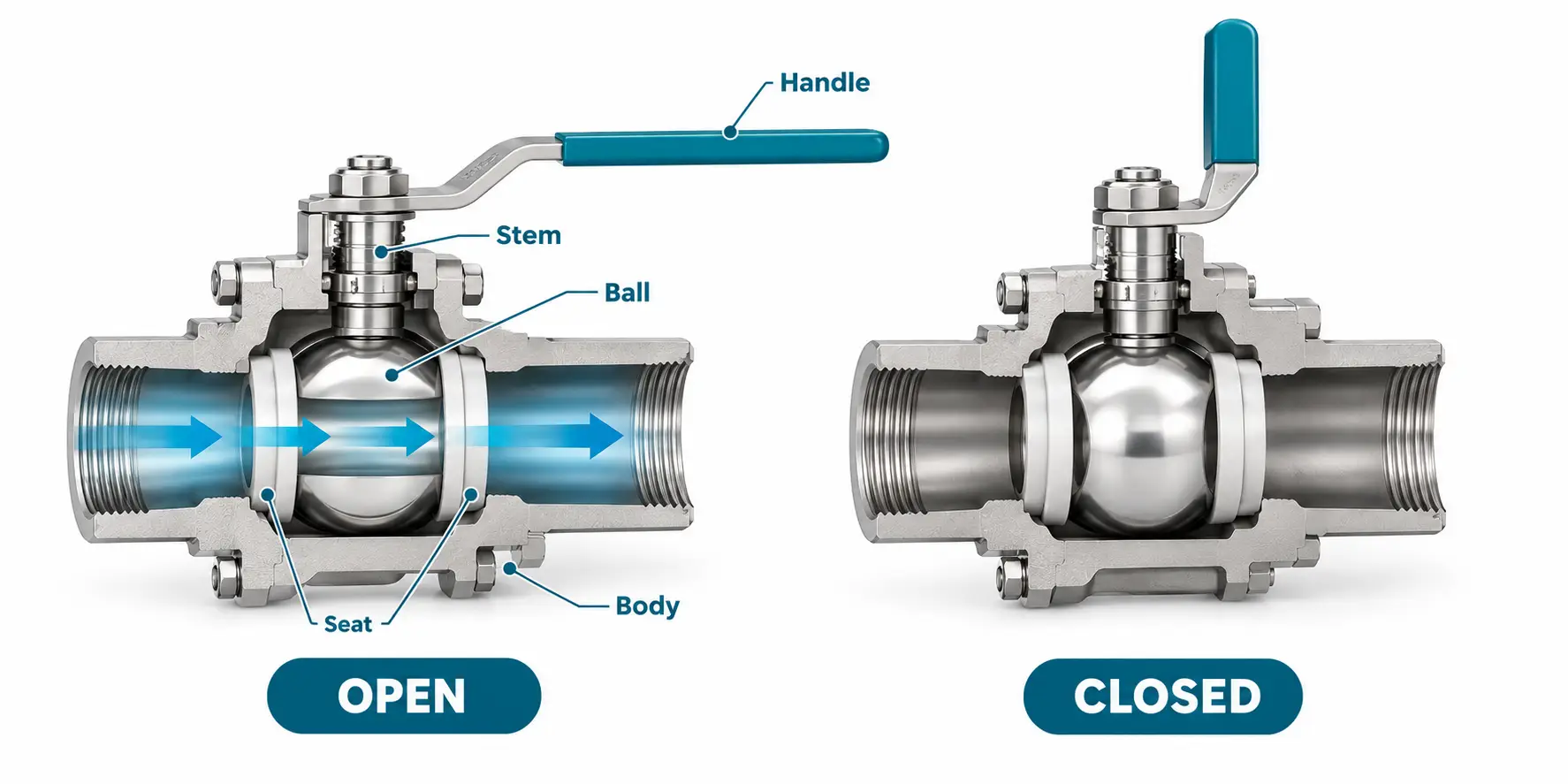
The handle connects to the ball through a stem. As the handle rotates, the stem turns the ball between sealing seats. With the bore aligned to the inlet and outlet, the valve is open. A 90 degree turn to prevent the flow. A handle parallel to the pipe means the valve is Open, a perpendicular handle means the valve is closed.
This simple ball valve working principle makes the design useful where fast shut-off is required. Standard designs are generally selected for isolation rather than continuous precision throttling because partially open operation may concentrate velocity and wear around the ball and seats.
Main Parts and Construction
The main components are the body, spherical closure, stem, seats, seals, packing and operating handle or actuator. The body contains the process pressure, while seats create a seal around the closure. Stem packing helps prevent leakage around the operating shaft.
Buyers researching an industrial ball valve can review ZF Corporation’s ball valve category . Final suitability should be confirmed from the exact model configuration, current datasheet and project specification.
Common Ball Valve Types
|
Design |
How it differs |
Selection consideration |
|---|---|---|
|
Floating ball |
The ball can move slightly towards the downstream seat. |
Common in many small and medium-size services |
|
Trunnion mounted |
The ball is mechanically supported by a fixed mounting. |
Often considered for larger sizes or demanding pressures |
|
Full bore |
The flow passage closely matches the connected pipe bore. |
Reduced restriction and possible pigging requirements |
|
Reduced bore |
The internal passage is smaller than the connected pipe. |
Greater restriction but potentially smaller construction |
|
Three piece |
The central body can be removed from connected end pieces. |
Can simplify certain maintenance activities |
When comparing different types of ball valves explained in product catalogues, also check whether the design uses soft or metal seats. Soft-seated valves can provide effective shut-off in compatible services. Metal-seated designs may be considered for abrasive or higher-temperature duties, subject to their model-specific limitations.
Full Bore vs Reduced Bore
A full-bore design provides an opening close to the pipeline’s internal diameter, which can reduce flow restriction. A reduced-bore design has a smaller opening and may create more pressure loss. The correct full bore vs reduced bore ball valve decision depends on flow capacity, pressure loss, cleaning, pigging, weight and cost requirements.
Materials, Seats and Connections
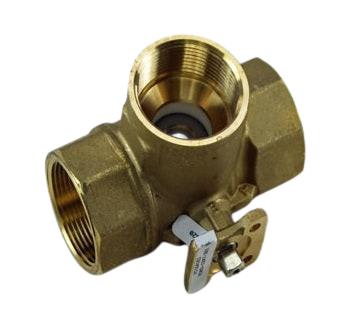
Body materials can include brass, carbon steel and stainless steel. The ball, stem, seat and sealing materials may differ from the body, so a general material description is not enough. Compatibility must be checked against the actual fluid, concentration, pressure and operating temperature.
Available end connections include threaded, flanged, socket-weld and butt-weld designs. ZF Corporation’s broader industrial valves category can help buyers compare ball valves with gate, globe, check and other valve technologies used for different duties.
Applications in Industrial Systems
Common ball valve applications include water treatment, compressed-air systems, natural-gas isolation, chemical processing, fuel transfer and general process piping. Smaller specialized valves may also support equipment-specific duties. For example, this 3M 15 mm valve for a paint-preparation system is intended for a defined product application rather than general pipeline use.
A second 3M paint-preparation system valve listing illustrates why buyers should check equipment compatibility and manufacturer references instead of selecting from the valve name alone.
Manual and Actuated Operation
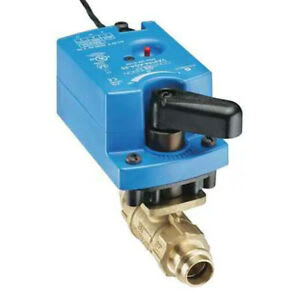
Manual valves normally use a hand lever. Automated units may use pneumatic or electric actuators for remote operation, sequencing or emergency shutdown. Actuator selection requires suitable operating torque, cycle frequency, control signals and fail-position requirements.
Buyers researching pneumatic equipment and related market options may view the MAC Valves product listings . This link is provided for independent sourcing and informational purposes and does not imply a partnership or authorized-distributor relationship.
How to Select an Industrial Ball Valve
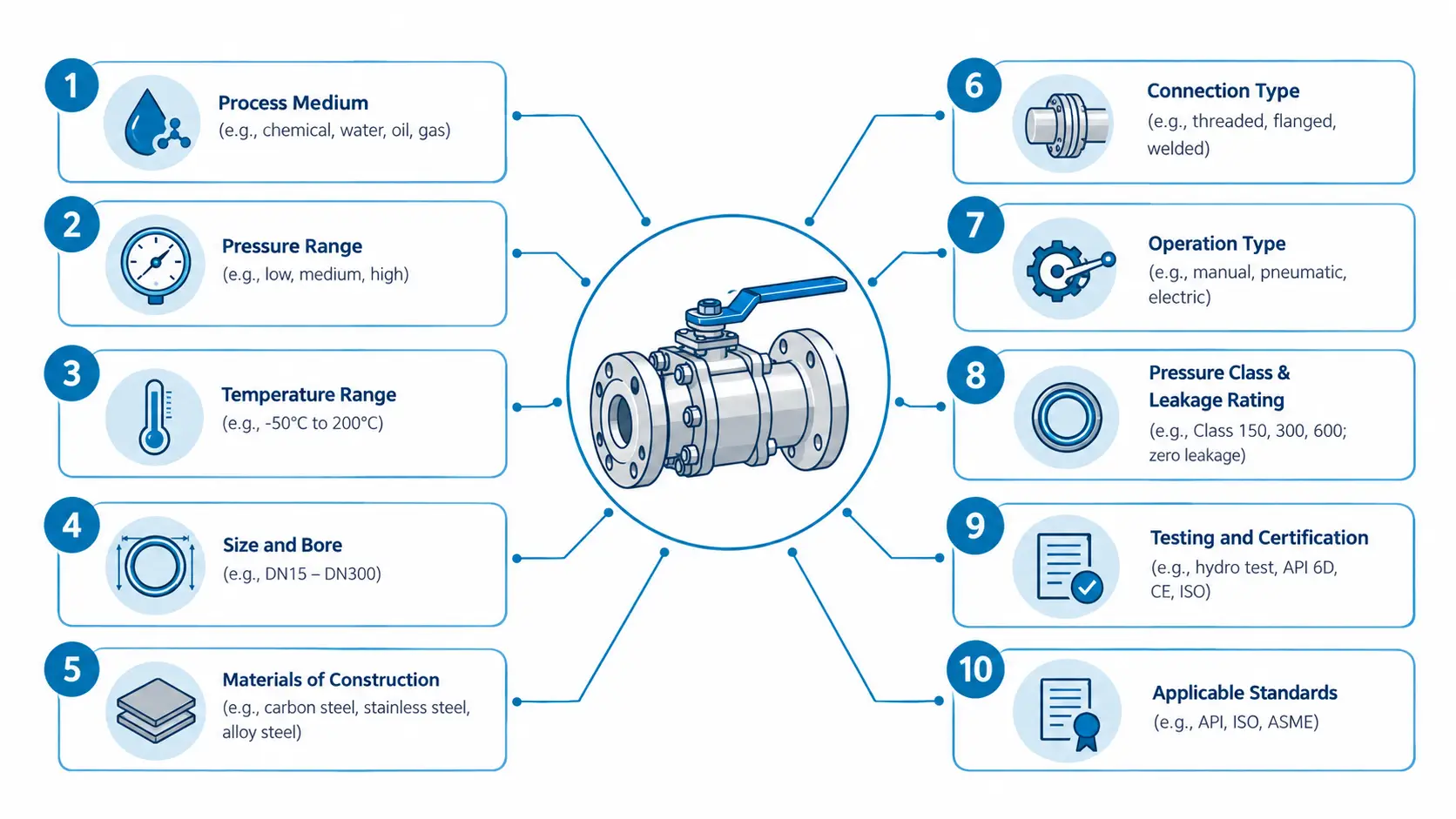
Learning how to select a ball valve for process service requires a complete specification rather than size alone. Before requesting a quotation, record:
-
Process medium and its chemical properties
-
Minimum, normal and maximum pressure
-
Minimum, normal and maximum temperature
-
Nominal size and required bore
-
Body, ball, stem and seat materials
-
Threaded, flanged or welded connection
-
Manual, pneumatic or electric operation
-
Pressure class and leakage requirements
-
Testing, certification and documentation
-
Applicable API, ISO, ASME or project standards
Selection tip: A valve pressure marking should not be treated as a universal allowable pressure at every temperature. Always review the applicable pressure-temperature rating and the limitations of the body, seats, seals and connected piping.
Standards and Maintenance
Depending on the design and application, relevant standards may include API 608, ISO 17292 and ASME B16.34. Testing, actuator interfaces and pressure-equipment rules may involve additional requirements. Always verify the current edition and project scope before procurement.
Routine maintenance may include checking external leakage, stem packing, operating torque, seat performance, actuator condition and corrosion. Unexpected torque, incomplete closure or leakage can indicate seat damage, contamination, seal deterioration or actuator problems.
Frequently Asked Questions
Can a ball valve be used for throttling?
A standard design can restrict flow when partially open, but it is usually selected for isolation. Continuous throttling should use a valve designed and sized for that duty.
What is the difference between floating and trunnion designs?
A floating ball can move slightly against the downstream seat. A trunnion-mounted ball is mechanically supported, which changes how pressure forces and operating torque are managed.
What information is needed for an RFQ?
Include size, bore, pressure class, temperature, medium, materials, seats, end connections, operating method, standards, testing and documentation requirements.
Final Selection Advice
The correct Ball Valve depends on more than pipe diameter. Confirm the medium, operating envelope, construction, bore, seat, materials, connection and applicable standards. Verify any proposed product against current manufacturer documentation and project requirements before ordering.
Have a ball-valve sourcing requirement?
Share your complete specification, existing part number or application details with ZF Corporation’s independent sourcing team.
Talk to Our Specialist
Disclaimer: Z&F Corporation is not affiliated with, authorized by, endorsed by, or acting as an official representative of any manufacturer, brand, or trademark owner referenced on this website. All product names, trademarks, brand names, logos, and manufacturer references are the property of their respective owners and are used solely for identification, reference, and compatibility purposes.