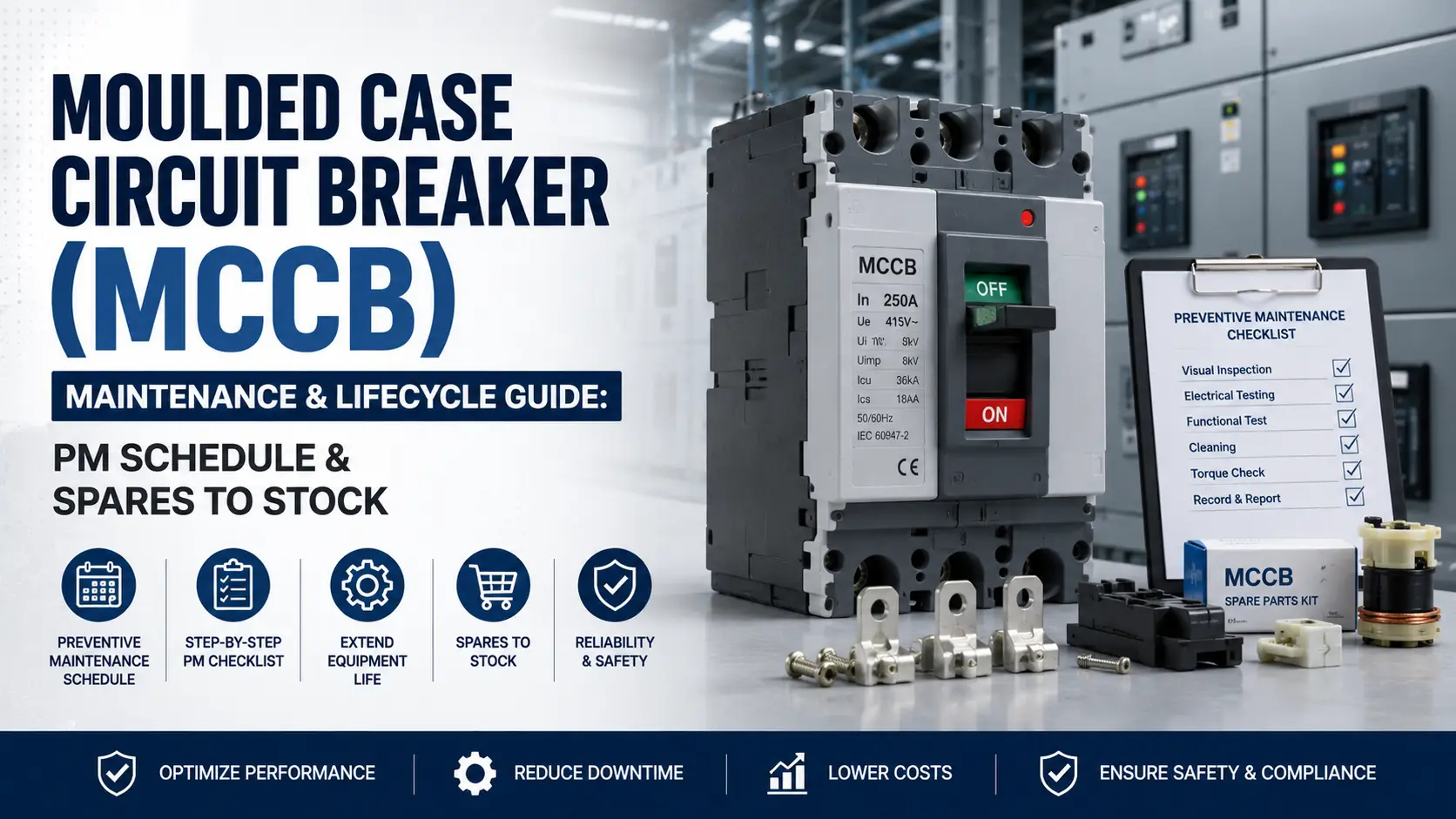
Moulded Case Circuit Breaker (MCCB) Maintenance & Lifecycle Guide: PM Schedule & Spares to Stock
A moulded case circuit breaker is one of those components UK facilities teams tend to install and forget — until the day it fails to trip, or trips when it shouldn't, during a fault that really mattered. Unlike an MCB, an MCCB is usually protecting a much larger section of a distribution board, so an unplanned failure has a proportionally larger impact. This guide sets out a practical preventive maintenance schedule, the wear indicators worth watching for, and the spares worth holding on the shelf so an MCCB failure doesn't turn into an extended outage.
Need help planning MCCB maintenance or sourcing spares for your site?
Recommended PM Schedule
MCCBs are largely maintenance-free electrically, but the mechanical operating mechanism, contacts and enclosure all benefit from a structured inspection regime. Most UK sites align MCCB maintenance with their wider switchboard inspection cycle under BS 7671 periodic inspection requirements, but the breaker-specific tasks below go beyond a standard visual EICR check.
Interval | Task | Why It Matters |
|---|---|---|
Monthly | Visual inspection for discolouration, unusual odour, or physical damage to the case | Early sign of overheating or arcing inside the moulded case |
Quarterly | Thermal imaging survey of the board under load | Detects loose terminations and developing hot spots before failure |
Annually | Manual operation test (open/close cycle) and mechanism inspection | Confirms the operating mechanism hasn't seized or stiffened |
Annually | Torque check on all line and load terminations | Terminations loosen over time through thermal cycling |
Every 3-5 years (or per manufacturer guidance) | Primary injection or secondary injection trip testing | Verifies the breaker will actually trip at the specified current and time |
The exact interval and scope should be adjusted for the criticality of the circuit — a breaker protecting a single non-essential lighting circuit doesn't need the same rigour as one protecting a data hall's main incomer or a process line's motor control centre. Many UK sites tier their MCCB maintenance into three bands: critical (monthly visual plus quarterly thermal), standard (quarterly visual plus annual thermal), and non-critical (annual visual only), which keeps the maintenance workload proportionate without leaving anything unchecked for years at a time. It's also worth logging every manual operation and trip test against the specific breaker's serial number, since a pattern of degrading performance across successive tests is a much stronger replacement signal than any single reading in isolation.
Common Wear Indicators
A breaker that trips unusually slowly, or that requires noticeably more force to operate the handle than it once did, is telling you the mechanism is wearing. Discolouration around the terminals, a faint burning smell near the board, or a breaker that feels warm to the touch even under moderate load are all signs of a developing high-resistance connection, usually at the termination rather than inside the breaker itself. Pitting or blackening visible through the arc chute vents after a fault-clearing operation is normal to some degree, but heavy pitting after only one or two fault clearances suggests the breaking capacity may have been closer to its limit than the application allows for, and the unit should be inspected by a qualified engineer before being returned to service.
Spare Parts to Stock
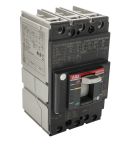
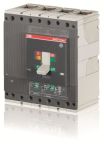
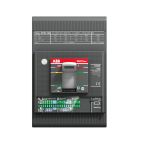
For sites running ABB SACE Tmax or equivalent MCCBs, it's worth holding at least one spare unit per frame size in use on site, since MCCBs are generally replaced as a complete unit rather than field-repaired. Also worth stocking: spare auxiliary contact blocks and shunt trip or undervoltage release accessories if these are fitted, since they're a common point of failure that doesn't require replacing the whole breaker. For plants where the MCCB has a discontinued or hard-to-source part number, ZF Corporation can cross-reference to a current equivalent frame and rating so a spare can be held without waiting on a long lead time from the original manufacturer.
End-of-Life Planning
MCCBs don't have a fixed expiry date, but a breaker that has cleared several fault currents at or near its rated breaking capacity should be considered for replacement rather than indefinite reuse, since each fault-clearing operation contributes some cumulative wear to the contacts and arc-quenching system. As a general rule, if trip testing shows a breaker tripping outside its rated time-current characteristic, or if the mechanism inspection reveals stiffness that doesn't resolve with lubrication per the manufacturer's guidance, it's more cost-effective to replace the unit than to keep testing it back into service. Planning replacement ahead of a hard failure also avoids the premium cost and delay of an emergency same-day sourcing exercise.
Related Category | Why It Matters | Link |
|---|---|---|
Molded Case Circuit Breakers | Full ABB SACE Tmax range for board and panel protection | |
Motor Protection Circuit Breakers | MPCBs sized specifically for motor starting current | |
Miniature Circuit Breakers | Lower-current protection for final distribution circuits |
Building an MCCB Asset Register
A surprising number of unplanned MCCB failures trace back not to the breaker itself but to a site simply not knowing what it has installed — frame size, trip unit rating, manufacture date and last test date scattered across old drawings, memory, and whichever engineer last touched the board. A simple asset register recording these details per breaker, cross-referenced to the board schedule, turns "we think it's an ABB Tmax something" into an exact part number that can be quoted and sourced in minutes rather than days when a spare is needed urgently. This is particularly valuable for older installations where the original panel builder or the original breaker range may no longer be readily available, and a cross-reference to a current equivalent needs to be established in advance rather than during an outage.
Documentation & Compliance Records
Alongside the physical maintenance work, most UK sites are expected to keep a documented maintenance history for MCCBs protecting critical distribution boards, both for insurance purposes and to satisfy periodic electrical inspection requirements under BS 7671. At minimum, this should record the date of each visual inspection and trip test, the result, any adjustments made, and the name of the engineer who carried it out. Where a breaker has been trip-tested using a secondary injection test set, the actual measured trip time against the manufacturer's published time-current curve should be logged rather than just a pass/fail note, since a gradually lengthening trip time across successive tests is a much stronger early-warning sign than a single test in isolation.
This record also matters commercially: when a board eventually needs re-certification, or when a site is sold or re-let, a complete maintenance history for the MCCBs on the main distribution board is often requested as part of due diligence, and its absence can hold up a transaction or trigger a costly independent condition survey that a well-kept log would have avoided entirely.
Working With a Specialist Supplier
A UK MRO supplier that stocks the actual MCCB frames, trip units and accessories in use on a site — rather than only being able to quote lead times against a manufacturer's own schedule — is usually the difference between a planned maintenance replacement and an extended unplanned outage. ZF Corporation holds ABB SACE Tmax and Tmax XT ranges across common frame sizes, and can cross-reference superseded or discontinued part numbers to a current equivalent so that a spare identified during a PM visit can be sourced and held before it is actually needed, rather than ordered reactively once a fault has already occurred.
Frequently Asked Questions
What is a moulded case circuit breaker (MCCB) used for?
An MCCB protects a larger section of a distribution board than an MCB, typically ranging from around 100A up to several thousand amps, combining overload and short-circuit protection in a single moulded enclosure.
How do I choose between Allen-Bradley and ABB MCCBs?
Both brands are widely used across UK industrial sites; selection often comes down to what's already standardised in the plant, panel builder compatibility, and stock availability at the time of order — ZF Corporation stocks ABB and can cross-reference other brands.
What standards apply to MCCBs (BS EN 61009)?
Industrial MCCBs are typically tested to IEC 60947-2; BS EN 61009 specifically covers RCBOs rather than MCCBs, so always confirm the correct standard reference against your breaker's datasheet and your board's design intent.
Can ZF Corporation source obsolete or discontinued MCCBs?
Yes — we regularly cross-reference discontinued frame sizes and trip units to current equivalents for panel repairs and switchboard upgrades where the original breaker is no longer manufactured.
What is the typical lead time for an MCCB in the UK?
Common fixed-pattern frame sizes are typically available from stock; higher ampacity frames and specific trip unit configurations may carry a short lead time — contact us with the exact specification for a quote.
Conclusion
An MCCB maintenance programme doesn't need to be complicated to be effective — a monthly visual check, a quarterly thermal survey, an annual mechanism and termination check, and periodic trip testing will catch the vast majority of developing faults before they cause an outage. Pair that with a small stock of spare units and accessories for your most-used frame sizes, and an MCCB failure becomes a planned swap rather than an emergency.
Need help planning a maintenance schedule or sourcing MCCB spares?
Request a Maintenance Quote
DISCLAIMER: Z&F Corporation is not affiliated with, authorized by, endorsed by, or acting as an official representative of any manufacturer, brand, or trademark owner referenced on this website. All product names, trademarks, brand names, logos, and manufacturer references are the property of their respective owners and are used solely for identification, reference, and compatibility purposes.