Pressure Relief Valve vs Block And Bleed Valve: Which One Does Your Chemical Processing Need?
Pressure relief valves and block and bleed valves both sit on instrument and process lines in chemical processing plants, but they do fundamentally different jobs — confusing the two, or assuming one can substitute for the other, is a common and costly specification mistake. This comparison breaks down what each device does and when your process needs one, the other, or both.
Need help specifying pressure relief or block and bleed valves for your process line?
Overview of Pressure Relief Valves
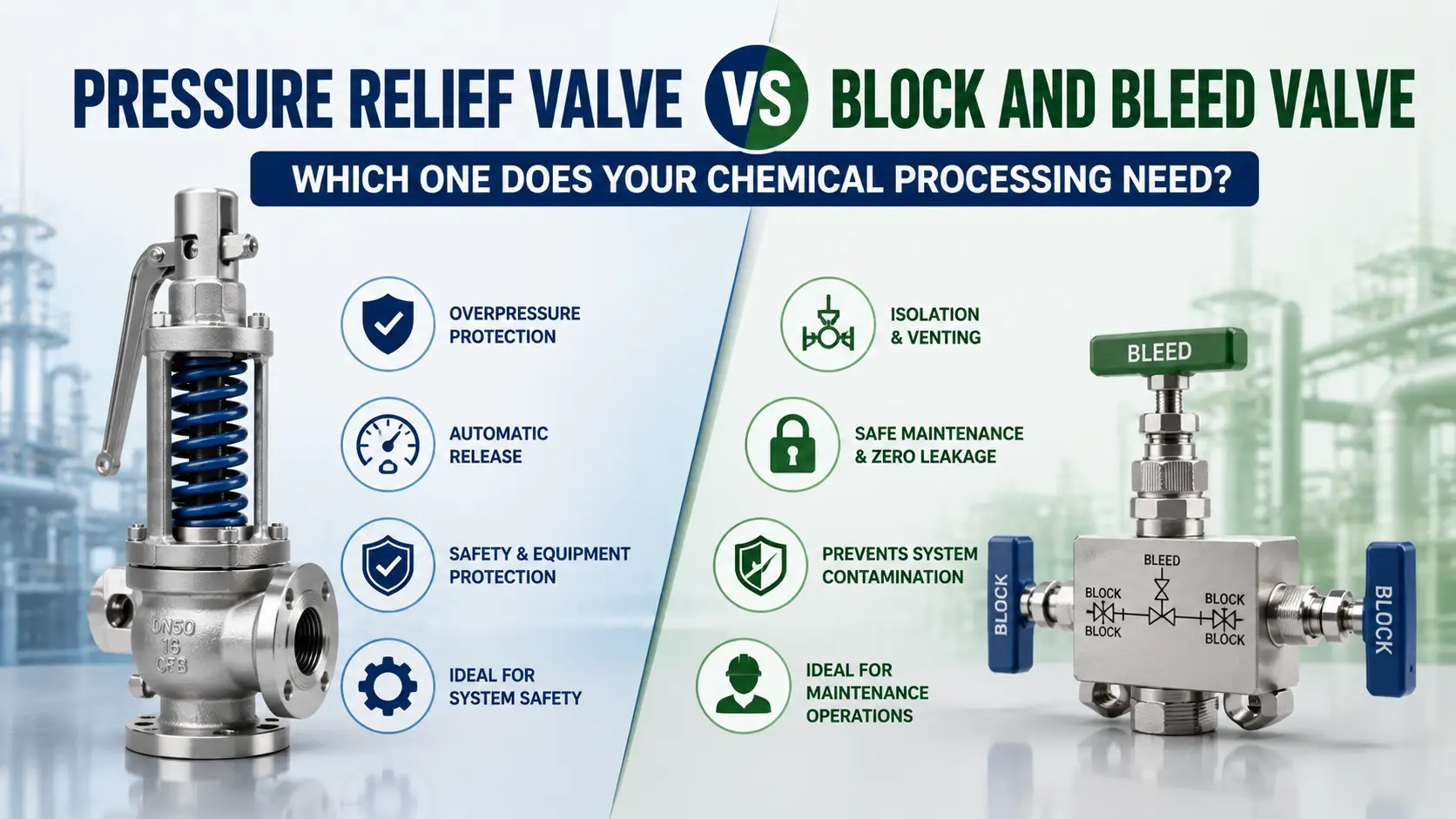
A pressure relief valve (PRV) is a spring-loaded safety device that automatically opens to release fluid when system pressure exceeds a preset limit, then recloses once pressure returns to a safe level. Its function is protective and automatic — it exists purely to prevent over-pressurisation of a vessel or line, and is typically set, tested and certified to a specific relief pressure that isn't adjusted in normal operation.
Overview of Block and Bleed Valves
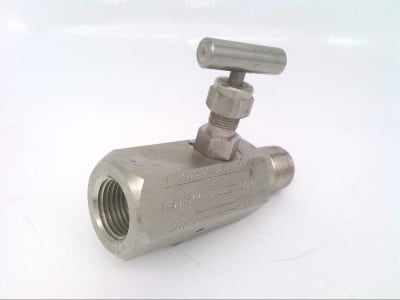
A block and bleed valve (or a block-and-bleed manifold) is a manually-operated isolation arrangement, typically combining two block valves either side of an instrument connection with a bleed valve in between. Its purpose is entirely different — it allows an instrument, gauge or transmitter to be safely isolated from the process and vented (bled down) before removal for calibration or maintenance, without shutting down the whole line.
Head-to-Head Comparison
Aspect | Pressure Relief Valve | Block and Bleed Valve |
|---|---|---|
Function | Automatic overpressure protection | Manual instrument isolation & venting |
Operation | Automatic, spring-loaded, set pressure | Manual, operator-controlled |
Typical location | Vessel, pipeline, relief header | Instrument take-off point |
Certification focus | Set pressure test & certification (e.g. IECEx/ATEX area rating where applicable) | Pressure/temperature rating of the manifold body |
Maintenance driver | Periodic proof-testing & recertification | Used at every instrument service/calibration |
Which Should You Choose?
This isn't really an either/or decision — most chemical processing lines need both, in different places. Specify a pressure relief valve wherever a vessel, line or system needs protection against exceeding its design pressure. Specify a block and bleed valve (or full 3-valve manifold) at every instrument take-off point where a gauge, transmitter or switch will need periodic isolation and venting for maintenance without shutting down the process. Trying to use one in place of the other — for example, relying on a bleed valve as an overpressure safeguard — is not a substitute for a properly rated and certified relief device.
Related Categories
Category | Description | Link |
|---|---|---|
Valves | Full valve range including pressure relief and instrument manifolds |
Frequently Asked Questions
What is a pressure relief valve used for?
It automatically releases fluid from a vessel or line once pressure exceeds a preset safe limit, protecting equipment and personnel from overpressure events, and recloses once pressure returns to normal.
How do I choose between Anderson Greenwood / Pentair and Emerson ASCO pressure relief valves?
Anderson Greenwood / Pentair (including the Crosby range) is generally the established choice for mechanical pressure relief valves; Emerson ASCO is more commonly specified for solenoid and pilot-operated control valves rather than passive relief devices — the two brands typically sit in different parts of the same process line rather than as direct substitutes.
What standards apply to pressure relief valves (IECEx)?
Relief valve sizing and set pressure typically follow API 520/526 for process industries, with IECEx or ATEX certification applying to any associated instrumentation rather than the mechanical relief valve body itself.
Can ZF Corporation source obsolete or discontinued pressure relief valves?
Yes — we regularly cross-reference discontinued Anderson Greenwood/Crosby relief valve part numbers to current equivalents for plant turnarounds and upgrades.
What is the typical lead time for a pressure relief valve in the UK?
Common set pressures and sizes are typically available from stock; bespoke set-pressure certification or obsolete cross-references may carry a longer lead time — contact us with the exact specification for a quote.
Conclusion
Pressure relief valves and block and bleed valves aren't competing products — they protect against completely different risks. Specify relief valves for overpressure protection and block and bleed manifolds for safe instrument isolation, and make sure both are properly rated for your process conditions.
Want a side-by-side comparison guide for your project?
Download Comparison Guide
DISCLAIMER: Z&F Corporation is not affiliated with, authorized by, endorsed by, or acting as an official representative of any manufacturer, brand, or trademark owner referenced on this website. All product names, trademarks, brand names, logos, and manufacturer references are the property of their respective owners and are used solely for identification, reference, and compatibility purposes.