What Is an Industrial Valve? Complete Guide to Types, Functions, and Selection
What is an industrial valve, and how to select the most appropriate valve for the pipeline? An industrial valve is a mechanical device that will open, close or partially obstruct a passage or passage to control, direct and/or regulate the flow of liquid, gas or slurry. It provides information on the main types of industrial valves, their function, application, standards and selection consideration, before contacting the quotation.
Need help specifying the right valve? Request a Quote and our team will review your requirements.
1. What Is an Industrial Valve?
An industrial valve starts, stops or throttles media flow inside a piping system. To answer the question, what is an industrial valve properly, you have to address 3 positions: isolation, regulation and backflow prevention. Valves also have the function of preventing over pressure and for emergency shutdown. See how these functions are implemented in actual products in our valves category.
2. How Do Industrial Valves Work?
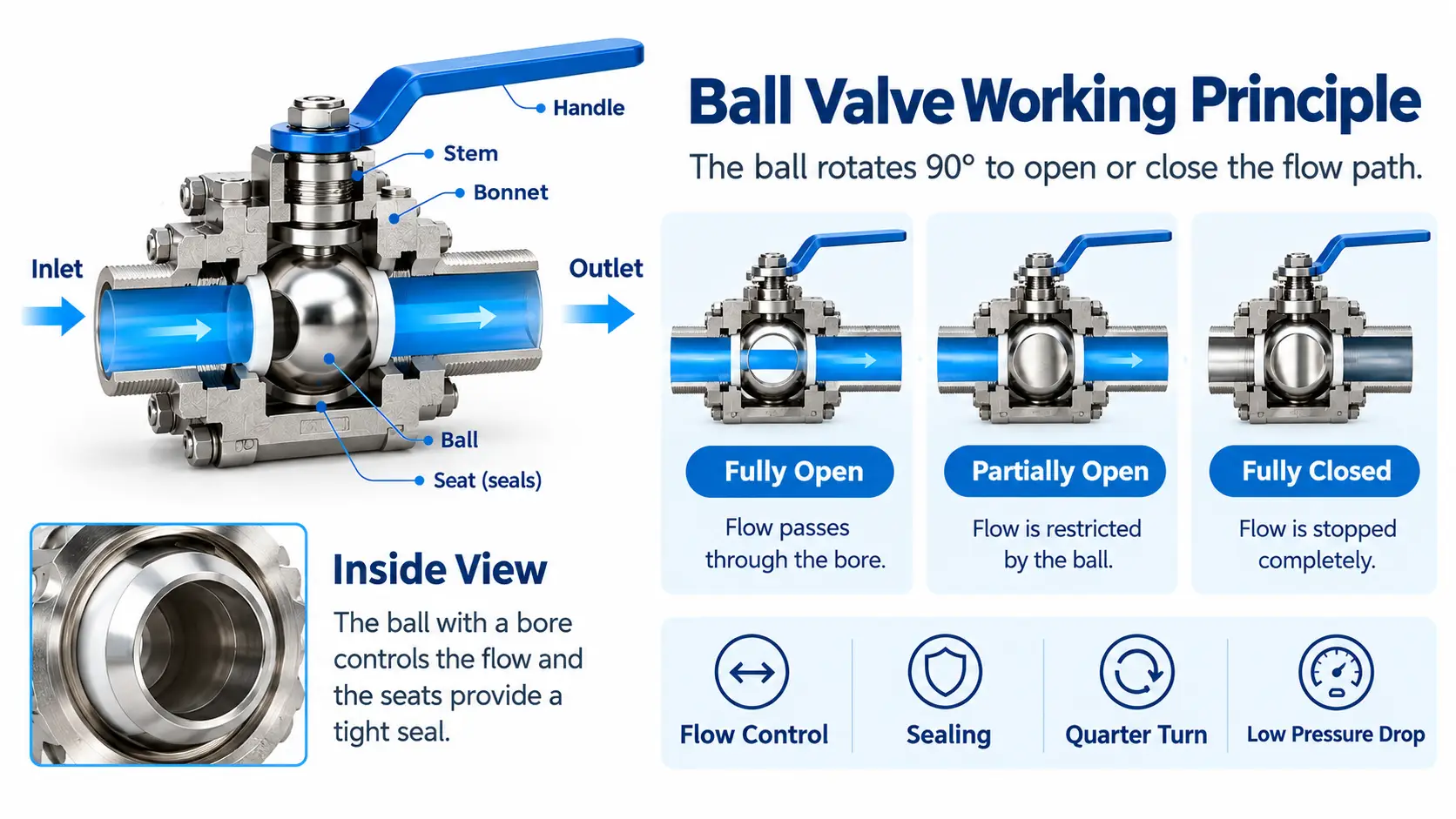
A valve has a movable part, such as a disc, gate or ball, that is used to control the flow path. By shifting that part, the open space will alter in the seat. The fluid is held in the bonnet and seals and is moved with a stem, handle or actuator.
It is clearly evident from the ball valve working principle. A ball with a bore will line up with the pipe to let the flow pass, or it will rotate 90 degrees to stop the flow. If the pressure drop is to be kept to a minimum, a full-port ball valve should be used to match the bore to the pipe.
3. Types of Industrial Valves
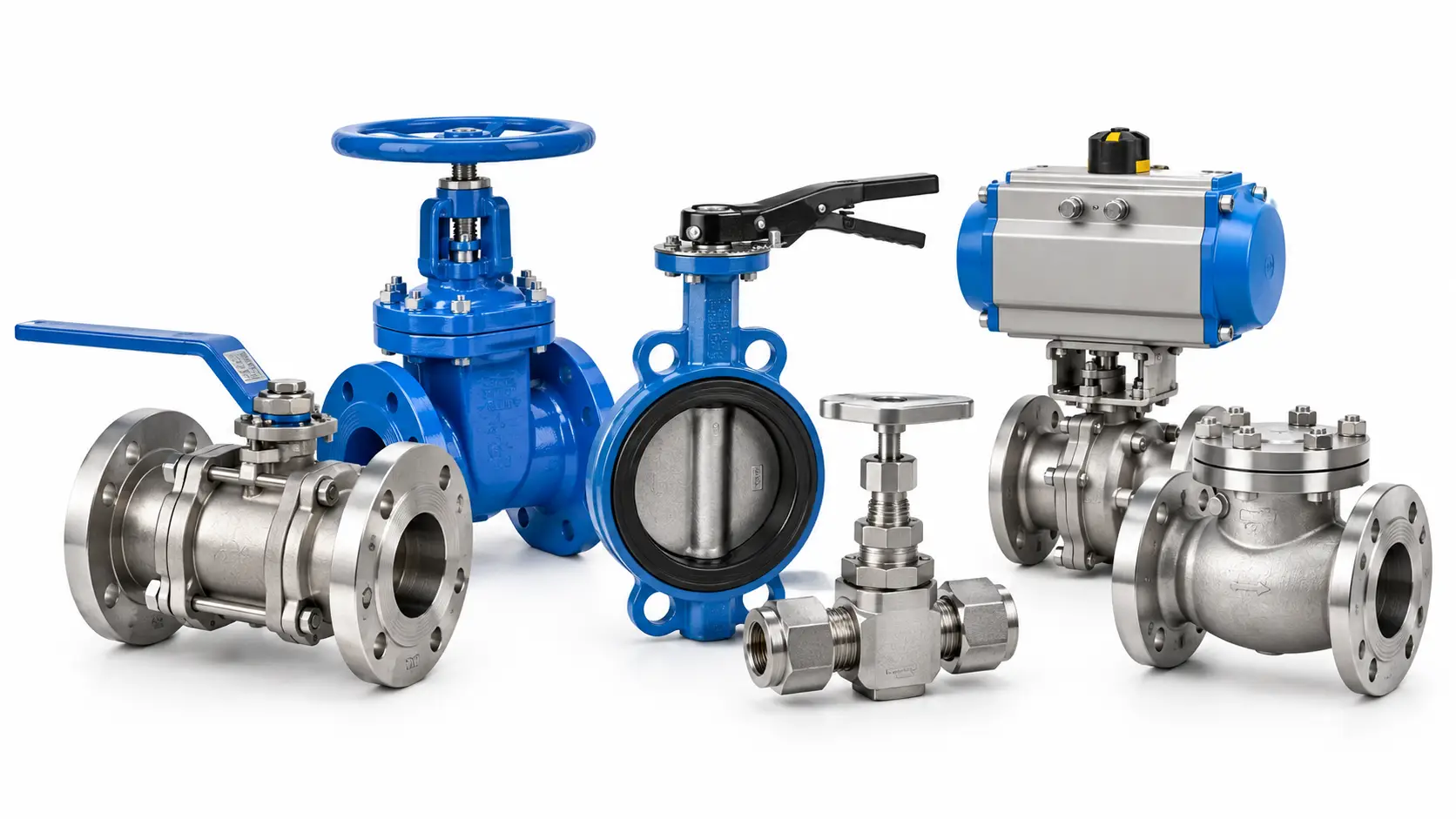
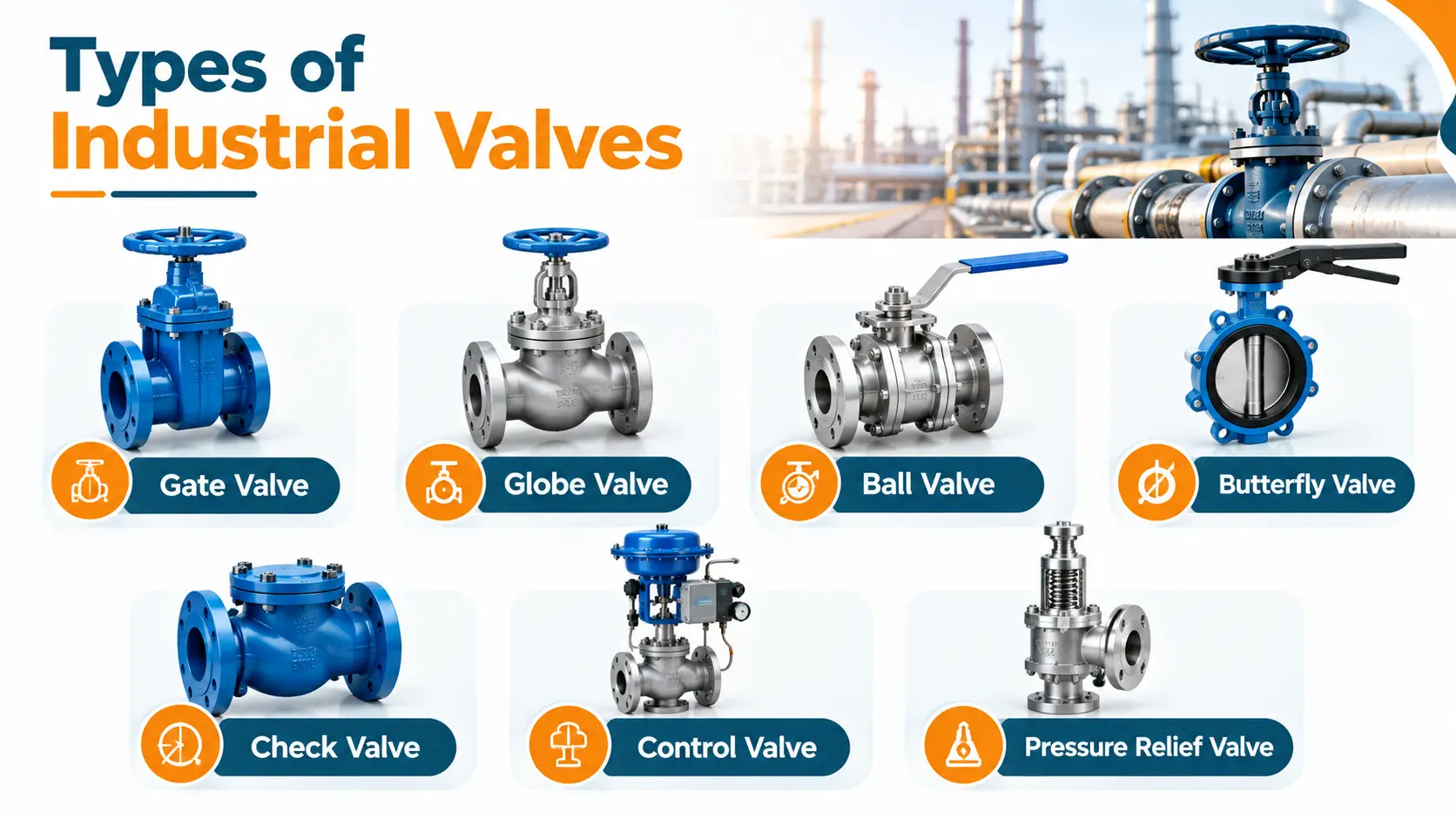
The common industrial valves are simple difference in closure element and motion.
Gate Valve
Gate valve is a linear-motion valve that is used to isolate or stop the flow of liquid or gas inside a pipeline by moving a flat or wedge-shaped gate. When the gate is completely open, the gate is completely removed from the flow path, resulting in a straight through bore with little pressure drop and turbulence. Gate valves are multi-turn valves, usually actuated by a handwheel or gear, which take multiple turns to move from fully close to fully open.
Globe Valve
Plug pushes down on a seat for accurate throttling, but at the expense of greater pressure drop. To make sense of the decision, our guide on gate vs globe valve is provided.
Ball Valve
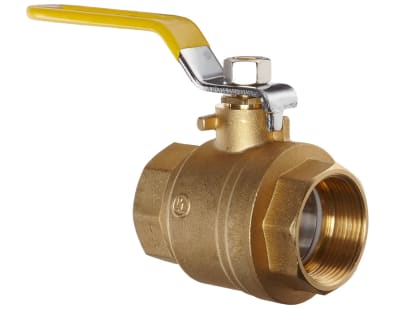
A ball valve is a type of valve that regulates flow by means of a hollow ball that pivots. If the ball is rotated 90 degrees (quarter turn), the bore is aligned with the pipeline to allow flow and/or if rotated 90 degrees to block flow completely. Ball valves offer tight shutoff, with negligible leakage, and open and close faster than multi-turn gate or globe valves.
Butterfly Valve
In a butterfly valve, a circular disc attached to a central shaft is used. The disc can be rotated 90 degrees so that it is opened or shut in parallel or perpendicular to the flow direction. Butterfly valves are much lighter and will occupy less space than gate or globe valves of the same size.
Check Valve
A check valve is a non-return valve that will only allow fluid to flow in one direction. If upstream pressure is greater than cracking pressure, the disc/piston will move away from the seat so that the media can pass. Flow reversal causes the disc to close against the seat under back pressure, there is no need for the operator to apply pressure or operate an external actuator to close the disc when flow is reversed.
Control Valve
Control valve is a throttling valve that has an actuator and positioner which move the valve plug in response to an actuator signal from a controller. Control valves adjust the flow continuously to control a process variable like flow, pressure, level, or temperature, unlike isolation valves.
Pressure Relief Valve
A pressure relief valve (PRV) is a safety valve that allows pressure to open and relieve the fluid or gas from the system when it exceeds the set pressure. When the pressure falls below the reseating pressure, valve re-seals to ensure system integrity.
4. Gate Valve vs Globe Valve vs Ball Valve vs Butterfly Valve vs Check Valve
A comparison of gate valve and globe valve flow control along with other common designs, is presented in this table.
|
Valve |
Primary Function |
Pressure Drop |
Operation |
|---|---|---|---|
|
Gate |
Isolation |
Very low |
Multi-turn |
|
Globe |
Throttling |
High |
Multi-turn |
|
Ball |
Isolation |
Low (full port) |
Quarter-turn |
|
Butterfly |
Isolation, throttling |
Low to medium |
Quarter-turn |
|
Check |
Backflow prevention |
Low to medium |
Automatic |
To learn more about a butterfly valve vs ball valve choice in water systems, check out our ball valve buyer guide.
5. Industrial Valve Applications by Industry
Valves are used in all industrial sectors and the type of valves in the oil and gas industry are not the same as those in the water treatment industry.
-
Oil and gas: pipeline isolation & wellhead control.
-
Power generation: boiler feedwater control and steam isolation.
-
Water treatment: butterfly and check valves for large lines.
-
Chemical processing: corrosion-resistant and lined valves.
-
Instrument lines: compact gauge valves isolate gauges and transmitters.
6. How to Select the Right Industrial Valve
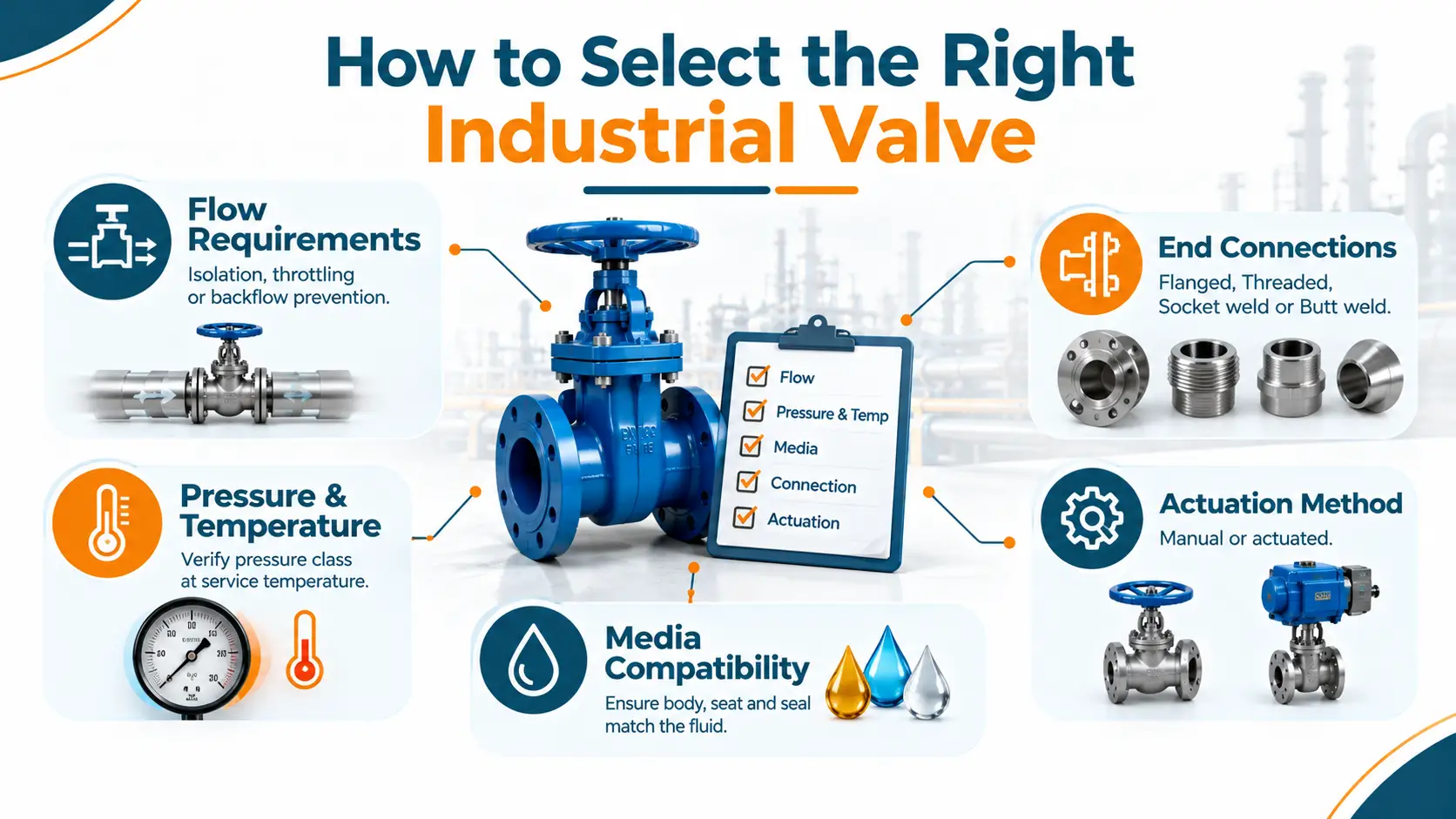
The best valve selection guide is the duty, not the catalog. Look at these 5 factors:
-
Flow requirements: isolation, throttling or backflow prevention.
-
Pressure and temperature: verify pressure class at service temperature; particularly for high pressure systems (ASME).
-
Media compatibility: ensure body, seat and seal are compatible with the fluid.
-
End connections: Flanged, Threaded, Socket weld or Butt weld.
-
Actuation method: manual or actuated.
Use Cv or Kv for flow rate, pressure drop and temperature when sizing a valve for steam. Once you have established your valve and control specification, start looking around for the valves and controls.
7. Valve Materials and Pressure Ratings
In order to have the valve materials to correspond with the fluid that is being transferred, they should be the same. The materials include stainless steel and alloys like Hastelloy or Inconel that are suitable for aggressive chemicals, or carbon steel for general hydrocarbon service. A bronze ball valve is designed for water, air and low pressure steam.
Pressure ratings are according to pressure classes as per ASME B16.34 and allowable pressure decreases with the increase of temperature. Always check the rating at service temperature.
8. Actuated vs Manual Valves
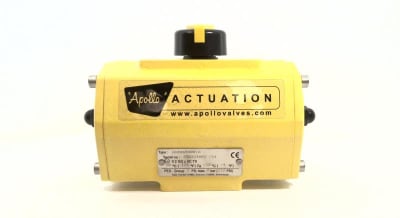
Manual valves use a lever or handwheel, and are appropriate for infrequent use. Lever-handles like those manufactured by Apollo Valves provide rapid quarter-turn operation on smaller lines. Actuated valves are operated by powered actuators for remote or automatic operation.
|
Actuator |
Strength |
Limitation |
|---|---|---|
|
Pneumatic |
Fast, simple, spring fail-safe |
Needs compressed air |
|
Electric |
Precise positioning, no air |
Slower, higher cost |
|
Hydraulic |
Very high force |
Complex, leak risk |
9. Industrial Valve Standards and Certifications
The design, testing and ratings are defined by the Standards. The main references are:
-
API 6D: pipeline valves.
-
API 600: steel gate valves.
-
ASME B16.34: pressure-temperature ratings.
-
ISO 5208: pressure testing for leakage.
-
ISO 15848: fugitive emissions.
-
ISO 9001: quality management.
Low emission certification is important for refineries and chemical plants, where valves are a primary source of fugitive emissions. Other pressure equipment rules, such as PED, might be applicable as well. Our valve range covers products from several established manufacturers.
10. Common Valve Failures and Maintenance Best Practices
To stop common industrial valve leakage problems, it is helpful to be aware of the ways valves fail:
-
Seat and seal wear: inspect and replace on schedule.
-
Corrosion: choose materials for the media.
-
Actuator malfunction: test signals and air supply.
-
Installation errors: check flow direction and avoid overtightened bolts.
-
Water hammer and cavitation: close slowly and size correctly.
Surges are prevented by a pressure relief valve. Inspect critical valves every 6 – 12 months as necessary, according to service severity and maintain spare seats and seals for high-cycle valves. There are many types of valves that can be repaired, but when body corrosion jeopardizes the valve integrity, replace them.
11. Frequently Asked Questions
What is an industrial valve and what does it do?
Regulates, directs or controls the flow of liquids, gases or slurries by opening, closing or throttling a passage.
What are the different types of industrial valves?
These include gate, globe, ball, butterfly, check, control and pressure relief valves, as well as diaphragm, plug and needle valves.
How do gate valves and globe valves differ?
Gate valves provide full-bore isolation with very little pressure loss, and globe valves are best for throttling. Take a look at our gate vs globe valve guide.
What is the working principle of a ball valve?
A ball with a bore is aligned to the pipeline to allow the fluid to flow through or rotates 90 degrees to turn the pipeline off.
How often should industrial valves be maintained?
This depends on the severity of the services. For critical valves, inspection is recommended by the manufacturer and the plant at least every 6 to 12 months.
12. Conclusion
Being familiar with the types of valves and how they function, as well as which standards apply, enables you to make the correct specification without a doubt. Pair function, pressure class, materials and actuation to your duty; verify all from current datasheets prior to purchase.
Brand names are used for identification only and imply no partnership or endorsement by Z&F Corporation.
Need to identify the correct valve for your application? Talk to Our Specialist and request a quotation.