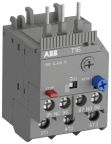
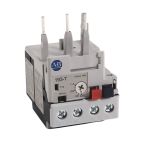
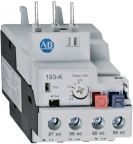
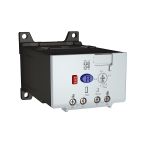
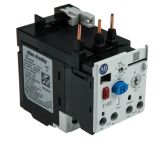
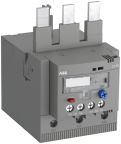
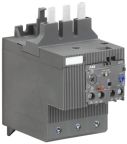
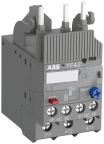
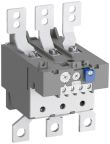
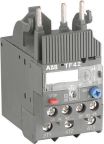
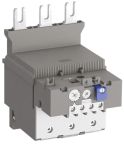
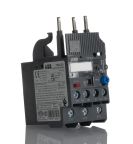
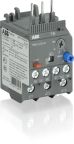
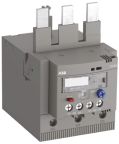
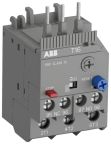
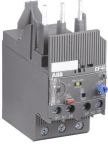
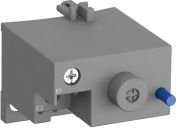
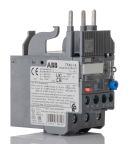
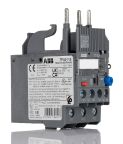
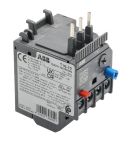
A thermal overload relay sits between a contactor and the motor it's switching, tripping on sustained overcurrent to protect the motor from damage before a fuse or breaker would act — it's a protection device, not a switching one. Z & F Corporation Ltd stocks these from the same two manufacturers as our Auxiliary Contacts range: Allen Bradley's 193 and E100 series and ABB's TF series, both spanning a wide current range from sub-amp settings for small motors up to over 140A for large ones.
The setting that actually matters is the F.L.C. (Full Load Current) range printed on the relay — it needs to bracket the motor's rated current, with the dial then set to the motor's actual nameplate amperage rather than the top of the range. Too high a setting and the relay won't trip before the motor overheats; too low and it'll nuisance-trip under normal starting current. Contact configuration (typically 1 NO/1 NC) and physical mounting to the specific contactor series matter too, in the same way as auxiliary contacts do.
If you're replacing a relay on an existing contactor, the motor's nameplate current and the contactor's model number are the two things we need to confirm the right part — the relay itself is sized to the motor, not the contactor, so a contactor upgrade doesn't automatically mean a relay change. We are not Allen Bradley or ABB, and not an authorised distributor for either — genuine stock only, sourced and supplied independently.