Industrial Products for Gypsum and Aluminium Plants: Complete Industry Guide
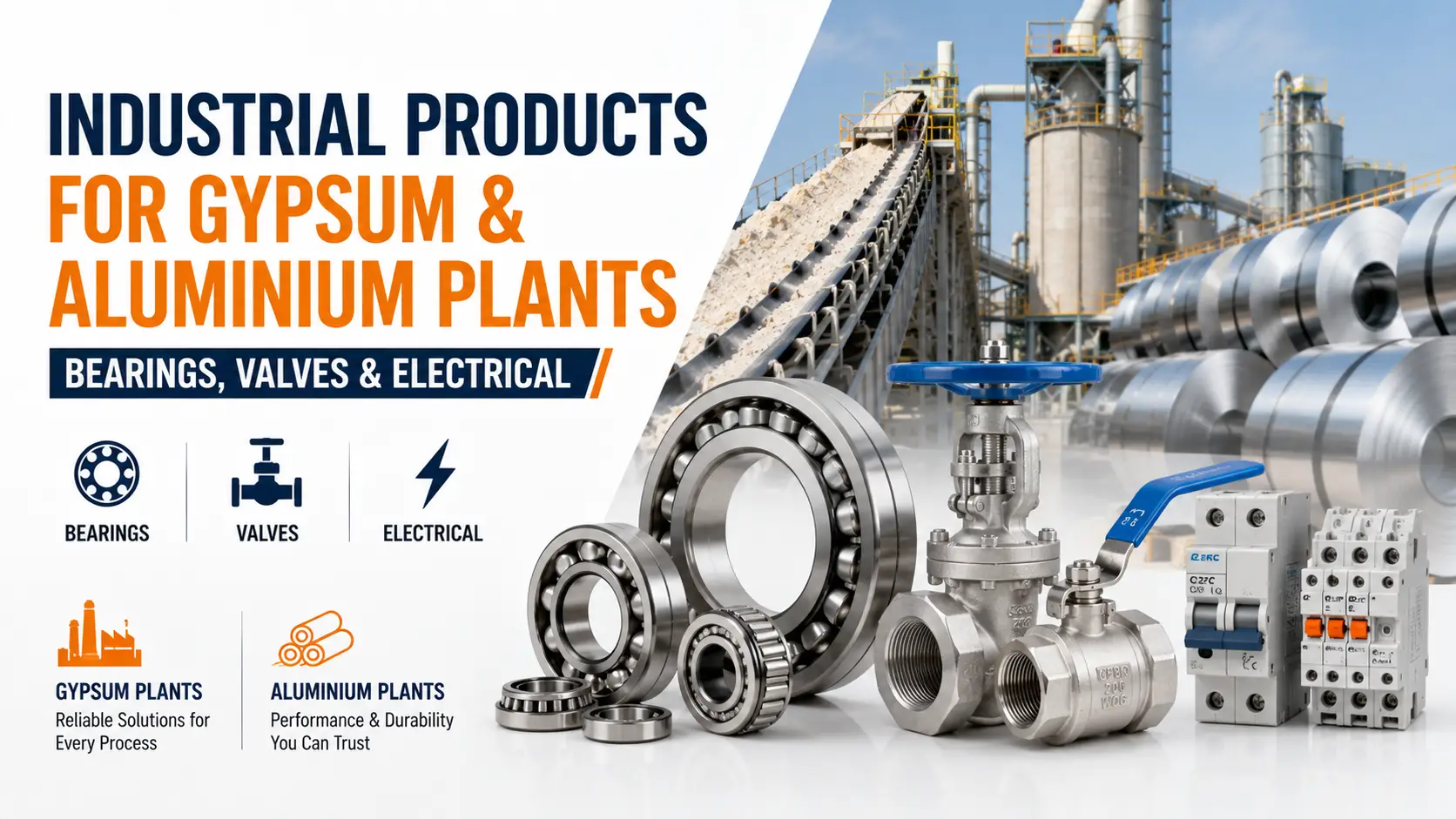
Gypsum board operators use a variety of industrial products correctly specified for their needs, as do aluminium smelters. Industrial products, whether it's a gypsum powder plant or an aluminium rolling mill, selecting the right industrial products gypsum aluminium plants managers can trust depends on the operating conditions, compliance measures and industrial lifecycle cost of industrial products, rather than price. This guide provides information on equipment categories, their applications, standards, procurement criteria and objectives, and specification-based evaluation of equipment suppliers.
Looking for price quotes for industrial equipment for your plant?
Overview of Gypsum and Aluminium Manufacturing Industries
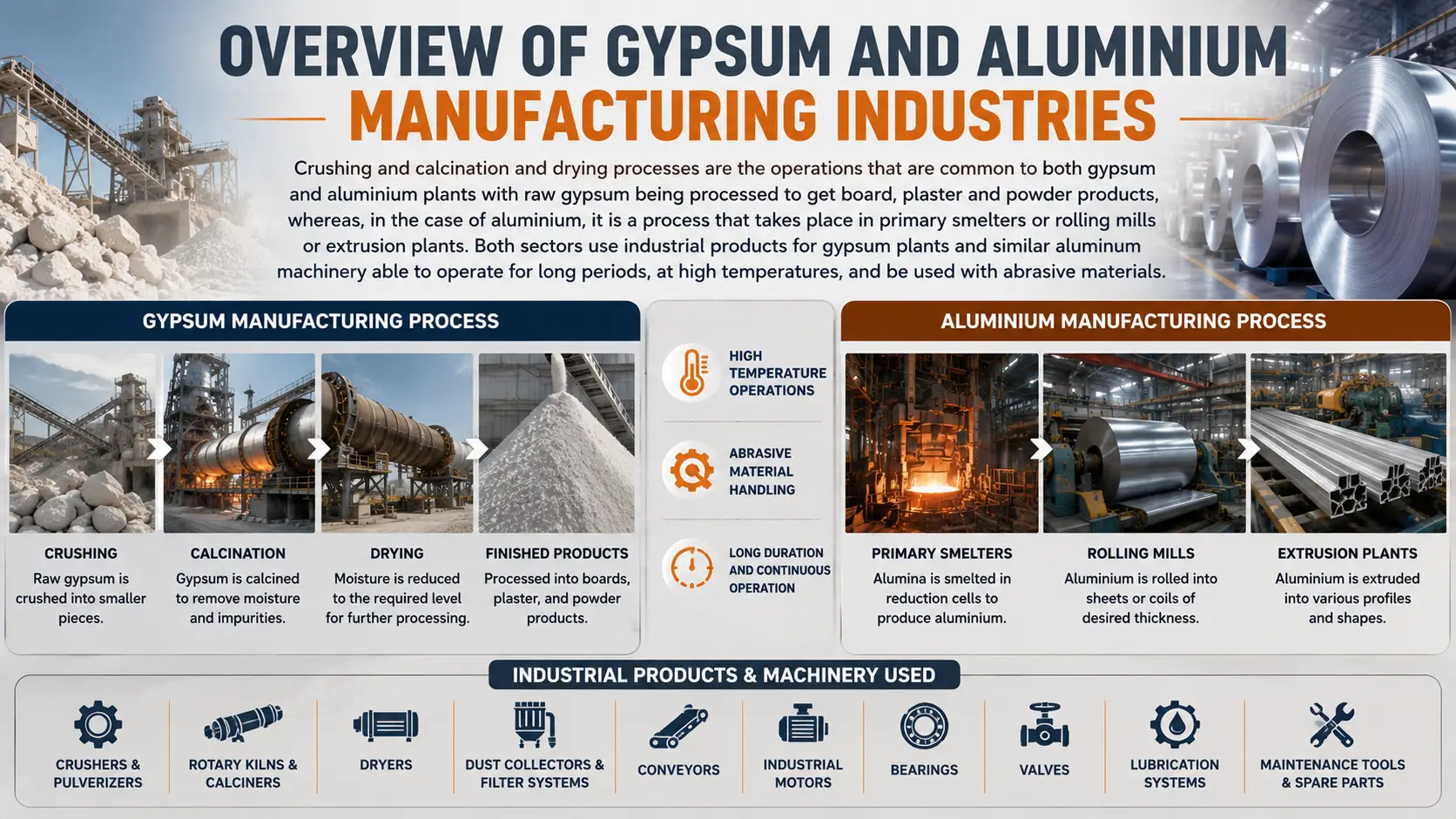
Crushing and calcination and drying processes are the operations that are common to both gypsum and aluminium plants with raw gypsum being processed to get board, plaster and powder products, whereas, in the case of aluminium, it is a process that takes place in primary smelters or rolling mills or extrusion plants. Both sectors use industrial products for gypsum plants and similar aluminum machinery able to operate for long periods, at high temperatures, and be used with abrasive materials.
Why Industrial Products Matter in Processing Plants
The International Energy Agency estimates the industrial sector consumes around 37% of global final energy use, with efficiency in equipment selection being directly linked to operating cost and reliability. If not optimally specified, poorly designed industrial products gypsum aluminium plants can result in unplanned plant downtime, safety-related incidents and lifecycle costs higher than the correct matched plant.
Major Equipment Used in Gypsum Plants
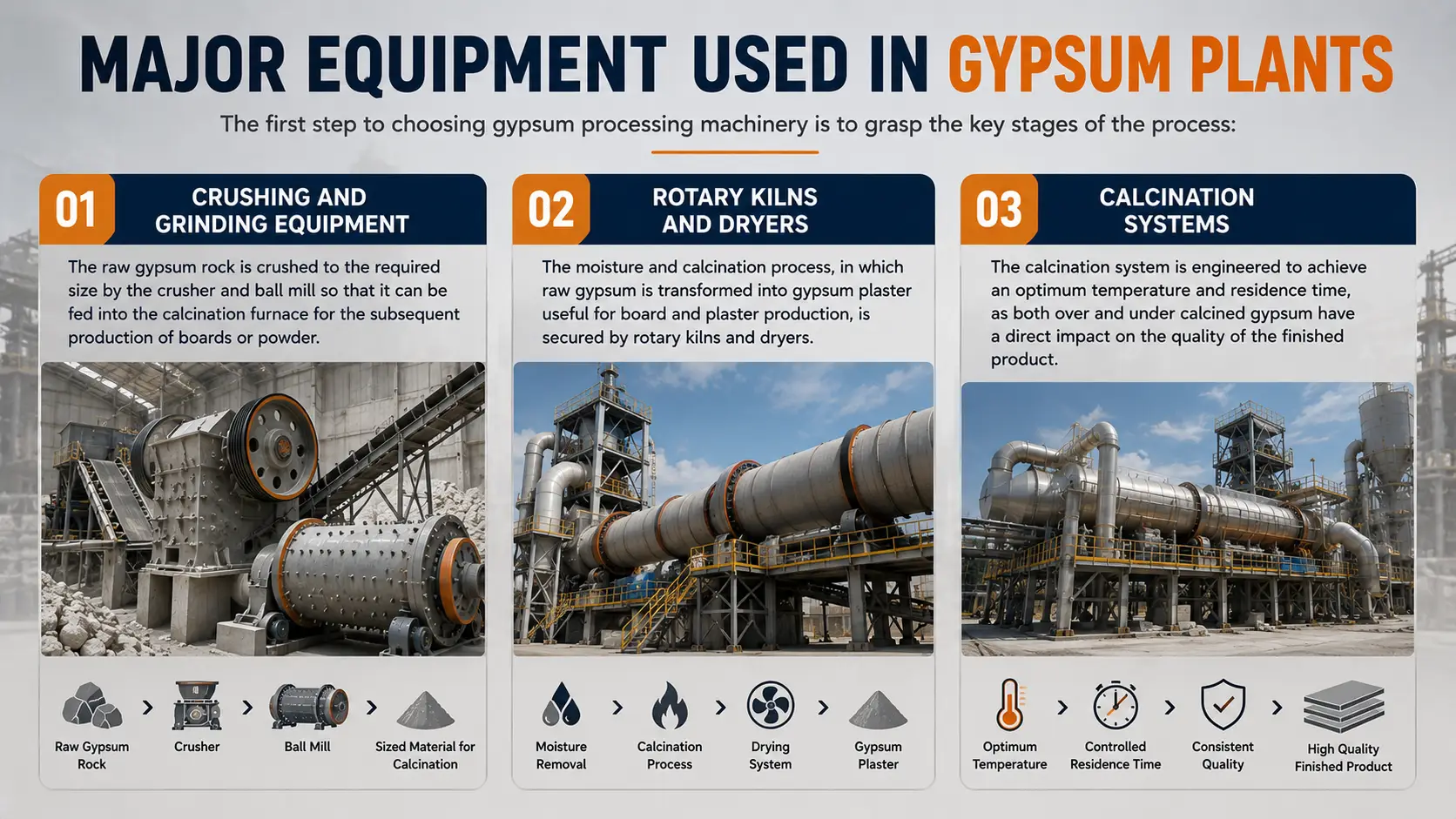
The first step to choosing gypsum processing machinery is to grasp the key stages of the process:
Crushing and Grinding Equipment
The raw gypsum rock is crushed to the required size by the crusher and ball mill so that it can be fed into the calcination furnace for the subsequent production of boards or powder.
Rotary Kilns and Dryers
The moisture and calcination process, in which raw gypsum is transformed into gypsum plaster useful for board and plaster production, is secured by rotary kilns and dryers.
Calcination Systems
The calcination system is engineered to achieve an optimum temperature and residence time, as both over and under calcined gypsum have a direct impact on the quality of the finished product.
Industrial Products Used in Aluminium Plants
Aluminium manufacturing involves smelting, casting, rolling, and extrusion, which all require different types of equipment:
The primary aluminium smelting and casting equipment includes an EFD and a CTO. Primary aluminium smelting and casting equipment encompasses EFD and a CTO.
The drive systems for rolling mills and associated gearboxes are covered
Extrusion presses, die-handling equipment
Air systems for pneumatic material handling
Presses and heavy lifting equipment hydraulic power units
Process Automation and Instrumentation
Digital instrumentation and control systems are being integrated into more and more modern industrial plant components. Data from flow meters, pressure transmitters and temperature sensors are sent to the PLC and SCADA systems, which help to ensure tighter control of the process and predictive maintenance in both gypsum and aluminium production lines.
Electrical Products for Industrial Facilities
The safe supply of electricity is integral to all phases of gypsum and aluminium production. The voltage, load and environment where electric motors, variable frequency drives, switchgear and industrial cable would be located must be considered. For facilities planning and upgrading the electrical infrastructure, our Electrical Pillar resource provides a more detailed discussion of cable, motor and switchgear selection.
Pumps, Valves and Piping Systems
Process fluids, cooling water, and slurries are circulated in both plants by centrifugal and positive displacement pumps, and industrial valves control flow and isolate equipment for maintenance. Our Valves Pillar resource provides information on valve types and materials for use in abrasive and high-temperature process applications for gypsum and aluminium.
Material Handling Equipment
This involves the use of conveyor systems, bucket elevators and dust collection systems to transport raw material and finished product around the plant and to ensure control of airborne particulates from crushing and grinding.
Equipment | Function | Typical Application |
Belt conveyors | Bulk material transport | Raw gypsum rock, aggregate handling |
Bucket elevators | Vertical material lifting | Powder and granular product transport |
Dust collectors | Airborne particulate control | Crushing, grinding, and calcination areas |
Screw conveyors | Enclosed material transport | Fine powder and additive handling |
Industrial Lubrication Solutions
Properly specified lubricants that are appropriate for load, temperature, and contamination are critical to bearings, gearboxes and rotating equipment in both gypsum and aluminium plants. With the proper lubrication, critical rotating equipment will not overheat, will wear less, and will last longer.
Bearings and Rotating Equipment
Bearings minimize friction, increase efficiency, facilitate rotating machinery, and prolong the life of machine equipment on conveyors, fans and gearboxes. Our Bearings Pillar resource focuses on selecting bearings for high-temperature, high-load and contamination applications typically found in the gypsum and aluminium processing industry.
Safety Equipment and PPE Requirements
It provides personal protective equipment for dust and heat and chemical exposure.
Kiln and smelting zone fire protection system
Gas detection equipment in the presence of combustion or process gases
Spill response equipment in production areas
Maintenance and Reliability Best Practices
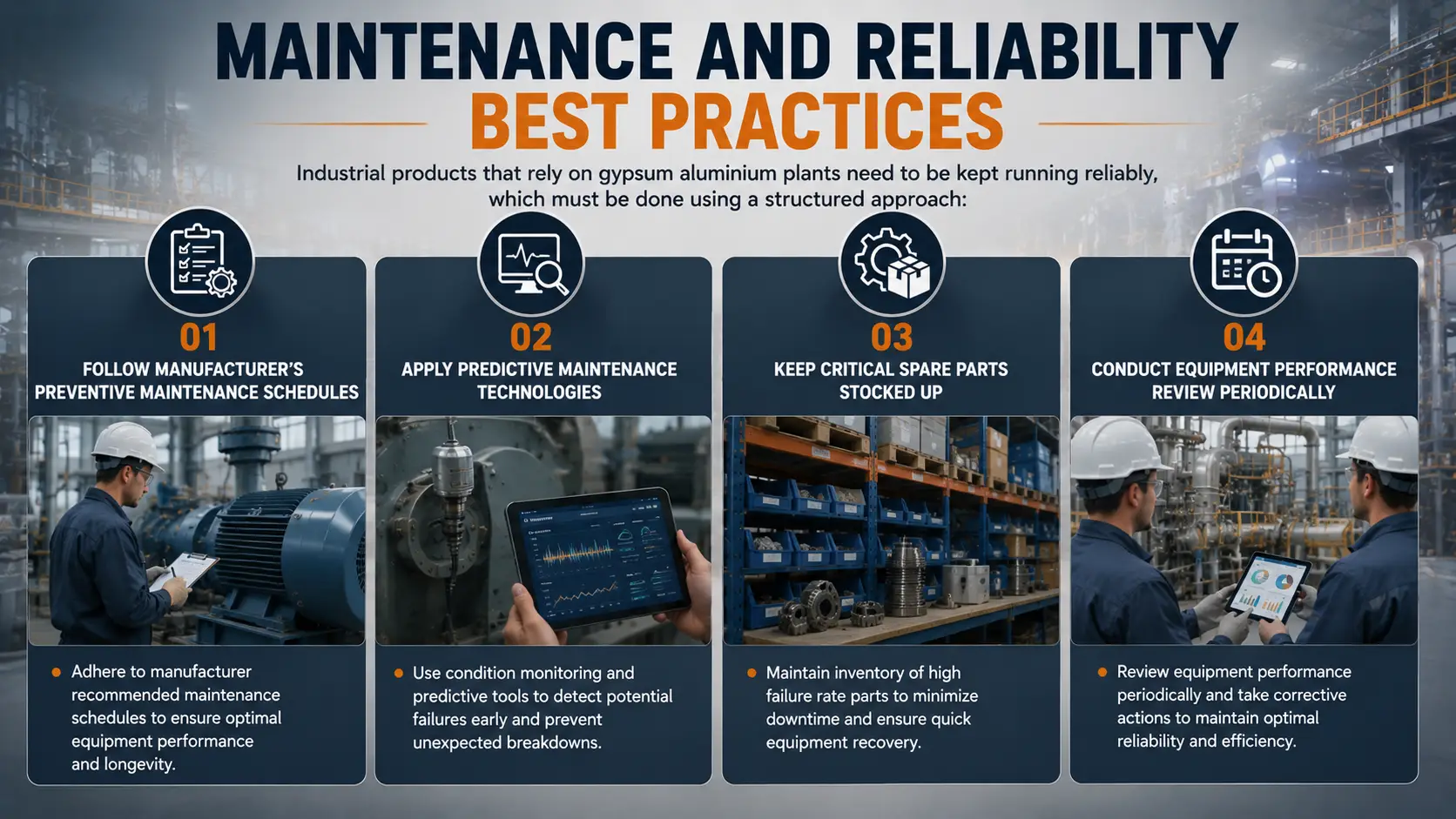
Industrial products that rely on gypsum aluminium plants need to be kept running reliably, which must be done using a structured approach:
Follow manufacturer's preventive maintenance schedules
Apply predictive maintenance technologies to detect failures early before breaking down.
Keep critical spare parts stocked up for high failure rate parts.
Conduct equipment performance review periodically in accordance with schedule
Quality Standards and International Certifications
There are recognized frameworks that control designing, testing and safety compliance of equipment in gypsum and aluminium production:
Standard / Organization | Relevance |
ISO | General equipment design and quality management standards |
IEC | Electrical equipment safety and performance standards |
ASTM International | Material specification and testing standards |
ASME | Mechanical equipment design and pressure system standards |
NFPA | Fire and combustible dust safety standards for processing plants |
Factors to Consider Before Procurement
When purchasing industrial products gypsum aluminium plants projects, you must look at the cost of the product but certainly not just the unit price:
Check technical feasibility with existing plant facility
Check supplier certification & conformances
Consider the LCC (Life Cycle Cost) as well as the initial cost of the product.
Assess reliability of suppliers, lead times, after sales technical support
Ensure that spare parts are available for long term maintenance planning.
Common Operational Challenges
Issues can arise in an industrial property even if it is well specified, such as a gypsum aluminium plants facility:
Downtime due to lack of adequate spare parts planning
Failure of an engine's oil filter due to mis-specification
The efficiency decreases when the component sizes are too small or when they are mismatched.
Unmet compliance requirements that arose during procurement.
Future Trends in Industrial Manufacturing
In line with the transition to Industry 4.0 in heavy manufacturing, more and more plants are adopting smart sensors, digital twin technology and Industrial IoT platforms to help monitor remotely, optimize energy use and implement predictive maintenance programs in gypsum and aluminium plants.
Frequently Asked Questions
What industrial products are required in a gypsum plant?
A typical gypsum plant will have crushers, mills, conveyors, pumps and motors, bearings, dust collectors, automation, and instrumentation.
Which equipment is essential for aluminium production facilities?
The smelting equipment, rolling mills, pumps, compressors, automation systems, motors and electrical components, and safety equipment are required in the aluminium plants.
How do automation systems improve manufacturing efficiency?
Benefits of automation are that it can help to control the process, decrease the chances of human error, increase the consistency of production, and cut costs in operation.
What industrial standards should suppliers comply with?
Common standards such as ISO, IEC, ASTM, ASME, NFPA and industry manufacturing standards are all standards that have been used.
What maintenance practices reduce equipment downtime?
Preventive and predictive maintenance as well as adequate spare parts planning and lubrication will all help reduce your downtime
How do you select industrial products for heavy-duty applications?
You should look at technical specifications, product application, compatibility, certifications, vendor reliability, maintenance and total lifecycle costs.
What role do sensors play in industrial plants?
Real-time sensor data will be communicated to the PLC and SCADA, and will result in better process control and predictive maintenance.
How can industrial buyers evaluate supplier quality?
Buyers should check certifications, technical documentation, reference projects and after sales support capability.
Conclusion
Operating the industrial products gypsum and aluminium plants involves selecting appropriate equipment for the operating conditions, rather than settling for cheap equipment. Whether it's in gypsum processing, such as crushers and rotary kilns, or in the production of aluminium, from smelting processes through to rolling mills, every element, including pumps, valves, bearings, electrical systems and safety equipment are vital to plant reliability if they are chosen according to known standards and lifecycle cost. Standards-based procurement, in combination with maintenance planning and spare parts management, can contribute to minimizing downtime and optimize long term operation of gypsum and aluminium facilities.
Obtain advice on equipment selection for the plant.
DISCLAIMER: Z&F Corporation is not affiliated with, authorized by, endorsed by, or acting as an official representative of any manufacturer, brand, or trademark owner referenced on this website. All product names, trademarks, brand names, logos, and manufacturer references are the property of their respective owners and are used solely for identification, reference, and compatibility purposes.