Types of Industrial Pumps: Complete Selection and Application Guide
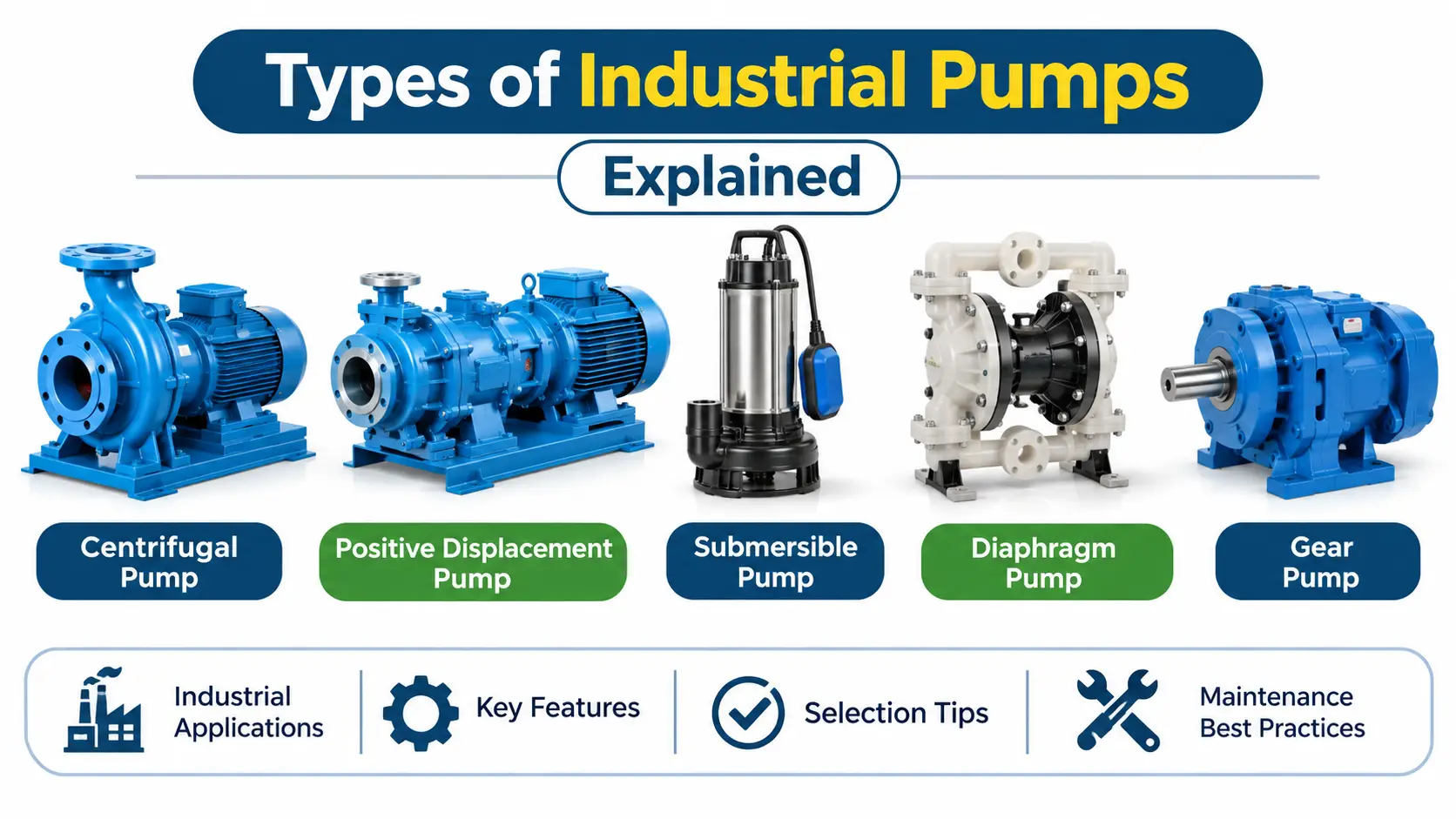
The first question to ask when selecting from the various types of industrial pumps is: How does the pump move the fluid? Dynamic pumps give velocity to the fluid, positive displacement pumps trap fixed volume of fluid. This guide covers the many types of industrial pumps in engineering terms and not brand names, their operation, and where they fit best, as well as the selection of the right pump for your fluid, pressure and flow.
Need help selecting or sourcing a pump? Request a Quote and our team will review your requirements.
1. Primary Classifications: Dynamic vs Positive Displacement Pumps
Industrial pump classification is based on the principle of how the pump works and can be classified into dynamic and positive displacement pumps. The only difference between centrifugal pumps vs positive displacement pumps is the way in which flow is affected by pressure.
|
Factor |
Dynamic (Centrifugal) |
Positive Displacement |
|---|---|---|
|
Mechanism |
Impeller adds velocity |
Traps and displaces fixed volume |
|
Flow vs pressure |
Falls as head rises |
Nearly constant |
|
Viscosity |
Efficiency drops |
Handles thick fluids |
|
Self-priming |
Usually no |
Often yes |
|
Best for |
High flow, thin liquids |
Viscous, metering, high pressure |
However, if the centrifugal and positive displacement pumps are known, then the cost is not a concern when making manufacturing. Pumps are fluid-power components, so explore related hydraulics and pneumatics products.
2. Dynamic Industrial Pumps: Centrifugal and Axial Designs
A centrifugal pump is a type of pump that is based on the principle of rotating impeller to raise the velocity of the fluid and the energy is converted from velocity to pressure in the volute casing. Single-stage pumps are suitable for low/medium heads, Multi-stage pumps are used to form high pressure by cascading impellers. Axial flow pumps are used for pumping very large volume and very low heads.
Common standards are ANSI B73.1 for chemical process service, API 610 for heavy duty refinery service and ISO 5199. These designs are available from many manufacturers, please refer to our supported brands.
3. Positive Displacement Pumps: Rotary and Reciprocating
Pumps that will deliver a near constant amount of flow against a pressure are called Positive displacement pumps. Rotary pumps can be classified into a variety of types including gear, screw, vane, lobe and progressive cavity. Reciprocating industrial pumps use pistons, plungers or diaphragms to produce a more pulsating flow but higher pressures are also generated.
Simple, steady transfer of fluids: heavy lubrication, oil transfer – gear pumps. Quieter, higher volume flow: heavy lubrication, oil transfer – screw pumps. For pneumatic fluid control – air operated diaphragm pumps – that need clean and regulated air, refer to our pneumatic fluid control range. Always fit a relief valve on positive displacement discharge lines.
4. Specialized Pumps for Harsh Environments
-
Double diaphragm: diaphragm pumps for industrial purposes are used with an abrasive slurry and can also be used “dry.”
-
Progressive cavity pumps are used for pumping hydrogen or shear-sensitive materials and sludge.
-
Peristaltic metering pumps: do sterile & accurate dosing.
-
Do not run dry, remove shaft seal for hazardous chemicals (magnetic drive sealless pumps).
-
Plunger pumps: use as high pressure industrial pumps.
-
Submersible industrial pumps: operate underwater; read our submersible pump guide.
5. Technical Selection Criteria: Sizing for Fluid Characteristics
This is a comparison of common industrial fluid transfer pumps.
|
Pump |
Best For |
Viscosity |
Solids |
|---|---|---|---|
|
Centrifugal |
High flow, thin liquids |
Low |
Low to moderate |
|
Multi-stage |
High head |
Low |
Low |
|
Gear |
Oils, resins |
High |
Low |
|
Progressive cavity |
Sludge, pastes |
Very high |
High |
|
AODD |
Slurry, chemicals |
Medium |
High |
|
Peristaltic |
Metering, sterile |
Medium to high |
Moderate |
When selecting one of the right industrial pumps for chemical processing, consider viscosity (cP), specific gravity, temperature, and vapor pressure and solids content. Materials such as 316 stainless steel, Hastelloy, titanium, PTFE and PVDF are corrosion resistant. Re-check measurements with calibrated equipment such as WIKA.
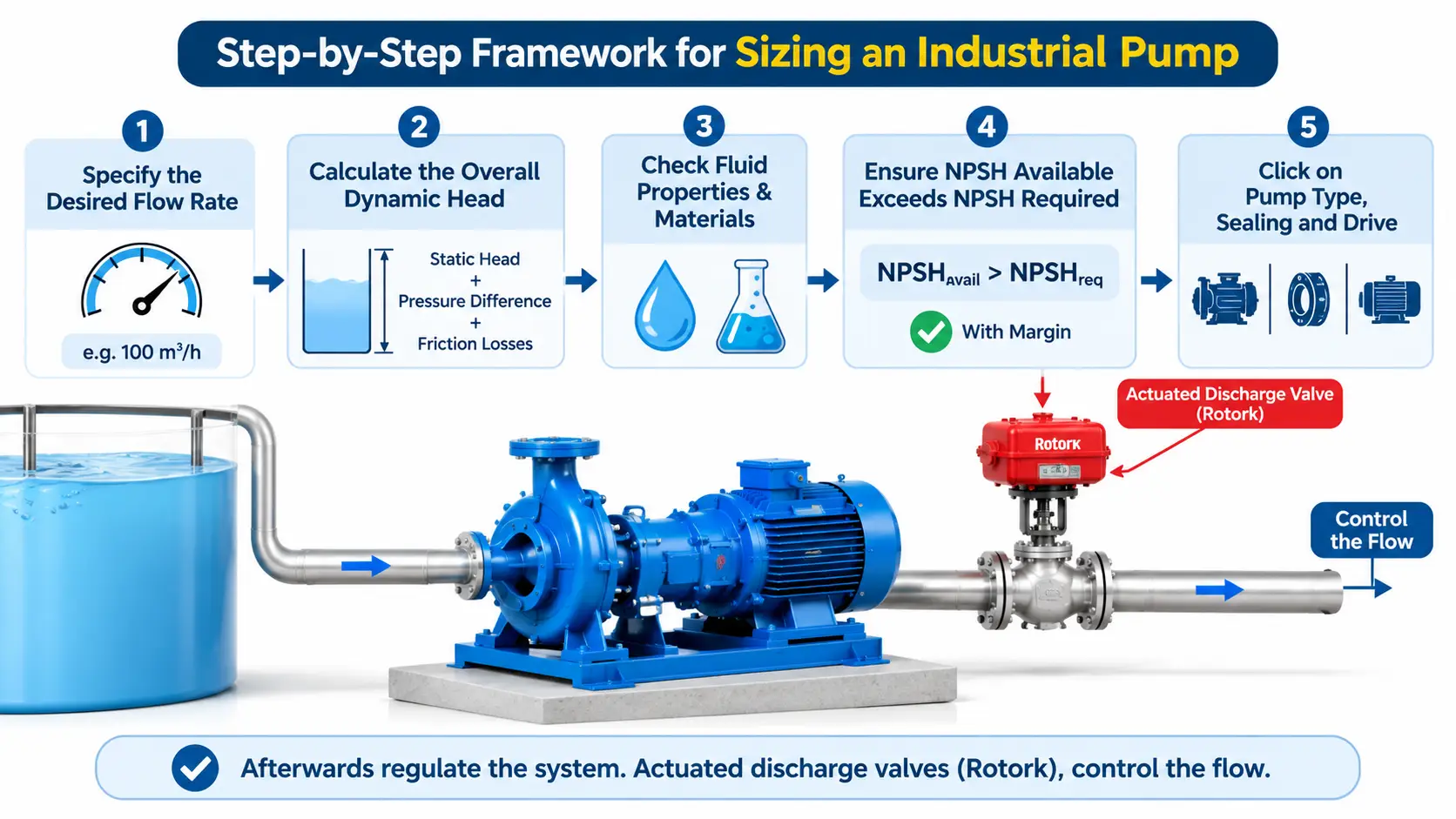
6. Step-by-Step Framework for Sizing an Industrial Pump
-
Specify the desired flow rate.
-
Calculate the overall dynamic head (static head + pressure differences + friction losses).
-
Check fluid properties and materials.
-
Ensure that NPSH available exceeds NPSH required, margin.
-
Click on Pump Type, Sealing and Drive.
Afterwards regulate the system. Actuated discharge valves Rotork, control the flow.
7. Industrial Pump Applications by Industry
-
Power generation: multi-stage centrifugal pumps in boiler feed systems of power distribution and generation systems.
-
Chemical processing magnetic drive or chemical resistant lined pumps.
-
Size and Abrasion in Mining - Selection of Slurry Pump.
-
Municipal: progressive cavity pumps for sludge.
-
Application Food & pharmaceuticals: hygienic designed sanitary pumps.
8. Key Components and System Interfaces
-
Seals: mechanical seal guide guide is a comparison of seal and sealless.
-
Bearings: Screw Designation: sizes for both radial and axial loads.
-
Valves: The pump is protected by Isolation and Check valves.
-
Fasteners: Make sure the grade used on baseplates and flanges is correct.
9. Pump Installation, Maintenance, and Cavitation Prevention
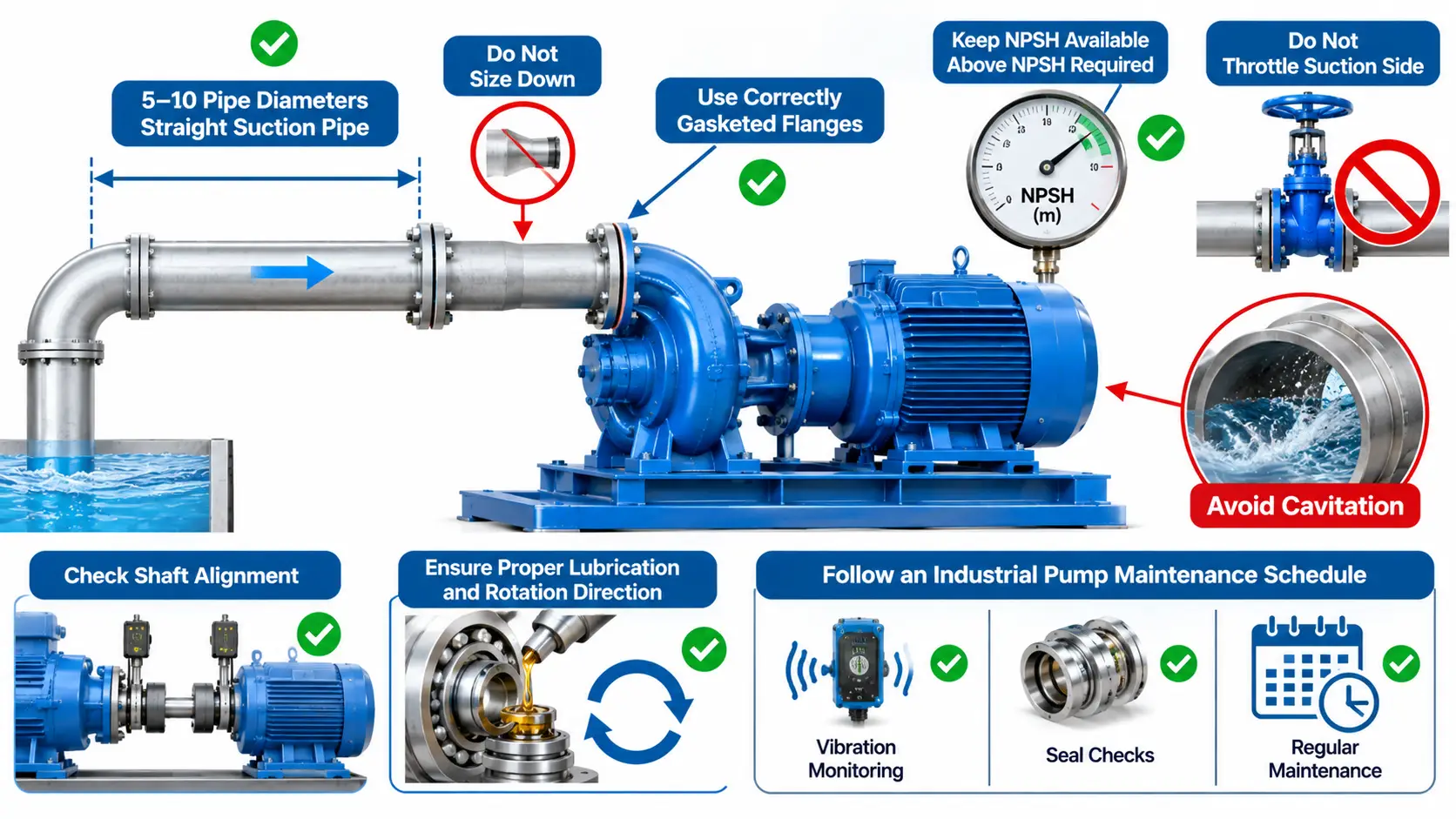
Use a straight 5-10 pipe diameters of suction piping before the suction inlet, and do not size down the suction piping. Use correctly gasketed pipeline flanges to avoid air ingress.
-
Keep NPSH available above NPSH required.
-
Do not throttle the suction side.
-
Check shaft alignment, lubrication and rotation direction at commissioning.
-
Follow an industrial pump maintenance schedule that includes vibration monitoring and seal checks.
10. Frequently Asked Questions
What are the main types of industrial pumps?
Dynamic pumps can be centrifugal or axial pumps. Positive displacement pumps can be gear, screw, diaphragm or plunger pumps. Browse our general industrial products.
What is the difference between centrifugal and positive displacement pumps?
Centrifugal pumps give velocity and so with increase in pressure flow decreases. Positive displacement pumps have fixed volumes so the flow is nearly constant.
Which industrial pump is best for high-viscosity fluids?
Progressive cavity, internal gear, screw and lobe pumps suit thick fluids because they keep volumetric efficiency as viscosity rises.
How do you calculate Net Positive Suction Head (NPSH)?
NPSH available = absolute suction pressure head + static head – friction loss – vapor pressure head. It must be greater than the required NPSH.
What causes pump cavitation and how can it be prevented?
The fluid pressure falls below the vapor pressure and bubbles form and collapse pitting the metal. Maintain NPSH above the required level and use smooth, short suction piping.
11. Conclusion
The right types of industrial pumps for your plant depend on fluid properties, pressure and flow, not habit. Classify the duty, size the head, verify NPSH and design suction piping carefully. Learn more about our independent sourcing approach on our about page.
Brand names are used for identification only and imply no partnership or endorsement by Z&F Corporation.
Need help matching a pump type to your application? Talk to Our Specialist and we will help identify suitable products.